Blog Archives
Reel to Reel ranks 2013 in movies
And once again, we reach the end of another year. And as usual, I didn’t get to see as many movies as I wanted to. I saw most of the ones I was really excited about, all but one in fact (which wound up not being made at all, sadly). For the record, the ones I didn’t see yet that are still on my to-see list are American Hustle, Wolf of Wall Street and Her, all of which will be readily available after the holidays, what with being award bait and all.
So here, for the second year (here’s last year’s list if you’re interested), the list of movies I saw this year roughly in order of how much I liked them, along with brief comments on a few films. This list includes made-for-TV, direct-to-video, and streaming films, as long as they were feature length. The rankings are based purely on how much I enjoyed watching the movie, and no other criteria. I caution you, though, that my opinions on rankings and such change frequently, so if you ask me to make this same list tomorrow, it may well be slightly different:
1. Saving Mr. Banks. Simply a beautiful movie that hits me hard as a writer. I get where both the characters of P.L. Travers and Walt Disney were coming from, I sympathize with them both, and I found the movie deeply moving. I know that a lot of it was conjured up for the sake of cinema, but I’m kind of afraid to look up how much for fear it would ruin the film for me.
2. Frozen. Disney’s best animated movie in years. I particularly like that the film was undeniably a love story, but at the same time, broke every major rule in the usual “princess” formula.
3. Man of Steel. A controversial choice to be this high, I know, but I don’t care. As someone who’s loved Superman since childhood, I thought this film was a worthy jumpstart for both the character and for DC’s effort at a cinematic universe.
4. Pacific Rim. The most underrated movie of the year, in my opinion. Visually exciting and a hell of a lot of fun.
5. Monsters University.
6. The Hunger Games: Catching Fire.
7. Ender’s Game.
8. The Hobbit: The Desolation of Smaug.
9. An Adventure in Space and Time. TV film about the original star of Doctor Who, William Hartnell, made in conjunction with the series’ 50th anniversary. I really liked it.
10. Evil Dead.
11. The World’s End
12. Oz, The Great and Powerful.
13. Star Trek Into Darkness.
14. Thor: The Dark World.
15. Justice League: The Flashpoint Paradox.
16. Batman: The Dark Knight Returns Part II.
17. The Rubber Room. Intriguing documentary about the New York public school system, specifically the practice that leaves teachers accused of assorted mistakes stranded without work for months or years without the opportunity to defend themselves.
18. Crystal Lake Memories:The Complete History of Friday the 13th. Good and terribly thorough documentary about the horror movie series. Make sure you’ve got the time to watch it, though – it’s SEVEN HOURS LONG.
19. Iron Man 3.
20. LEGO Batman The Movie: DC Superheroes Unite.
21. The Wolverine.
22. The Sound of Music. Live TV production of the classic musical.
23. Necessary Evil: The Villains of DC Comics.
24. Europa Report.
25. Superman Unbound.
26. Kick-Ass 2.
27. Warm Bodies.
28. Upstream Color. I really liked the director’s last movie, Primer, so I had high hopes for this one. I felt somewhat let down, though. The movie thought it was smarter than it really was.
29. Escape From Planet Earth.
30. Side Effects.
31. A Good Day to Die Hard.
32. World War Z.
33. Mister Scrooge to See You.
34. Jack the Giant Slayer.
35. Iron Man: Rise of Technovore.
36. The Purge. Intriguing idea – a world where all crime is legal for 12 hours a year – but the film is handled poorly, set up on a soapbox, has a horribly predictable ending and is so heavy-handed it’s impossible to enjoy as a thriller.
37. The Host. The only thing I have to say about this Stephanie Meyer adaptation is that I initially mistyped it as The Hose, and I couldn’t help but think that would have been a more interesting movie.
38. Riddick.
39. Oblivion. I challenge anybody to explain the backstory and plot of this film in a way that does not invite a six-year-old child to point out how outrageously stupid the aliens are. I DARE YOU.
40. Hansel and Gretel: Witch Hunters.
41. Sharknado. I know that this TV production was supposed to be bad, but I disagree with those who think it was both bad and fun. I just didn’t enjoy it.
What I Watched In… August 2013
In the interest of full disclosure (and to generate a little content here) I thought I’d present a regular tally of what movies I managed to see in the previous month. Some of them I’ve written about, most of them I haven’t. This list includes movies I saw for the first time, movies I’ve seen a thousand times, movies I saw in the theater, movies I watched at home, direct-to-DVD, made-for-TV and anything else that qualifies as a movie. Feel free to discuss or ask about any of them!
1. Pete’s Dragon (1977), B+
2. Ernest in the Army (1998), D
3. The Artist (2011), A-
4. The Wolverine (2013), B
5. 101 Dalmatians (1961), B+
6. Puppet Master (1989), C
7. Cloud Atlas (2012), B
8. The Revenge of Dr. X (1970), F; RiffTrax Riff, B-
9. A Goofy Movie (1995), B+
10. Chicken Run (2000), A
11. Starship Troopers (1997), C; RiffTrax Riff, B+
12. Enchanted (2007), A
13. Hellbound: Hellraiser II (1988), C
14. Nightmares in Red, White and Blue: The Evolution of the American Horror Film (2009), B-
15. Kick-Ass 2 (2013), B+
16. Shaun of the Dead (2004), A
17. Hot Fuzz (2007), A-
18. The World’s End (2013), A-
19. The Adventures of Robin Hood (1938), A
20. Robin Hood (1973), B
21. Robin and Marian (1976), B
22. Robin Hood: Prince of Thieves (1991), B+
23. Robin Hood: Men in Tights (1993), C+
24. Would You Rather (2012), B
25. Masters of the Universe (1987), C
26. Gamer (2009), C
Showcase At the Movies Superhero Double Feature
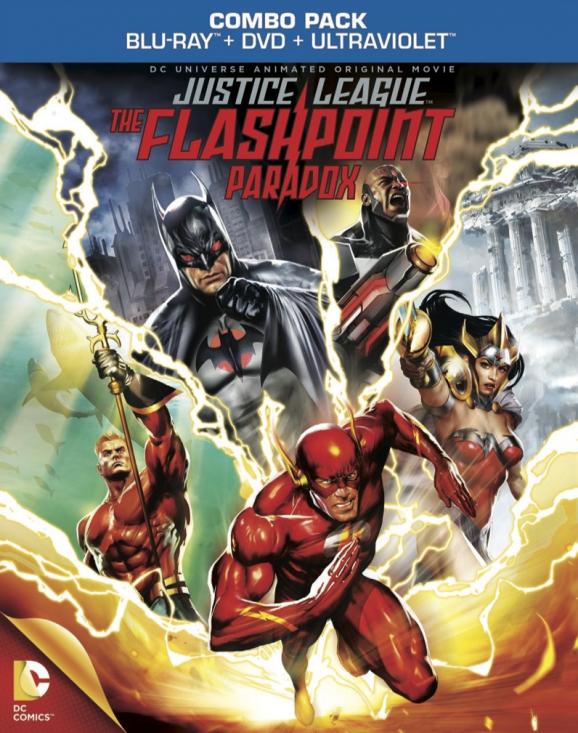
 This week’s episode of my podcast, the All New Showcase, features myself and my cohort Kenny giving our opinions on a pair of new superhero movies. We took in The Wolverine and the new animated feature Justice League: The Flashpoint Paradox. To hear our thoughts on those, as well as a comic book and TV pick, click on the link!
2 in 1 Showcase Episode 287: Summer Movie Preview 2013
 Twice a year, on the Showcase podcast, I sit back with whichever of my co-hosts are available and talk about the new movies coming out in the next several months. It’s time for this year’s Showcase Summer Movie Preview!
Trilogy Trouble
I am, as you may know, an English teacher. As such, I’ve got a particular sensitivity towards using words correctly. The wonderful thing about words, you see, is that by using them properly you can be much more specific in your meaning… more descriptive, more precise and, therefore, more effective in making the intent of your words clear. If I wanted to say, in one word, that something has been broken into ten pieces, I should be able to use the word “decimate,” because that was its original meaning. But too many people used it as a synonym for “destroy,” and now that secondary – and far less specific – meaning is also considered correct. And it irritates me. And it’s the same vein of irritation that strikes me when I hear people throw around the word “trilogy” willy-nilly.
 Strictly speaking, a “trilogy” can refer to any series of three, but I think using it that way cheapens its usage. The word “trilogy” should be reserved to refer to something a little different than just “three.” These days, it seems to be popular to group movies into trilogies, perhaps because it’s so attractive package them together in a DVD box set. You can go out and buy the Lord of the Rings trilogy, the Dark Knight trilogy, the Back to the Future trilogy, each with three films in a series, each of which fits the definition to varying degrees. But are they true trilogies? How about the X-Men trilogy? There have been two movies released since they started calling it that, although one could argue that they aren’t part of the original series, but rather spin-offs… but next year’s X-Men: First Class seems poised to tie everything together. Can you still make that arguement? There are three films with Evil Dead in the title, but when people talk about an Evil Dead trilogy they mean Evil Dead, Evil Dead 2 and Army of Darkness. And then there’s my personal favorite, the Star Trek Trilogy. In a series with either six, ten, or eleven movies (depending on how you count), the boxed set with “trilogy” on the cover collects numbers two through four, because technically, those are the only ones that take place (chronologically) one after another.
Let me break this down, guys.
The True Trilogy.
 In my personal, extremely picky (I know) vernacular, a true trilogy is one story told in three parts. The Lord of the Rings, for example, is a true trilogy. (Yes, I know Professor Tolkien never actually wanted to split the book into three volumes, that it was done on the insistence of a publisher who didn’t think people would want to purchase a novel the length of a phone book. For the purposes of this semantic discussion, that’s not actually important.) For me to consider it a true trilogy, it needs to be planned as such… maybe not necessarily conceived in three parts, but once finished, part three should end with the ending the author was working towards all along. True trilogies, by my definition, are really quite rare.
It’s not uncommon for someone to claim a story was intended as a trilogy even when it wasn’t. These usually don’t hold up to close scrutiny – the original Star Wars trilogy, for example… as much as I love the first three movies, if you watch them together it seems terribly unlikely that George Lucas had decided that Leia and Luke were brother and sister when he wrote the first screenplay, and even the question of Luke’s parentage isn’t a slam-dunk in that first film. Try to handwave it as being a “certain point of view” all you want, Obi-Wan – either you lied to Luke in Episode IV or Lucas hadn’t decided yet that Vader was Anakin Skywalker. The third Scream film also tries to claim trilogy status as well – Jamie Kennedy’s character appears in a post-mortem video that lays out the “trilogy rules” – but it’s written by a different writer than the first two films and the story it tells makes the second film (which was considerably better than the third) largely irrelevant, from a narrative standpoint. True trilogies are hard to find, but easy to confirm.
Far more common is…
The Retroactive Trilogy.
 A Retroactive Trilogy is what you get when a storyteller doesn’t have any solid or specific plans for a sequel, but once the first movie turns out to be a success, comes up with two more films that more or less go together. The original Star Wars, most likely, fits into this category much better than the “true trilogy” category. There are differing reports as to how much of Return of the Jedi was mapped out when Empire Strikes Back was written, it seems that at least some sort of framework was planned… as Luke is leaving Dagobah and Obi-Wan calls him “our last hope,” Yoda replies, “No… there is another.” Did they know the “other” was Leia when they wrote that line? I dunno. But they were at least thinking.
The problem with these Retroactive Trilogies is that sometimes the writers simply try too hard. They build everything up in part two to some gargantuan cliffhanger, but along the way they’re throwing so many things at the audience that the story starts to get lost and garbled. Then, when part three comes along, they’ve gotten so jumbled up that they just can’t untie the knot before the end. I don’t have the hatred for the Matrix sequels that some people do, but I can’t deny they fell victim to this problem. Even worse, I’d argue, were the second and third Pirates of the Caribbean films. Not coincidentally, I liked the fourth Pirates film much better than two or three, mostly because the plot had almost nothing to do with the previous three films, simply throwing Jack Sparrow and Captain Barbossa into another standalone adventure.
 One of the best Retroactive Trilogies I’ve ever seen is the Back to the Future series, with second and third installments that are entertaining in their own right, extend the world built in the first, tie back to the beginning in a logical way, and each have their own clear identity. But they’re still, to be clear, a retroactive trilogy. Yes, I know, we’ve all seen that “To Be Continued” logo at the end of Part I a million times… which is why most people forget that it wasn’t actually in the theatrical cut, but added to the VHS release after the first movie was a hit and the studio decided to go on and make some sequels.
The Trilogy in Name Only.
This is the one that really irritates me. When the trailers for Oz the Great and Powerful came out, they identified Sam Raimi as the “director of the Spider-Man trilogy.” Which made me bristle. The three Raimi-helmed Spider-Man movies are in no way a trilogy… not planned as such, not conceived as such, not executed as such. Aside from the lead characters, the only arc that even remotely welds them together is that of Harry Osborne, whose significance in Spider-Man 2 was negligible. Furthermore, Raimi never intended to stop at three. There were plans, at one point, to go to six films, but after Spider-Man 3 left audiences disappointed and Tobey Maguire hurt his back, everyone decided to walk away from the franchise and let someone else take a crack at it. (Incidentally, there are reports that the current Amazing Spider-Man film is intended to launch a trilogy. Whether there’s actually a three-part story planned or whether it’s just marketing using that word because they think it sounds sophisticated remains to be seen.)
 A Trilogy in Name Only is what you get when a series happens to end after the third installment. Blade, for example. Ocean’s Eleven. The original Robocop franchise. None of these were planned as three-volume stories. These just happened to stop after three movies for various reasons – failure of the third installment, age or lack of interest in the principal actors, whatever. Despite that, these films frequently get packaged and marketed as “trilogies.” Even the Godfather franchise falls under this category.
Sometimes, though, fourth films get made after a series seems over, taking away even its faux “trilogy” status. Toy Story is currently in this category, but every time you turn around it seems someone is starting a rumor about Pixar working on a Toy Story 4. (Seeing as how the third Toy Story had perhaps the greatest ending of any animated film in history, I really think that would be a huge mistake, but that’s an argument for another time.) You can find DVD sets of the TransFormers films marketed as a “trilogy” even as the fourth film is under production, and I distinctly remember the Saw movies marketed as a “trilogy” even back when they were actively cranking out a new movie every darn year.
What’s more, we’ve entered the age of the drastically-delayed sequel, which is taking older films that used to fall into this category and turn them into longer franchises: Die Hard, Indiana Jones… these used to be called trilogies, then fourth films came out. The same thing will happen to Jurassic Park next year.
Remakes or spin-offs incidentally, do not take a film out of this category. They’re working on a Robocop remake, but they’ll still market the original as a trilogy. They marked The Mummy franchise as a trilogy because they can easily (and rightfully) ignore the Scorpion King films.
 Evil Dead is an interesting case, as the new film is being presented as a remake, while at the same time the creators are publicly talking about continuing the original series (with an Army of Darkness 2) and eventually making a film that would bring the two incarnations of the franchise into a collision course. After AoD2 and a new Evil Dead 2, they’re considering a film that would feature Bruce Campbell’s Ash meeting Jane Levy’s Mia in a film that – I feel comfortable saying – would finally force the American Film Institute to stop placing Citizen Kane at the top of its “100 Greatest Films of All Time” list. At any rate, doing this would make for seven films total… two Ash Evil Dead movies, two Army of Darkness movies (also starring Ash), two Mia Evil Dead movies, then whatever they would call the final film.
None of this is to make any particular claims about the qualities of any film in any given category. There have been bad “true” trilogies and terrible “retroactive” trilogies. Sometimes a trilogy in name only can have three fantastic movies (and by “sometimes” I mean “mostly in the case of the Toy Story films”). This isn’t about judging any film as superior to any other. This is all about a plea from me to use words the way they are intended. If it ain’t a trilogy, don’t call it one.
The first Reel to Reel study, Mutants, Monsters and Madmen, is now available as a $2.99 eBook in the Amazon Kindle store and Smashwords.com bookstore. And you can find links to all of my novels, collections, and short stories, in their assorted print, eBook and audio forms, at the Now Available page!
What I Watched in… February 2013
In the interest of full disclosure (and to generate a little content here) I thought I’d present a regular tally of what movies I managed to see in the previous month. Some of them I’ve written about, most of them I haven’t. This list includes movies I saw for the first time, movies I’ve seen a thousand times, movies I saw in the theater, movies I watched at home, direct-to-DVD, made-for-TV and anything else that qualifies as a movie. Feel free to discuss or ask about any of them!
What I Watched in February 2013
- Blazing Saddles (1974), A
- Superman II (1980), A-
- Birdemic: Shock and Terror (2010), F; RiffTrax Riff, A
- Groundhog Day (1993), B+
- Dead Alive (1992), B+
- Chasing Ghosts: Beyond the Arcade (2007), B
- X-Men (2000), B+
- Star Trek II: The Wrath of Khan (1982), A
- Star Trek III: The Search For Spock (1984), B
- Star Trek V: The Final Frontier (1989), D
- Die Hard With a Vengeance (1995), B+
- Dredd (2012), B+
- A Good Day to Die Hard (2013), B
- Batman: The Dark Knight Returns Part II (2013), B+
- Trekkies 2 (2004), C+
- Trek Nation (2010), B+
- Cool As Ice (1991), F; RiffTrax B+
- Live Free or Die Hard (2007), B+
- Branded (2012), C+
- Argo (2012), A
- The Crucible (1996), B-
If I was making the Justice League movie…
 Fans of DC Comics’s Justice League franchise saw what seems to be another setback this week, when word leaked the script that has been in development is being scrapped entirely. For those who just want to see the damn movie made already, this is obviously distressing news. But my approach is slightly different. I absolutely want to see a Justice League movie, but I want to see a great movie. So if Warner Bros recognized that the script they’re working with is crap, by all means, start over and do it right.
Earlier this week over at CXPulp, I wrote about how Disney seems to be planning to apply the lessons of Marvel Studios to their recently-acquired Star Wars franchise. (For those of you who may not follow this stuff the way I do, let me briefly explain that Disney bought Marvel in 2009 and that Marvel and DC have been the two biggest publishers – and therefore the two biggest rivals – in American comic books for decades). Marvel created films for several of their characters, brought them together in their mega-hit The Avengers, and are now breaking them off into smaller films again before the next combined go-around. Comic book fans, delighted with what Marvel is doing, are asking why the hell the movies based on DC Comics – the Justice League, Superman, Batman, and many more — can’t do the same thing. Although DC Comics, for a long time, had properties with more mainstream recognition than Marvel, in the past decade Marvel has dominated superhero movies. The only hit from the DC Universe in recent years has been Christopher Nolan’s Dark Knight trilogy, while Marvel’s X-Men, Spider-Man, and Avengers-related films have become legitimate powerhouses.
The reason for this, I believe, goes back to the late 90s. Marvel, at the time, was still an independent company, although one reorganizing after a bankruptcy. DC, however, has been wholly owned by Warner Bros for a very long time. That means Warner Bros is the only game in town to make a DC movie. If Warner Bros isn’t interested, it won’t happen, and if Warner Bros doesn’t understand what makes the property work, we get crap like Steel and Catwoman. Marvel, on the other hand, had the freedom to shop their properties around. Universal doesn’t have the right feel for Spider-Man? Take it to Sony. Paramount can’t give us a decent X-Men film? Bring them to Fox. Granted, this system turned out its share of clunkers too (let’s not forget that some genocidal maniac gave approval to not one, but TWO Ghost Rider movies starring Nicolas Cage), but their batting average over this period, beginning with Blade in 1998, is pretty damn good.
Things are different now, of course, since Marvel is owned by Disney. But by the time of that purchase in 2009, Marvel had already launched their own film unit to make movies with the characters other studios didn’t have – Iron Man and Incredible Hulk had both already come out and production was underway on Iron Man 2, Thor and Captain America: The First Avenger. By the time Marvel was a Disney property, they’d proven that they could make great films on their own, and Disney has wisely stayed the hell back and let them do it, the way they did when they bought Pixar in 2006. (Disney seems to have a three-year cycle for buying other companies, they got Lucasfilm in 2012. That means I have until 2015 to create a franchise with lucrative enough IPs that I can sell them to Disney and retire in luxury.)
This, more than anything else, is what Warner Bros needs to learn in regards to any DC Cinematic Universe. It’s not about copying Marvel’s storytelling or casting tricks or format. It’s about letting the people who know the characters do what they do best and getting out of their way while they do it.
Marvel needed to raise the profiles of their lesser-known characters or Avengers never would have been the hit that it was. DC has a different problem. Ten years ago, nobody who wasn’t a comic book fan knew who Iron Man or Thor were. DC’s problem is that everybody knows many of their characters – Wonder Woman, Aquaman – but they fundamentally misunderstand them. Aquaman is a punchline, he’s “the guy that talks to fish.” But as writers like Geoff Johns and Peter David have shown us, he can be so much more than that – a tragic monarch, a man who struggles with the responsibility of protecting two-thirds of the surface of the Earth… not to mention the fact that the physical changes necessary to allow a person to survive on the ocean’s floor would make them pretty strong and otherwise badass on land. Putting Aquaman in a movie doesn’t necessitate that you explain who he is, it necessitates you explain what makes him awesome.
So if I was in charge of the Justice League movie, this is what I would do.
First, start with this summer’s Man of Steel. The film is generating some positive buzz and I’m excited about it. I’d work in a small reference to a larger DC Universe – have some news report about Green Lantern in the background, or a page of the Daily Planet referencing the chaos in Gotham City that happened during The Dark Knight Rises. Nothing that would really influence Superman’s story, but enough to nod at the fact that he’s not – as Nick Fury said in the first Iron Man – the only superhero in the world.
Then, I’d work on putting together a phenomenal Justice League story. I wouldn’t start with the big bad that was in the previous script, Darkseid, for two reasons. First, Marvel is already using Thanos in their movies, and although Thanos was largely a Darkseid rip-off when he was created in the comics, movie fans won’t get that and will think it’s the Justice League that’s being derivative. Second, he’s too big for the first movie. Where do you build from there? You need a threat big enough to justify bringing all of these characters together, of course, but they shouldn’t go up against the biggest threat in the universe their first time out.
Next, get the recognizable aspects from the current DC films and put them together: Henry Cavill as Superman, build off the end of The Dark Knight Rises (as a spoiler consideration I won’t be more specific than that), and yes, I’d get Ryan Reynolds back as Green Lantern. That movie had problems, but his casting really wasn’t one of them. Then I’d add the characters that the public has heard of but doesn’t understand – Wonder Woman, Aquaman, the Flash. Use this movie to showcase them the way Avengers suddenly turned everyone in America into fans of the Hulk for the first time in decades.
Don’t bother with everybody’s origin. It’s a convention of the superhero genre, true, but it’s often the least exciting part of it. You don’t need to know why John McClane became a cop to enjoy Die Hard, so why do I need to see Barry Allen get struck by lightning when I’ve already accepted a world with a man from Krypton and another guy with a magic ring? After Justice League, we’ll start spinning the other characters off into their individual movies – if necessary, work in the origins there. There’s no rule that says they have to take place after the Justice League movie just because they’re made in that order, although even then, I think a quick flashback would probably be more than sufficient in most cases.
Finally, make it clear that the Justice League isn’t the be-all and end-all of the DCU. Marvel can’t reference Spider-Man, the X-Men, or the Fantastic Four, because the rights to those characters are still tied up with other studios thanks to deals they made before they were purchased by Disney. DC doesn’t have that problem. Guillermo Del Toro is working on a movie featuring some of DC’s supernatural characters like Swamp Thing and Deadman – a Justice League movie could drop in a reference to them. Give us veiled hints or rumors about other Leaguers from the comics like Zatanna, Plastic Man, Firestorm… characters that have potential for their own films in the future, assuming of course that they’re done right. Even better – if you have some sort of huge battle for the end piece, the sort of thing that the public can’t help but notice (like the battle of New York in The Avengers, and it just shows how great that movie was structured that it keeps being the best analogy), give us glimpses of some of these other heroes fighting their own battles while the League takes on the Big Bad, whoever it happens to be.
And most importantly, make sure that the story is one that satisfies the fans but is broad enough to grab people who don’t know all of the characters. This is what Marvel has done brilliantly and what Warner Bros has prevented DC from doing for years. If you can pull off that trick, we’d have a movie that could launch not just one franchise, but an entire universe.
Of course, that’s what I would do. But what do I know? I’m just a guy who reads comics and watches movies. It’s not like I’ve got the pedigree of the man who gave the green light to Jonah Hex.
(If that line isn’t enough to convince people I should be running the show, nothing will be.)
It’s The Odyssey… IN SPACE!
It was recently announced that Warner Brothers is working on taking the epic poem, The Odyssey, and turning it into a science fiction film. Because the internet exists, responses ranged from the cautiously optimistic to the blindly cynical to several hundred ancient Greeks complaining that Hollywood is raping their childhood like they did with that Jason and the Argonauts debacle. Amongst all the responses, though, only one took me by surprise. At /Film, Germain Lussier said, “Even in our wildest, 11th grade English class imaginations, few could have seen this one coming.”
To which my response is… “Really? Is it that big a surprise?” If anything, I can’t believe it hasn’t been done before.
The great thing about science fiction, friends, is its infinite adaptability. There is virtually no story you can’t tell in the proper sci-fi setting… in fact, many of the greatest works of sci-fi are largely metaphorical in nature. Both the Star Trek and X-Men franchises, at least early in their early incarnations in the 1960s, were often used to discuss the civil rights movement. Battlestar Galactica was known to deal with modern-day politics. Superman is often spoken of as an extraterrestrial Christ figure, despite being created by a couple of Jewish kids from Cleveland. Everything from 1984 to 2012 has taken then-current fears and put them on display through a sci-fi prism.
Then there are the stories that pick up on specific plots and tropes. Alien, as I’ve argued many times, is essentially a haunted house movie with the house replaced by a spaceship and the ghost replaced by a drippy, hard-shelled monstrosity with acid blood. Forbidden Planet shares much of its DNA with William Shakespeare’s The Tempest. Throw the Swiss Family Robinson off their island — off the planet — and you have Lost in Space. That one didn’t even change the family’s last name.
Much has been written about George Lucas homaged big ol’ chunks of Akira Kurasowa’s Hidden Fortress when he wrote Star Wars. That’s probably the reason people were so willing to believe the recent rumor — since debunked — that Disney had Zach Snyder working on a Star Wars universe adaptation of another Kurasowa film, Seven Samurai. (You may know it better by the title of the American remake: the classic western The Magnificent Seven.) That story could easily work in outer space. Hell, why stop there? Take the death of Qui-Gon Jinn and retell it Rashomon style.
The Odyssey in space? Why not? Look at the basic DNA of the story: it’s about a general who has been gone from home for years who gets lost and goes through many dangers and adventures on his way home, where everybody but his wife and son believe he’s dead. Gerry Dugan and Phil Noto put that story in a contemporary military setting and called the graphic novel The Infinite Horizon. The Cohen brothers dropped it into the American south and gave us O Brother, Where Art Thou? The Civil War drama Cold Mountain picks up on parts of Homer’s epic. James Joyce loosely adapted it in Ireland at the turn of the 20th century and called it Ulysses, which the Modern Library declared the best novel in 100 years.
Hell, why stop at The Odyssey? Give us space opera versions of The Iliad and The Aeneid while you’re at it. Hollywood loves a trilogy.
Good science fiction can handle almost anything you throw at it.
 Reel to Reel