Category Archives: Geek Punditry
Fun with Riffing
 Once upon a time, there was a thing called the “Cable Ace Awards.” It was basically the Emmys for cable TV. They stopped giving them out about the same time HBO started winning all of the real Emmys, at which point they realized there was no longer any reason for the Ace Awards to exist, showing the sort of self-awareness the MPAA can only dream of. As far as I’m concerned, there’s only one lasting contribution the Ace Awards made to modern society: they’re responsible for my introduction to Mystery Science Theater 3000. One year, whichever network was broadcasting the awards showed a bunch of the nominated shows over a weekend, including an episode of MST3K. As my parents’ cable provider did not, at that time, carry Comedy Central, I’d never seen an episode before. I stumbled upon the image of a guy and two robots in a darkened theater cracking jokes about a terrible 50s-era monster movie, the sort that local TV channels still showed all weekend even then. I was instantly mesmerized, but it would be about two years before our local cable got Comedy Central and I was given my real entryway into becoming a hardcore MSTie for life.
MST3K went away many years ago, of course, but it has its spiritual successors, my favorite of which is RiffTrax. The RiffTrax crew consists of Michael J. Nelson, Bill Corbett, and Kevin Murphy – essentially the second cast of MST3K. They’re doing the same job as before, making fun of movies, but now they do it through video on demand you can download from their website or buy on DVD, MP3 commentary riffs for blockbuster movies that you can synch and watch on your own, and a few times a year, live riffs of movies they perform in front of an audience and broadcast to movie theaters across America. Last night, I went to the first RiffTrax Live event I’ve had the chance to attend – a Kickstarter-fueled riffing of director Paul Verhoven’s laughably bad sci-fi “satire” Starship Troopers. The riff was great, picking apart the movie mercilessly. Even several cast members, including Casper Van Dien, Clancy Brown, Jake Busey, and Neil Patrick Harris (who has joined Mike Nelson for riffs in the past) spread the word about the riffing, none of which particularly spared them from the crew’s jokes… although it should be noted that Denise Richards undoubtedly got the worst of their jabs, and she didn’t seem to have anything to do with promoting the riffing.
I’m not here to sell you on the riff, though – you can go to their website and download any of their riffs if you need convincing. What I loved about this, more than anything else, was the actual experience of watching the film. I went with my friends Kenny, Daniel and Lauren, all of whom have gone to RiffTrax Live shows before, and therefore knew a bit more about what to expect than I did. As we sat down, the screen rolled with what appeared to be the usual pre-movie spiel you get in any multiplex in America… but soon, the resounding laughter would make it clear even to the blind that this wasn’t just your ordinary stuff. Instead, it was RiffTrax-generated jokes. Anagrams that poked fun at recent summer blockbusters, “Movie Mistakes” gags that invariably turned into jokes about Casper Van Dien’s post-Troopers career, and so on. With each change of the scene there’d be quiet, then laughter.
In-between the new screens, though, the atmosphere was nothing like a usual movie theater, where disinterested strangers sit around chomping down their popcorn at best or yammering on their phone at worst. Instead, it was a sort of carnival atmosphere, full of people who came not just to watch a movie, but to have a good time. People roamed around, talking, chatting to strangers. There was a sort of unspoken promise that the general volume level would drop to read the preshow cards (even though there was no technical reason for it to do so), and a bizarre feeling of community. It was like everybody in the room was in on a joke that we knew the people wandering in and out of whatever Tyler Perry joint was soiling the adjacent theater would never understand.
Once the movie started, the conversation stopped, but not the noise. People laughed, people cheered, people applauded their favorite riffs. I don’t usually clap even in the best of movies, because it’s not like the actors can hear me. But when Mike Nelson dropped a fairly obvious gag at the expense of AT&T, it hit a sort of universal chord that made the theater almost explode with energy, and I found myself pounding my hands together along with everybody else.
Because I wasn’t just “at the movies,” like I am any other time, even when the best movies are on the screen. Years ago, the MST3K commercials included a line that was something like, “It’s like watching cheesy movies with three of your funniest friends.” Last night, I felt like I was in an entire theater full of friends who wanted to have a good time together.
They’re going to rebroadcast the Starship Troopers show on September 12, again in theaters across America. Then they’re coming back on October 24 to riff the granddaddy of the modern zombie film, Night of the Living Dead. I can’t wait to see that one too, and I intend to go to as many of these as I can from now on. In a world where even movie theaters are so often dens of misery, it’s great to know that for just a little while, you can stop in for some pure, untarnished fun.
Showcase At the Movies Superhero Double Feature
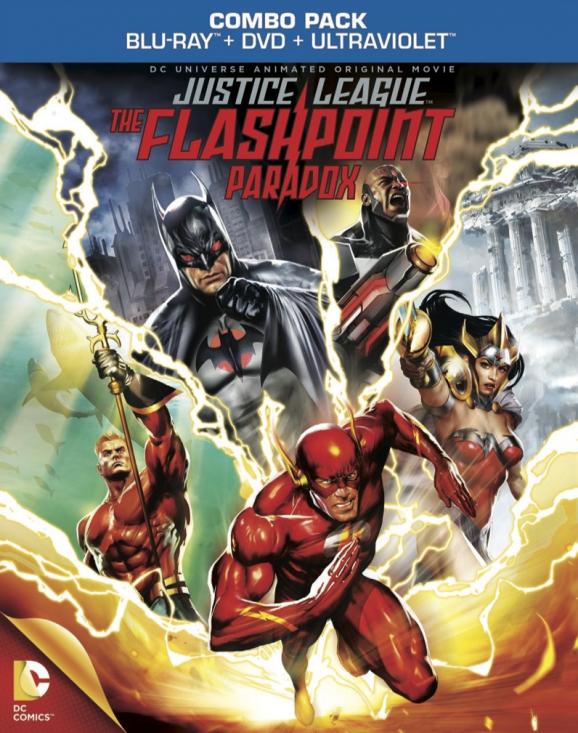
 This week’s episode of my podcast, the All New Showcase, features myself and my cohort Kenny giving our opinions on a pair of new superhero movies. We took in The Wolverine and the new animated feature Justice League: The Flashpoint Paradox. To hear our thoughts on those, as well as a comic book and TV pick, click on the link!
Icons week postponed — so listen to this
Hey, guys. I am, at the moment, a tad bit swamped with projects… the play I’m in, the novel I’m trying to finish… and frankly, something has to give. As it shakes out, that something is going to be the July “Icons Week” here at Reel to Reel. Don’t worry, I’ve got every intention of returning to Reel to Reel in August, with a focus on five cinematic adventures starring Robin Hood. In the meantime, though, I need to use that time to finish other stuff.
 I’m still commentating, though, including about some of the movie news announced at last weekend’s San Diego Comic-Con International. Man of Steel 2 is going to co-star Batman? Avengers 2 is subtitled Age of Ultron? New movies for Witchblade, the Darkness, and Avengelyne? Plus a lot more. I got together with my fiance Erin and my buddy Kenny and recorded an episode of the All New Showcase podcast to discuss these topics and many, many, many others related to comics, TV shows, and even video games. If you want to hear our thoughts, click the link below and give it a listen!
2 in 1 Showcase at the Movies: Monster-Sized Double Feature
 For those of you who listen to the podcasts, I reviewed a pair of movies in this week’s episode of my show. If you feel like listening to me ramble a bit about Pacific Rim and Monsters University, here’s a link!
(If you dig comic books, I also briefly talk about the new issues of Astro City and Quantum and Woody.)
2 in 1 Showcase At the Movies #36: Monster-Sized Double Feature
Learning the wrong lessons from The Lone Ranger
 Allow me to preface this by saying I have not yet, as of this writing, seen Disney’s The Lone Ranger. I probably will eventually, but it’s looking increasingly like the sort of movie I can wait to get from NetFlix, one I’m not particularly looking forward to anymore. I love the character, though, and in my capacity as a fully-accredited Geek Pundit, I sort of feel obligated to see the movie in order to completely analyze what’s wrong with it.
That said, this article is going to tell you what’s wrong with it. Well… not with the movie itself, I’ve got no intention of discussing the plot or performances beyond the snippets revealed in the trailers, but I’m going to discuss what I think went wrong in the production of this $215 million film that, in a five day opening weekend that included the Fourth of July holiday, only managed to scrape up $49 million. (It came in second to Universal’s Despicable Me 2, a $76 million film that pulled in $142 million in the same frame.) Most importantly, I’m going to talk about how the Disney studio is going to look at the weak performance of this movie, analyze the problem, and as they have done so often in the past, completely misunderstand what they did wrong.
I’m going to pick on Disney here because they made this movie and they make these mistakes a lot, but to be fair I should point out most of these problems apply to any major movie studio, where decisions are made by people with business degrees and not anybody with the first idea what makes for an entertaining motion picture. I’m talking about the Disney that could only bring in $104 million for a wonderful movie like The Princess and the Frog — a charming fairy tale with classic Disney charm and, four years later, persistent popularity among fans. They took a look at the film’s underperformance, decided that the problem is that “boys won’t see a movie with Princess and the title,” and forced their upcoming sci-fi epic to change its title from A Princess of Mars to John Carter of Mars, then cutting it to the unbearably bland John Carter under the logic that girls wouldn’t want to see a movie with Mars in the title (because Mars Needs Moms tanked in-between the two films). John Carter, of course, has been marked as a cinematic blunder of Hindenburg-level proportions, but it was a strong, deserving film that got sunk because the Disney suits played musical chairs with their marketing department and didn’t know what the hell to do with it. The Princess and the Frog and John Carter were both good movies that could have had success at the box office if they’d found their audience, but Disney insists on trying to make the box office audience for their movies “everybody on the planet.”
And that gets us to the root of Disney’s problem. In the last two decades, they have become increasingly identified as a studio that produces content that is more appealing to girls than boys (the various princess films, for instance, or the avalanche of girl-led sitcoms on the Disney Channel). There’s nothing wrong with making content that appeals to girls, of course, but all Disney sees is a gaping black hole where the money they want to get from boys and their parents should be. They’ve tried to combat this in multiple ways — changing their Toon Disney network to “Disney XD” and loading it with sitcoms starring boys, turning their 80s sci-fi film Tron into a modern franchise and, of course, purchasing Marvel Comics and Lucasfilm to exploit their superhero lines and Star Wars, respectively. The thing is, Tron: Legacy wasn’t a blockbuster either, and although the Marvel films have done extremely well, the general public didn’t walk out of The Avengers satisfied that they had seen a great Disney movie. Marvel has its own brand, and while Disney is perfectly happy to rake in the money from that success, they want a property they can put their own stamp on.
 Arguably, the biggest success of Disney proper in the past decade has been its Pirates of the Caribbean franchise. To the Disney suits, this is a movie that has everything: swords and fighting and monsters for the boys, dreamy hunks like Orlando Bloom and Johnny Depp for the girls. (Note for the benefit of readers who happen to be my fiance: I’m not saying I personally believe in this incredibly sexist attitude. I’m saying that this is what a Hollywood suit sees when he tries to determine why a movie has made money.) What this exec fails to see is that the Pirates movies… well, the first Pirates movie, and to some degree the fourth one… are actually good movies. They’re fun, full of energy, exciting, and for the most part deliver what you expected when you saw the trailers. Monsters were abundant, adventure was had, swashes were buckled. Great.
Compare this, if you will, to the major complaints I’m hearing about The Lone Ranger. Most people who have been dissatisfied (and even many of those who liked it) have reported a long, dull stretch in the middle and a surprisingly violent climax, neither of which is something you would expect from the trailers, which show trains blowing up, Helena Bonham Carter shooting a gun out of her garter belt, and Johnny Depp unforgivably mugging for the camera. People don’t expect excessive violence out of the Disney brand. (Even the fights in the Pirates franchise are largely cartoonish, without showing the real consequences of such action.)
However, such violence is in keeping with The Lone Ranger. On the other hand, Depp seems to have imported his Captain Jack Sparrow shtick into Tonto, a character that traditionally is rather solemn and wise, and turned him into just another facet of the same clown Depp has been playing in assorted movies since the first Pirates film. So Disney took a franchise with an 80-year history, tweaked it enough that longtime fans won’t like it, but failed to change it enough so that the four quadrant “family” audience they keep chasing will buy into it. The result of Disney trying to make a movie that appeals to everyone is a movie that appeals to no one.
Pixar notwithstanding, it’s virtually impossible to make a movie that will appeal to every possible demographic. In truth, it’s not even smart to try. Invariably, something that appeals to one group will turn off another group, so by trying to make something that everybody likes, you have to cut out pretty much everything that makes something interesting, original, or worth watching. This is why so many cookie-cutter action movies, romantic comedies, or brainless horror movies keep getting turned out over and over again. It’s the reason you can watch a brand-new movie and feel like you’ve seen it a thousand times before.
The Lone Ranger could be an excellent movie if made properly: that is to say, made in a way that appeals to the existing fanbase and a potential new audience that would be into a western adventure. In the same way that some people try to argue that Superman is a character who no longer matters, some say the same about the Lone Ranger. These people miss the point — properties don’t last for three quarters of a century or longer if there isn’t something about them that matters in a timeless way. The Lone Ranger is, in fact, rather timeless — a man whose family is murdered and left for dead, then uses the anonymity of his “death” to seek justice. In many ways, characters like he and Zorro and the Scarlet Pimpernel are all prototypes for the modern superhero, and superheroes are huge at the box office these days. Why can’t they make that work?
 What’s more, the story is primarily one about a man’s search for justice, which is a major theme in many of the greatest westerns ever made. But westerns are an entire genre that, like the Lone Ranger himself, constantly struggle to prove they still matter. Every time we get a great western like True Grit, Hollywood has to balance it with a movie that feels like it has to “justify” the western by combining it with something else. Take Jonah Hex, a comic book western about a Confederate soldier that turned against the south, was hideously scarred, and now makes his way as a bounty hunter. It’s grim and gritty and, when played properly, enormously engaging and dramatic. But when Warner Bros decided to make a movie out of the character, they decided a solid western wasn’t good enough and instead threw in a bunch of stupid supernatural elements ripped off from The Sixth Sense and The Crow, tossed out some steampunk weapons that didn’t belong there at all, and wound up with a film that ranks somewhere between X-Men: The Last Stand and Halle Berry’s Catwoman on the scale of comic book movies that are an utter disgrace to the source material.
The Lone Ranger couldn’t “just” be a great western. It had to be a western that looked like a family comedy. And also had that dreamy Johnny Depp in it to get the girls to come.
Let’s talk about Depp, by the way. It could be easy to get the impression, from this piece, that I hate Johnny Depp, and that’s simply not true. He’s a talented actor and he’s made some great movies. I’m just getting a little sick and tired of seeing him. He doesn’t have to be in every movie, and he sure as hell doesn’t need to play Tonto. Reportedly, when this film began having budget problems and was almost derailed, he took a big pay cut to ensure it got made. Good for him. He still shouldn’t have been cast as Tonto in the first place. Honestly, I’m of the opinion that most cases where an actor is cast against the usual race of an established character it’s something of a stunt, but there are times when it can be made to work. Laurence Fishburne as Perry White in Man of Steel, for example, was no big deal because Perry’s ethnicity isn’t really of any importance to his role in the story. Tonto, however, is a Native American Indian. This is vital to the character. And casting Johnny Depp in the part makes you unable to see Tonto at all — all you see is Depp in that goofy makeup he insisted on wearing, contrary to pretty much every interpretation of Tonto ever.
Even if Depp had played the character completely straight, even if he’d done a remarkably faithful interpretation of Tonto, do you honestly mean to tell me that Disney couldn’t find one Native American actor in the country who could do the part just as well, if not better?
Of course, then Disney couldn’t have promoted the film on Depp’s “star power.” Which of course, makes all the difference. Just look at the raging success of last year’s Dark Shadows, in which he turned a supernatural soap opera into a goofy 70s comedy. Smash hit, right?
(Side note: Johnny Depp, Helena Bonham Carter, and Tim Burton all need to take a break from each other. They’ve made great movies in the past, but their routine has gotten really old. The three of them need to pledge to stop working together for at least 10 years, and which point we’ll have forgotten why we got sick of them and they can come back with a triumphant “reunion” movie. Probably a slapstick reinterpretation of Creature From the Black Lagoon.)
What should Disney take away from this? They should learn to make a good movie first, one that appeals to existing fans but also has the potential to grow the fanbase, and that they should make a movie that will be successful with a smaller group of people instead of a movie that fails across the board. They need to properly identify the audience that will enjoy this film and target it instead of trying to cut trailers that make the movie look like something it isn’t. They may not do Avengers numbers that way, but they could make movie that’s entertaining, profitable, and will have longevity.
What lessons will they likely learn? “People don’t like westerns or the Lone Ranger. What’s the next classic franchise we can try to homogenize into a mass market hit?”
2 in 1 Showcase At the Movies Episode #35: Man of Steel
 Later this week, I’m going to give you guys a much more analytical discussion of the newest Superman movie, Man of Steel. But for this week’s podcast, my crew and I recorded our immediate gut reactions literally minutes after we left the movie theater. If you want to listen to some old-school fanboys get geeky over Superman, this is the podcast to listen to. We DO tell you when to stop listening before we get into spoilers, but spoilers ABOUND. Don’t listen if you haven’t seen the movie don’t want to know how it ends.
Merida’s Makeover
 Over the last few days, I’ve heard a little outrage on the part of a few Disney fans over the slight makeover that’s taking place for Princess Merida, the heroine of Pixar’s film Brave. You see, Disney’s princesses are a huge franchise for them, and when they put out a film featuring a new princess, they tend to follow up on it with a big ceremony at one of the theme parks for her “coronation,” officially making her part of the family. Merida joined Snow White, Cinderella, Sleeping Beauty, Belle, Ariel, Pocahontas, Mulan, Jasmine, Tiana, and Rapunzel earlier today.
The furor is not over her joining the “Official” Disney Princesses, making her the first Pixar character to do so. The problem is with the redesign the character is sporting for her appearance on Princess-branded merchandise, which (let’s be honest) is the point of this whole endeavor anyway. And while I agree that there’s a problem here, I think this is one of those cases where people are letting their anger lead them to statements of such hyperbole that they’re hurting their cause overall.
I hear people complaining that they’re trying to sexualize Merida. The phrase “slutting her up” has been tossed about rather liberally. And frankly, guys, I don’t really see it. The character in the “after” picture may be more traditionally cartoon-beautiful than the “before,” but that’s a far cry from turning her into a sex object. I read American superhero comic books all the time, I know what I’m talking about here. And she’s not even as tarted up as some of her sister princesses, if you want to get technical. Hell, Ariel just goes around in a clamshell bikini all the time. Only the top half of the bikini, in fact. Shouting things like this, starting a Change.org petition over it… it kinda makes a person seem a little like a zealot, and nobody listens to zealots, not even when they have a legitimate point in there somewhere past the noise.
No, the problem I see isn’t so much one of sex as of softening the character. Merida, for those of you who didn’t see Brave, was a girl whose mother tried to force her into an arranged marriage. Merida proceeded to thwart her mother’s plan by proving herself more than a match for the three princes who tried to win her hand, slinging around a bow and arrow in a method that would make Hawkeye of the Avengers take notes. This is all in the first few minutes of the film, by the way, and the bulk of the story is a sweet tale about a mother and daughter growing to understand and respect one another, plus magic bears. But the point of Merida is that she is a character who is not defined by anyone else — not her parents, not her prince. She didn’t need to be rescued like Snow White or Sleeping Beauty, she’s her own woman and prefers it that way. Hell, she’s the only one of the princesses who’s still single at the end of her movie, and she’s perfectly happy that way.
The “new” Merida wears a slightly fancier version of her iconic dress (a dress she hated in the movie, incidentally, but I’m willing to let that slide for the sake of branding and marketing, because that’s what drives all of this), with a slimmer waist and hair that isn’t quite as wild as it was originally. Most bothersome to me, though, are the small changes to the face — it looks like she’s been covered in eyeshadow and lipstick, something the movie Merida most certainly would reject.
A minor reworking of the character is inevitable, if for no other reason than that she has to be on-model with the other princesses. The same thing happened to the previous CGI princess, Rapunzel, but her changes were less dramatic. Seeing a Merida like this, made up and missing her trademark bow and arrow, takes away her uniqueness. The character on the right fits in fine with the other Disney princesses, but that’s sort of the problem. She fits in. She no longer stands out, and that’s what made her such a fun character in the first place.
This isn’t a life-changing, cataclysmic change. The princesses have very little to do story-wise anyway — after their films they seem to exist mostly to serve as models for dolls and to put their pictures on everything from pajamas to notebooks. (My niece, Maggie, has a child-size fold-out sofa stamped with the earlier princesses. She sits on it when she watches Brave.) But want to see Merida with her bow, taking aim, and standing on her own. That’s what made her different, that’s what made her worth remembering. It’s what sets her apart not only from the iconic princesses, but also from forgotten Disney princesses like The Black Cauldron‘s Eilonwy or Atlantis: The Lost Empire’s Kida. I like to think that Merida earned her spot on that platform by being who she is. Why take that away from her?
Let’s just hope we don’t have this conversation all over again when Disney decides to drop Princess Leia in the group.
2 in 1 Showcase Episode 287: Summer Movie Preview 2013
Twice a year, on the Showcase podcast, I sit back with whichever of my co-hosts are available and talk about the new movies coming out in the next several months. It’s time for this year’s Showcase Summer Movie Preview!
It Means Hope
As you may know, I’m something of a Superman fan. This week, in my comic book column over at CXPulp.com, I talk a lot about the new trailer for Man of Steel that hit the internet this week. So watch the trailer, then click here to read my thoughts.
Trilogy Trouble
I am, as you may know, an English teacher. As such, I’ve got a particular sensitivity towards using words correctly. The wonderful thing about words, you see, is that by using them properly you can be much more specific in your meaning… more descriptive, more precise and, therefore, more effective in making the intent of your words clear. If I wanted to say, in one word, that something has been broken into ten pieces, I should be able to use the word “decimate,” because that was its original meaning. But too many people used it as a synonym for “destroy,” and now that secondary – and far less specific – meaning is also considered correct. And it irritates me. And it’s the same vein of irritation that strikes me when I hear people throw around the word “trilogy” willy-nilly.
 Strictly speaking, a “trilogy” can refer to any series of three, but I think using it that way cheapens its usage. The word “trilogy” should be reserved to refer to something a little different than just “three.” These days, it seems to be popular to group movies into trilogies, perhaps because it’s so attractive package them together in a DVD box set. You can go out and buy the Lord of the Rings trilogy, the Dark Knight trilogy, the Back to the Future trilogy, each with three films in a series, each of which fits the definition to varying degrees. But are they true trilogies? How about the X-Men trilogy? There have been two movies released since they started calling it that, although one could argue that they aren’t part of the original series, but rather spin-offs… but next year’s X-Men: First Class seems poised to tie everything together. Can you still make that arguement? There are three films with Evil Dead in the title, but when people talk about an Evil Dead trilogy they mean Evil Dead, Evil Dead 2 and Army of Darkness. And then there’s my personal favorite, the Star Trek Trilogy. In a series with either six, ten, or eleven movies (depending on how you count), the boxed set with “trilogy” on the cover collects numbers two through four, because technically, those are the only ones that take place (chronologically) one after another.
Let me break this down, guys.
The True Trilogy.
 In my personal, extremely picky (I know) vernacular, a true trilogy is one story told in three parts. The Lord of the Rings, for example, is a true trilogy. (Yes, I know Professor Tolkien never actually wanted to split the book into three volumes, that it was done on the insistence of a publisher who didn’t think people would want to purchase a novel the length of a phone book. For the purposes of this semantic discussion, that’s not actually important.) For me to consider it a true trilogy, it needs to be planned as such… maybe not necessarily conceived in three parts, but once finished, part three should end with the ending the author was working towards all along. True trilogies, by my definition, are really quite rare.
It’s not uncommon for someone to claim a story was intended as a trilogy even when it wasn’t. These usually don’t hold up to close scrutiny – the original Star Wars trilogy, for example… as much as I love the first three movies, if you watch them together it seems terribly unlikely that George Lucas had decided that Leia and Luke were brother and sister when he wrote the first screenplay, and even the question of Luke’s parentage isn’t a slam-dunk in that first film. Try to handwave it as being a “certain point of view” all you want, Obi-Wan – either you lied to Luke in Episode IV or Lucas hadn’t decided yet that Vader was Anakin Skywalker. The third Scream film also tries to claim trilogy status as well – Jamie Kennedy’s character appears in a post-mortem video that lays out the “trilogy rules” – but it’s written by a different writer than the first two films and the story it tells makes the second film (which was considerably better than the third) largely irrelevant, from a narrative standpoint. True trilogies are hard to find, but easy to confirm.
Far more common is…
The Retroactive Trilogy.
 A Retroactive Trilogy is what you get when a storyteller doesn’t have any solid or specific plans for a sequel, but once the first movie turns out to be a success, comes up with two more films that more or less go together. The original Star Wars, most likely, fits into this category much better than the “true trilogy” category. There are differing reports as to how much of Return of the Jedi was mapped out when Empire Strikes Back was written, it seems that at least some sort of framework was planned… as Luke is leaving Dagobah and Obi-Wan calls him “our last hope,” Yoda replies, “No… there is another.” Did they know the “other” was Leia when they wrote that line? I dunno. But they were at least thinking.
The problem with these Retroactive Trilogies is that sometimes the writers simply try too hard. They build everything up in part two to some gargantuan cliffhanger, but along the way they’re throwing so many things at the audience that the story starts to get lost and garbled. Then, when part three comes along, they’ve gotten so jumbled up that they just can’t untie the knot before the end. I don’t have the hatred for the Matrix sequels that some people do, but I can’t deny they fell victim to this problem. Even worse, I’d argue, were the second and third Pirates of the Caribbean films. Not coincidentally, I liked the fourth Pirates film much better than two or three, mostly because the plot had almost nothing to do with the previous three films, simply throwing Jack Sparrow and Captain Barbossa into another standalone adventure.
 One of the best Retroactive Trilogies I’ve ever seen is the Back to the Future series, with second and third installments that are entertaining in their own right, extend the world built in the first, tie back to the beginning in a logical way, and each have their own clear identity. But they’re still, to be clear, a retroactive trilogy. Yes, I know, we’ve all seen that “To Be Continued” logo at the end of Part I a million times… which is why most people forget that it wasn’t actually in the theatrical cut, but added to the VHS release after the first movie was a hit and the studio decided to go on and make some sequels.
The Trilogy in Name Only.
This is the one that really irritates me. When the trailers for Oz the Great and Powerful came out, they identified Sam Raimi as the “director of the Spider-Man trilogy.” Which made me bristle. The three Raimi-helmed Spider-Man movies are in no way a trilogy… not planned as such, not conceived as such, not executed as such. Aside from the lead characters, the only arc that even remotely welds them together is that of Harry Osborne, whose significance in Spider-Man 2 was negligible. Furthermore, Raimi never intended to stop at three. There were plans, at one point, to go to six films, but after Spider-Man 3 left audiences disappointed and Tobey Maguire hurt his back, everyone decided to walk away from the franchise and let someone else take a crack at it. (Incidentally, there are reports that the current Amazing Spider-Man film is intended to launch a trilogy. Whether there’s actually a three-part story planned or whether it’s just marketing using that word because they think it sounds sophisticated remains to be seen.)
 A Trilogy in Name Only is what you get when a series happens to end after the third installment. Blade, for example. Ocean’s Eleven. The original Robocop franchise. None of these were planned as three-volume stories. These just happened to stop after three movies for various reasons – failure of the third installment, age or lack of interest in the principal actors, whatever. Despite that, these films frequently get packaged and marketed as “trilogies.” Even the Godfather franchise falls under this category.
Sometimes, though, fourth films get made after a series seems over, taking away even its faux “trilogy” status. Toy Story is currently in this category, but every time you turn around it seems someone is starting a rumor about Pixar working on a Toy Story 4. (Seeing as how the third Toy Story had perhaps the greatest ending of any animated film in history, I really think that would be a huge mistake, but that’s an argument for another time.) You can find DVD sets of the TransFormers films marketed as a “trilogy” even as the fourth film is under production, and I distinctly remember the Saw movies marketed as a “trilogy” even back when they were actively cranking out a new movie every darn year.
What’s more, we’ve entered the age of the drastically-delayed sequel, which is taking older films that used to fall into this category and turn them into longer franchises: Die Hard, Indiana Jones… these used to be called trilogies, then fourth films came out. The same thing will happen to Jurassic Park next year.
Remakes or spin-offs incidentally, do not take a film out of this category. They’re working on a Robocop remake, but they’ll still market the original as a trilogy. They marked The Mummy franchise as a trilogy because they can easily (and rightfully) ignore the Scorpion King films.
 Evil Dead is an interesting case, as the new film is being presented as a remake, while at the same time the creators are publicly talking about continuing the original series (with an Army of Darkness 2) and eventually making a film that would bring the two incarnations of the franchise into a collision course. After AoD2 and a new Evil Dead 2, they’re considering a film that would feature Bruce Campbell’s Ash meeting Jane Levy’s Mia in a film that – I feel comfortable saying – would finally force the American Film Institute to stop placing Citizen Kane at the top of its “100 Greatest Films of All Time” list. At any rate, doing this would make for seven films total… two Ash Evil Dead movies, two Army of Darkness movies (also starring Ash), two Mia Evil Dead movies, then whatever they would call the final film.
None of this is to make any particular claims about the qualities of any film in any given category. There have been bad “true” trilogies and terrible “retroactive” trilogies. Sometimes a trilogy in name only can have three fantastic movies (and by “sometimes” I mean “mostly in the case of the Toy Story films”). This isn’t about judging any film as superior to any other. This is all about a plea from me to use words the way they are intended. If it ain’t a trilogy, don’t call it one.
The first Reel to Reel study, Mutants, Monsters and Madmen, is now available as a $2.99 eBook in the Amazon Kindle store and Smashwords.com bookstore. And you can find links to all of my novels, collections, and short stories, in their assorted print, eBook and audio forms, at the Now Available page!
 Reel to Reel