Blog Archives
What I Watched in… July 2013
In the interest of full disclosure (and to generate a little content here) I thought I’d present a regular tally of what movies I managed to see in the previous month. Some of them I’ve written about, most of them I haven’t. This list includes movies I saw for the first time, movies I’ve seen a thousand times, movies I saw in the theater, movies I watched at home, direct-to-DVD, made-for-TV and anything else that qualifies as a movie. Feel free to discuss or ask about any of them!
- Man of Steel (2013), A
- The Incredibles (2004), A
- Independence Day (1996), B+
- Brave (2012), A-
- Despicable Me (2010), B+
- Star Wars Episode VI: Return of the Jedi (1984), B+
- Flash Gordon (1980), D
- Howard the Duck (1986), D
- Snow White and the Seven Dwarfs (1937), A
- Star Wars Vs. Star Trek: The Rivalry Continues (2004), F
- Lockout (2012), B-
- Q: The Winged Serpent (1982), C-
- Warm Bodies (2013), B
- Fangs of the Living Dead (1969), D; RiffTrax Riff, B
- The Deadly Bees (1967), D+; MST3K Riff, B+
- Monsters University (2013), A-
- That Guy… Who Was In That thing (2012), B+
- Pacific Rim (2012), B+
- Peter Pan (1953), B+
- The Lost Skeleton of Cadavra (2001), B-
- Godzilla (1954), B+
- Lethal Weapon (1987), B+
- Little Shop of Horrors (1986), A-
- Cloverfield (2008), B+
- Gamera (1965), C; MST3K Riff, A
- The Invisible Maniac (1990), F
- Gamera Vs. Barugon (1966), D; MST3K Riff, B+
- YellowBrickRoad (2010), C-
- Gamera Vs. Gaos (1967), D; MST3K Riff, B
- Gamera Vs. Guiron (1969), D; MST3K Riff, B+
- Gamera Vs. Zigra (1971), C-; MST3K Riff, B
- Sharknado (2013), F
- Chopping Mall (1986), F
- Lilo and Stitch (2002), B+
- Lilo and Stitch 2: Stitch has a Glitch (2005), B-
- Dave Barry’s Complete Guide to Guys (2005), B-
- Little Shop of Horrors (1960), D; RiffTrax, B+
- The Rubber Room (2013), B+
- The Dark Crystal (1982), B
- Dark City (1998), A
- Justice League: The Flashpoint Paradox (2013), A-
What I Watched In… June 2013
In the interest of full disclosure (and to generate a little content here) I thought I’d present a regular tally of what movies I managed to see in the previous month. Some of them I’ve written about, most of them I haven’t. This list includes movies I saw for the first time, movies I’ve seen a thousand times, movies I saw in the theater, movies I watched at home, direct-to-DVD, made-for-TV and anything else that qualifies as a movie. Feel free to discuss or ask about any of them!
(June being the first month of Summer vacation and me being a teacher, I had a bit more time than in previous months to watch a lot of movies. I usually do. Expect July’s tally to also be extensive.)
- Twilight Zone: The Movie (1983), B
- Warriors of the Wasteland (1983), F; RiffTrax Riff, B
- Creepshow (1982), B+
- Cat’s Eye (1985), B-
- Sherlock Holmes (2010 Asylum “Mockbuster”), D
- Brainiac (1962), F; RiffTrax Riff, B+
- Dark and Stormy Night (2009), A-
- Next Avengers: Heroes of Tomorrow (2008), B-
- Superman: The Last Son of Krypton (1996), B+
- Batman/Superman Movie: World’s Finest (1997), A-
- Superman: Brainiac Attacks (2006), C-
- Superman/Doomsday (2007), B
- Superman (1948 Serial), B+
- Superman and the Mole-Men (1951), B+
- Superman Unbound (2013), B
- Superman (1978), A+
- Superman II: The Richard Donner Cut (2006), A
- Superman III (1983), C-
- Supergirl (1984), C
- Superman IV: The Quest For Peace (1987), D-
- Superman Returns (2006), B-
- Man of Steel (2013), A
- Bill Cosby, Himself (1983), A
- Carnival of Souls (1962), D; RiffTrax Riff, B
- The ABCs of Death (2012), B
- Teenage Mutant Ninja Turtles (1990), C
- Teenage Mutant Ninja Turtles II: The Secret of the Ooze (1991), C-
- Teenage Mutant Ninja Turtles III: Turtles in Time (1993), C-
- TMNT (2007), B+
- The Shawshank Redemption (1994), A+
- The Green Mile (1999), A
- Upstream Color (2013), B+
- The Muppets’ Wizard of Oz (2005), C+
- The Naked Gun: From the Files of Police Squad! (1988), B-
- Adventures in Babysitting (1987), B
- Clue (1985), B+
- The Aristocrats (2005), B
- The Princess and the Frog (2009), A
- Starship Troopers (1997), B
- The Mummy (1999), B+
- The Mummy Returns (2001), B
- The Mummy: Tomb of the Dragon Emperor (2008), C+
- The Purge (2013), C
- Unforgiven (1992), A
- Futurama: Bender’s Big Score (2007), B
- Run Lola Run (1998), A-
- Futurama: The Beast With a Billion Backs (2008), B-
- Unbreakable (2000), A-
- Futurama: Bender’s Game (2008), B-
- Wonder Boys (2000), B+
- Futurama: Into the Wild Green Yonder (2009), A-
- Shrek 2 (2004), B-
Superman Week Day 5: Henry Cavill in Man of Steel (2013)

WARNING: Spoilers begin very soon in the plot recap in this article. If you haven’t seen Man of Steel yet and don’t want to be spoiled, READ NO FARTHER.
Director: Zack Snyder
Writers: David S. Goyer & Christopher Nolan
Cast: Henry Cavill, Amy Adams, Michael Shannon, Diane Lane, Russell Crowe, Antje Traue, Harry Lennix, Richard Schiff, Christopher Meloni, Kevin Costner, Laurence Fishburne, Ayelet Zurer, Michael Kelly, Rebecca Bueller
Plot: The planet Krypton is embroiled in a civil war. Jor-El (Russell Crowe), leader of their scientific community, believes the planet to be doomed, but the ruling caste refuses to believe him. One person who does believe him is General Zod (Michael Shannon). Zod stages a violent coup, during which Jor-El steals the Kryptonian Codex, an artifact that carries in it the pre-determined genetic code for all Kryptonians. He and his wife Lara (Ayelet Zurer) have conceived a child in secret, Krypton’s first natural birth in centuries. Hiding the Codex with the baby Kal-El, Jor-El sends him into space to the planet Earth, a distant world where Krypton sent scouting parties eons ago. Zod kills Jor-El, but is captured. He and his followers are sentenced to an orbital phantom stasis, which allows them to escape soon afterwards, when Krypton is destroyed.
Flashing forward, we see an adult Clark Kent (Henry Cavill) working on an Alaskan fishing boat until an oil rig disaster forces him to reveal his incredible strength and resistance to injury. This is not the first time it’s happened – the wandering Clark has been roaming for some time ever since leaving his mother Martha (Diane Lane) back in Smallville, Kansas. Clark makes his way to an arctic research station, where he has heard rumors of an alien spaceship deep beneath the ice. There, he encounters Daily Planet reporter Lois Lane (Amy Adams). Saving Lois from the Kryptonian spaceship’s built-in defenses, he leaves her safe and takes the ship elsewhere. Using a key he’s had with him since childhood, he activates the ship and a hologram of Jor-El, who tells him the history of the planet Krypton and begins teaching him to use his powers for a greater purpose, one that seems to echo the wishes of the man who raised him, Jonathan Kent (Kevin Coster). Through a series of flashbacks throughout the film, we see young Clark trying to deal with his enhanced senses and using his gifts to help people. Jonathan has always been afraid, though, knowing that Clark is an alien, that people would not accept him. He impresses on his son that he will – one way or the other – change the world when he is revealed, but the time for that reveal hasn’t come yet. Jonathan ultimately dies in a tornado rather than allow Clark to save him and show his powers.
Lois tracks down the activities of her savior, eventually finding the home of Martha Kent in Smallville. She meets with Clark again and the two strike up a friendship, with her deciding to bury her intended story about him as she returns to the Daily Planet. The point is quickly overshadowed when Zod’s ship appears in the skies above Earth. It announces, in a broadcast translated into every Earthly language, that they are harboring Kal-El of Krypton somewhere on the planet, and promises to bring down great suffering if they do not turn him over. After some soul-searching, Kal-El gives himself up to the military, who turn him over to Zods’ lieutenant, Faora (Antje Traue). Faora insists that Lois Lane come with them as well.
On Zod’s ship, Lois activates the recording of Jor-El, who guides her in an escape attempt while Kal-El finds the truth about Zod’s plan: he wants to find the Codex stolen by Jor-El and use it to transform Earth into a new Krypton, a process which would necessitate the extinction of the human race. Kal-El escapes and saves Lois, but not before the Kryptonians manage to read both of their memories, revealing that the Codex has been imprinted the very cells of Kal-El’s body. Faora leads a Kryptonian excursion to Kal-El’s home in Smallville. As Kal-El and his brethren go to war in Kansas, the American military initially targets them both, but Col. Nathan Hardy (Christopher Meloni) soon comes to realize that Kal-El is not an enemy.
The Kryptonian warship splits into two, using “world engine” technology to sandwich the planet and begin the terraforming process, beginning with Metropolis. Kal-El, now being called “Superman” by the soldiers, provides the military with the ship that brought him to Earth, explaining that it uses the same sort of technology that powers the engine, and that crashing it into the Kryptonian ship will rip open the portal and toss them back into the Phantom Zone, provided he can destroy the engine on the other side of the globe first. As he battles his way to the engine, in Metropolis, Hardy’s army pitches a desperate battle against the Kryptonians. Both Superman and Hardy succeed, but at the cost of Hardy’s life. Returning to Metropolis in time to save Lois from falling to her death, Superman realizes one Kryptonian remains: Zod. The two engage in a pitched battle, Zod blaming Superman for destroying Krypton a second time. Although Superman does his best to minimize the destruction and save the humans, when Zod discovers how to activate his heat vision, Superman is left with no choice but to kill the General. Realizing what he’s done, the Man of Steel screams in agony and collapses in Lois’s arms.
Some time later, Superman again shuts down military efforts to track him, promising he’s on their side, but won’t stand for being watched. Returning home to Martha, Clark tells his mother his decision: to use his powers for the betterment of mankind, and to do so, to take a job where he can monitor danger and where no one will question him for running off at a moment’s notice: that of a reporter. In Metropolis, he takes a tour of the newspaper where he’s been hired as a stringer, culminating with “meeting” Lois Lane. With a sly, knowing grin, she shakes his hand and says, “Welcome to the Planet.”
Thoughts: It’s been several days, as I write this, since I saw Man of Steel, and my brain is still processing a lot of it. The reaction, from comic book fans, comic book professionals, and the general public has been remarkably mixed, with some people loving the changes to the mythos and others who hated them. I’m not here to keep you in suspense, friends: I absolutely loved the movie.
Not every minute of it, mind you. There were some slow moments, particularly in the middle, and a few times when I thought things didn’t quite feel right, but most of those were overshadowed by the things I did like. Christopher Nolan, who directed the Dark Knight trilogy, took the reigns as a producer for this film, with the directing chores going to Watchmen and 300 director Zack Snyder. The story was by Nolan and screenwriter David Goyer, who also worked on the Batman movies. The resultant film has a tone and emotional impact that’s similar to Nolan’s Batman with a visual style that’s the best parts of what Snyder brought to his other movies, but without some of the over-the-top elements (such as his frequent use of slow motion) that can sometimes make those films a little hokey.
Unlike any other version of Superman we’ve discussed this week (or, for that matter, any other version I’ve ever seen on film) this film really plays up the alien “first contact” aspect of the character. Initially, this made me nervous, as I prefer my Superman to be Clark Kent in tights and not an alien who pretends to be human. Those fears melted away pretty quickly, though. Jor-El is a much bigger presence in this movie than he’s been in any of the other versions, and Krypton plays an enormous role in the story, but at the core we still have the son of Jonathan and Martha Kent trying to solve the mystery of his own life and, once that puzzle is cracked, trying to learn his place in the world. Like Batman Begins did for that franchise, Man of Steel ends its story much earlier in the character’s personal mythos than we’re used to, with the very beginning of Clark’s life in Metropolis and many of the familiar elements (working as a reporter, donning his trademark glasses) not clicking into place until the final moments. This wouldn’t work, except for the fact that the whole film is about building up to that, about Kal-El and Clark Kent learning how to be Superman. In my mind that’s why all of the movie – including (hell, especially) the drastically shocking ending worked.
I’ll address that particular elephant in the room later, though – it’s important enough to save it for last. Let’s get back to Snyder for a moment. His 300 was a fun movie, full of action and violence, but it was hardly a serious picture. Watchmen, if anything, suffered a bit from remaining too faithful to the source material, much of which comes across as rather ponderous when put on the screen. His first original project, Sucker Punch, was a garbled mess of a film that looked pretty but didn’t have a scrap of logic, development, or coherence to it. Worrying about him taking on the premiere superhero franchise was a fair reaction.
But by giving him a solid story to work with, Snyder did some fantastic work. These are the most intense, brutal, energizing and electrifying action sequences a Superman movie has ever had – the most almost any superhero movie has ever had. The only thing that comes close, to my mind, is the final alien invasion sequence from Joss Whedon’s Avengers (another great superhero movie with an entirely different tone, despite a mild structural similarity to the conclusion of this film). Snyder didn’t only land the action moments, though… the quiet bits in Smallville worked very well, and the scenes of Clark learning how to fly were a joy to watch. They did, however, inspire a small chuckle from me when I thought about how similar they were to bits from Andrew Stanton’s John Carter, a 2012 sci-fi film that didn’t get nearly the credit it deserved. Carter is one of the characters Superman’s creators, Jerry Siegel and Joe Shuster, had in mind when they were pulling together the many pieces of the Man of Steel back in the 1930s.
Henry Cavill works very well as a young Clark Kent. The earliest scene with him, chronologically, is the death of Jonathan Kent. There, we see him as a frustrated young man (a late teen or early 20something) still fighting against a father who he feels has repressed him. The pain in his face when Jonathan dies lingers, and informs so much of what the character does later. Looking back on the previous scenes of him saving the men on the oil rig, you can now recognize in him someone who has something to atone for. That pain is amplified exponentially after Zod’s death, and it will be very interesting to see whether the promised sequel (which has already been pushed into production) will follow up on that sort of emotional beat.
Amy Adams as Lois Lane is another fine touch. She’s a great actress in her own right (I am, I admit, a fan), and she brings a strength and courage to the character. She’s not the spitfire that Margot Kidder was, but she’s not a wallflower either. This is a Lois that doesn’t go out of her way to be antagonistic, but she isn’t about to back down from a fight either. What’s more, she’s also the first Lois we’ve seen to actually solve the mystery – she figures out that her Guardian Angel is Clark Kent of Smallville before there’s even a “Superman” identity to look for. It’s a great moment for the character that deviates a bit from the usual pieces of the Superman mythology, but it does so in a way that strengthens Lois’s character without weakening Clark. What’s more, it will also easily allow the filmmakers to sidestep any future questions of how the person closest to both Clark and Superman is fooled by his rather simple disguise.
The entire cast, really, acquits itself well. Russell Crowe and Kevin Coster both feel like good, rational and admirable fathers for Superman. (Whether the fact that both of Superman’s fathers have played Robin Hood was considered during the casting process or not is a question for the ages, but I like to think it brings a little bit of metatextual gravitas to the casting.) Crowe’s Jor-El is a larger presence than the other versions have been, even Marlon Brando’s, but he also feels more like a loving father than those other versions. Even his holographic replica, at the end, sounds like he’s proud of his son.
Costner’s Jonathan Kent dies before he gets to see what Clark does with his power, but the way he dies is just brilliant. Almost every other version of the character has died of a heart attack – believable, sad, but not the character-defining moment we get here. In this version, Jonathan is saving people in traffic from a coming tornado, goes back for the dog, and realizes he’s not going to make it. His son could easily save him, even at this early stage of his development, but Jon refuses to allow it. At this point, Clark’s secret is more important than his own life. The one thing that’s always set Superman apart from the likes of Batman and Spider-Man is that he’s not usually driven by tragedy or survivor’s guilt… sure, he’s the last son of Krypton, but his home planet is one he never knew until he was an adult, it wasn’t formative for him. Jonathan’s death, in this manner, gives him something to atone for. His father – just minutes after Clark denied that he was his father – made a supreme sacrifice on his behalf. From that moment on, we’ve got a Clark Kent trying to be worthy of that sacrifice. It’s powerful as hell.
Michael Shannon was an interesting choice as General Zod. He doesn’t quite have the devilish look of Terrence Stamp, he could almost be a hero in the right circumstances, and he certainly believes himself to be the hero of the story. That’s what makes him compelling – from his way of thinking, he’s doing exactly the right thing. To use a rather overused metaphor, if you knew that the only way to save the human race was to destroy an anthill, would you hesitate to do it? Ants aren’t sentient, of course, so it’s a metaphor that falls apart, but using Zod’s logic, it’s perfectly sound. The best villains are always those that believe themselves to be in the right.
So having danced around it enough, let’s get to the most contentious part of this movie: Superman kills Zod. There’s no question about it here, no way to dress it up like an accident, no way to say that he didn’t know it would be fatal or that maybe Zod really survived. Superman wrapped his arms around Zod’s head, twisted with all his incredible strength, and killed him. And Superman is a character who should never kill.
And that is why it worked.
I’m about to get super damn nerdy here, pointing back to specific comic book stories and everything, but please bear with me. I’ve got a point to make. Superman is the character who believes in life above all else. Superman is the character who will do anything to find another way. Superman is a character who believes that death is not the last resort, but it is never a resort at all. But this is a lesson that has to be learned, and how else do we learn than from our mistakes?
I’m about to blow some minds for people who don’t read comics, but Superman has killed before. At least twice, in fact. In Alan Moore’s epic Whatever Happened to the Man of Tomorrow? (recently voted by fans as the greatest Superman story of all time), he kills the interdimensional menace Mr. Mxyzptlk, who has gone from being a pest to being a homicidal god. Then, to punish himself for killing – something he believes nobody, even Superman, has the right to do – he removes his own powers and walks away into the arctic waste. Fans accepted this pretty readily, most likely because it was presented as an “imaginary story,” something that was not technically in-continuity and was, in fact, the final story of the previous 50 years of Superman continuity before writer/artist John Byrne came in and relaunched the character with his Man of Steel miniseries. It’s a good story. But the second one I’m going to mention is even more applicable.
 A few years later, Byrne left the Superman comic books with a story called the “Supergirl Saga.” In this story, Superman discovers an alternate dimension where his counterpart is dead, there are no other superheroes in the world (no Batman, no Wonder Woman, no Justice League, etc.), and three Kryptonian criminals are laying waste to the entire planet. Superman is brought there to stop these alternate versions of Zod, Faora and Quex-Ul, but he’s too late, and the planet is left with just one survivor. Superman plans to strand the Kryptonians on this dead Earth, but Zod taunts him, promising to find his way to Superman’s own dimension and repeat his massacre there. Realizing Zod is right, that he can do it, Superman uses a piece of Kryptonite and executes them.
This being a part of the regular Superman line, it got a much bigger reaction than the Moore story. It was horrifying. It was shocking. Superman isn’t supposed to kill. And the writers who followed Byrne recognized it – Superman was so emotionally scarred by what he did that he wound up exiling himself from Earth for months, no longer believing himself worthy of being among humans. Both the “Supergirl Saga” and the subsequent “Exile” storylines also made that list of the best Superman stories, as voted on by fans, and I think it’s because they so brilliantly exemplify the point I’m trying to make here.
Superman doesn’t kill, that’s true, but that’s not the whole statement. The whole statement should read thusly: “Superman doesn’t kill, because the one time he did, it almost destroyed him.”
Zod’s death in Man of Steel isn’t a calculated, premeditated act. Superman never sets out to kill anybody. It’s not even the cold execution of the alternate Zod from the “Supergirl Saga.” It’s done in the heat of battle, by a young Superman who has only recently learned the full extent of his powers, and it’s done while Zod is actively threatening the lives of innocent people. And after it’s over, Superman is shattered. He screams in pain and agony, not at Zod for placing himself in that position, but at himself for failing to find another way. In circumstances where virtually anybody on the planet would consider his actions justified, Superman considers himself a failure, because he didn’t live up to the ideal that Jor-El has set for him.
And it’s that ideal, more than anything else, that drives the character. Clark Kent is not Superman because he can fly or see through walls or juggle tanks. He’s Superman because he reminds all of us that there’s a better way, and nobody will be harder on him for failing to reach that ideal than he will be himself. This may be the first Superman movie that actually demonstrates that influence on others as well. Repeatedly, throughout this movie, we see characters step up and be heroes because of the example he has set: Hardy’s death at the end, where he throws a one-liner back in Faora’s face, is priceless. Perry White (Laurence Fishburne) and Steve Lombard (in every version of the mythos, the biggest douchebag who ever worked at the Daily Planet – here played nicely by Michael Kelly) risk their lives to save an intern named Jenny (Rebecca Bueller, who many believe is this universe’s gender-flipped stand-in for Jimmy Olsen, as her last name is never spoken) even while Metropolis is crumbling all around them. Even before there is a Superman, we see young Clark save a bus full of kids, including a bully named Pete Ross (Jack Foley as a kid, Joseph Cranford as an adult). After he saves him, the next time we see Pete he’s helping Clark to his feet after he stops himself from crushing another group of thugs who are picking on him. Adult Pete shows up too, around the time that Zod is demanding Kal-El be turned over, and warning the people that know who he is to step forward. It seems pretty clear that Pete knows who they’re talking about, but he doesn’t say a word.
(I would, in fact, love to see this in the Man of Steel sequel – some circumstance where the entire town of Smallville turns a blind eye to the Clark/Superman connection, because there’s simply no way to believe they don’t know who Superman is, but it’s easy to believe that they’ve all silently decided to keep his secret.)
So yes, I loved Man of Steel, and if you didn’t, I hope I’ve at least articulated exactly why I think it worked so well. Warner Bros, as I’ve said, has already kicked off work on Man of Steel 2, with the promise of it leading to a Justice League movie down the line. After so many false starts over the years, if this is the template they use, they may finally have found a way to get it right.
The first Reel to Reel study, Mutants, Monsters and Madmen, is now available as a $2.99 eBook in the Amazon Kindle store and Smashwords.com bookstore. And you can find links to all of my novels, collections, and short stories, in their assorted print, eBook and audio forms, at the Now Available page!
2 in 1 Showcase At the Movies Episode #35: Man of Steel
 Later this week, I’m going to give you guys a much more analytical discussion of the newest Superman movie, Man of Steel. But for this week’s podcast, my crew and I recorded our immediate gut reactions literally minutes after we left the movie theater. If you want to listen to some old-school fanboys get geeky over Superman, this is the podcast to listen to. We DO tell you when to stop listening before we get into spoilers, but spoilers ABOUND. Don’t listen if you haven’t seen the movie don’t want to know how it ends.
Get ready for the Man of Steel…
It is absolutely no surprise or secret that the movie I’m the most excited for this year is finally hitting theaters this Friday. Lifelong comic book fan, and more importantly, Superman fan that I am, Man of Steel couldn’t possibly get here soon enough to suit me. I’m on a mini-vacation with my fiance, Erin, right now, but once I’m home with my DVD shelf I fully intend to immerse myself in the Superman films of the past. Chances are you’re aware of the four Christopher Reeve movies, the one Brandon Routh movie… you no doubt know about the Fleischer Studios shorts of the early 40s, the assorted TV shows starring George Reeves, Dean Cain, and Tom Welling. You may even know about the Helen Slater Supergirl movie, and you no doubt watched the 90s Superman: The Animated Series starring Tim Daly.
Today, I’m going to give you a quick rundown of a few Superman movies you may not know about. In 2007, Warner Brothers and DC Comics began a series of animated movies based on their superhero comics, beginning with a Superman film. Many of these are available via Netflix steaming, and all of them are being flooded back into stores this week, with the big Man of Steel push. Here are those DCU Animated Superman movies you may not have seen…
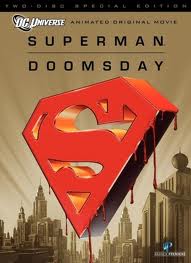 Superman/Doomsday (2007). The first film in the series was based on the early 90s Death of Superman storyline from the comic books, although it is a very trimmed-down version. In this version, Metropolis is attacked by a rampaging beast that comes to be known as Doomsday, a mindless killing machine that threatens to destroy his city. Superman faces down the beast, seemingly at the cost of his own life, but both friend and foe alike are unwilling to accept that his death is that simple. The film wasn’t bad — Adam Baldwin made for a good Superman and James Marsters was a great Lex Luthor. Anne Heche’s Lois Lane was weak, though, and I think they trimmed a bit too much to allow the story to fit in the extremely abbreviated running time of the animated series. Still, this was the DC Animated Universe’s first shot, and the series got better very quickly.
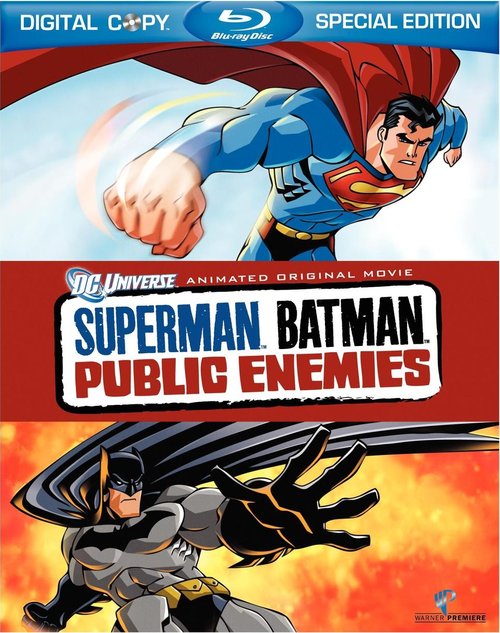 Superman/Batman: Public Enemies (2009). This movie reunited the TV voices of Superman and Batman, Tim Daly and Kevin Conroy, for the first of two films based on a comic book series by Jeph Loeb. In Public Enemies Lex Luthor (also voiced by his TV actor, Clancy Brown), has been elected president of the United States, and uses that influence to draw together a group of heroes under the government payroll. Luthor uses the threat of an impending strike of a massive meteor of Kryptonite to turn the public against Superman and he and Batman go on the run, fighting their fellow heroes in an attempt to clear their names and reveal Luthor as the villain he is. This is a really great flick, one that plays not just with Superman, but with the larger DC Universe, with lots of heroes and villains that casual fans may be introduced to for the first time.
 Superman/Batman: Apocalypse (2010). The sequel to Public Enemies again reunites Daly and Conroy. The shower of Kryptonite meteors in the first movie brought with it a large chunk with some mysterious technology inside. Batman investigates the chunk to discover a girl in suspended animation — Kara Zor-El (Summer Glau), daughter of Superman’s uncle, and the first blood family he has seen since coming to Earth as an infant. The heroes take Kara to Wonder Woman (Susan Eisenberg) to teach her how to use her powers and help her adapt to life on Earth, but she soon becomes embroiled in a battle between the heroes and the powerful villain Darkseid (Andre Braugher). I rather like this movie even more than Public Enemies, adding Supergirl to the mix and bringing in the most dangerous foe Superman has ever faced.
 All-Star Superman (2011). Based on a graphic novel by Grant Morrison and Frank Quitely, in All-Star, Superman (James Denton) receives a fatal overdose of solar radiation while thwarting one of Lex Luthor’s (Anthony LaPaglia) schemes. The radiation is killing him slowly, and giving him additional powers in the process. With his time limited, Superman embarks on a quest to make permanent, lasting changes to the world, leaving it better before his death. This film is based on one of the greatest Superman comics of all time and, sadly, came out just days after the death of its screenwriter, Justice League Unlimited showrunner Dwayne McDuffie. If you can only watch one of the movies on this list, or if you don’t understand what makes Superman a brilliant and compelling character, this is the movie to watch.
 Superman Vs. the Elite (2012). George Newburn, who voiced Superman on the Justice League cartoons, returns to the character in this film based on a comic book by Joe Kelly. Manchester Black (Robin Atkin Downes) is a new superhero, one whose team the Elite initially appears like a welcome addition in the war on crime. Superman soon realizes, however, that Manchester and the Elite have much more violent and permanent solutions to villainy than he is comfortable with. As the people of Earth start to gravitate towards the Elite and question whether Superman is outdated, the man of steel is forced to confront questions of his own relevance. Like All-Star, this is a brilliant story made into a very good movie. This film is the answer to everyone who ever says that Superman is “too old fashioned,” “too good,” or just plain “boring.” This is a story that explains the importance of Superman, and why he has to be who he is… because the alternative is chilling.
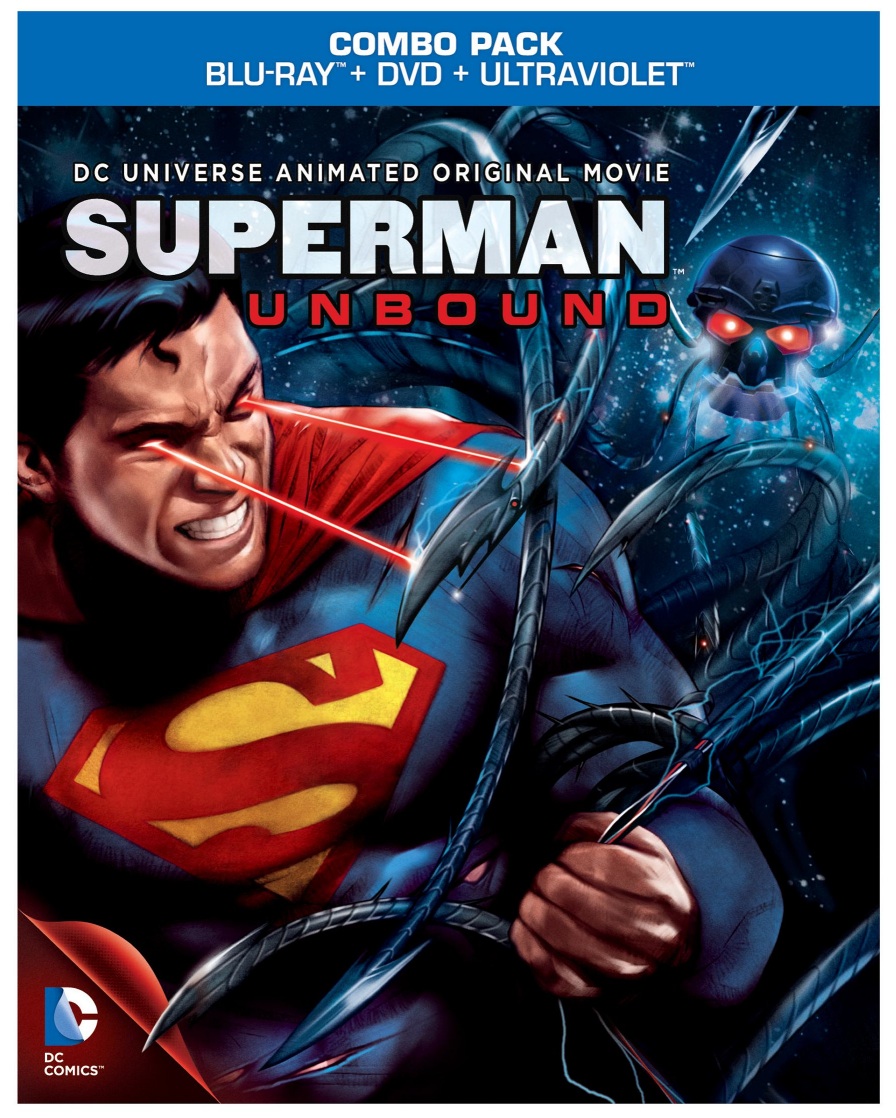 Superman Unbound (2013). The most recent film on this list came out just last month. based on a graphic novel by Geoff Johns and Gary Frank, Matt Bomer takes on the role of Superman in this film. Brainiac, a highly-intelligent alien that menaced Krypton in the past, has come to Earth, terrifying Supergirl (Molly Quinn), who remembers the villain from Krypton. Brainiac travels through the universe, miniaturizing and stealing cities from different planets before destroying them, and Metropolis is his next target. The graphic novel this movie is based on is great, the movie is just okay. Like some of the earlier films on the list, it suffers a little from having to strip away a bit too much from the original story to fit in the short animated running time. For the Superman fan, though, it’s still worth watching.
What I Watched In… May 2013
In the interest of full disclosure (and to generate a little content here) I thought I’d present a regular tally of what movies I managed to see in the previous month. Some of them I’ve written about, most of them I haven’t. This list includes movies I saw for the first time, movies I’ve seen a thousand times, movies I saw in the theater, movies I watched at home, direct-to-DVD, made-for-TV and anything else that qualifies as a movie. Feel free to discuss or ask about any of them!
1. Wristcutters: A Love Story (2006), B
2. The Adventures of Buckaroo Banzai Across the Eighth Dimension (1984), B+
3. Iron Man 3 (2013), B-
4. The Producers (1968), A
5. City Slickers (1991), A
6. Space Jam (1996), C+
7. Mars Attacks! (1996), B
8. Psycho II (1983), D+; Rifftrax Riff, A-
9. Tangled (2010), B+
10. The Grey (2011), B+
11. The Great Gatsby (1974), A-
12. Sound of My Voice (2011), C
13. The Wizard (1989), C-
14. Future Force (1989), F; RiffTrax Riff, B+
15. The Hound of the Baskervilles (1939), A-
16. Star Trek Into Darkness (2013), A-
17. Up (2009), A+
18. LEGO Batman: The Movie-DC Superheroes Unite (2013), B
19. Sherlock Holmes and the Deadly Necklace (1962), D
20. The Private Life of Sherlock Holmes (1970), A-
21. Defending Your Life (1991), B+
22. Doctor Who and the Daleks (1965), D; RiffTrax Riff, A
23. The Case of the Whitechapel Vampire (2002), C
24. Sherlock Holmes (2009), A-
25. A Matter of Life and Death (1946), A+
26. The Adventure of Sherlock Holmes’ Smarter Brother (1975), B-
27. The Great Mouse Detective (1986), B+
28. S&Man (2006), C
29. Monty Python’s The Meaning of Life (1983), C+
Gut Reactions: Star Trek Into Darkness (2013)
 Director: J.J. Abrams
Writer: Roberto Orci, Alex Kurtzman & Damon Lindeloff
Cast: Chris Pine, Zachary Quinto, Zoe Saldana, Karl Urban, Simon Pegg, John Cho, Benedict Cumberbatch, Anton Yelchin, Bruce Greenwood, Peter Weller, Alice Eve, Noel Clarke
Plot: Starfleet is rocked by a terrorist attack orchestrated by the mysterious John Harrison (Benedict Cumberbatch). As he escapes across the galaxy, James T. Kirk (Chris Pine) and the crew of the USS Enterprise begin a desperate chase to bring him to justice. And to say anything else would be majorly spoilery, so let’s pretend I’ve recapped the entire movie for a moment and wait until after you see the spoiler line below before I say anything else too specific, shall we?
Thoughts: When J.J. Abrams rebooted the Star Trek franchise in 2009, fans of previous incarnations seemed to fall squarely into one of two camps. On one hand, there were those die-hards who felt like the liberties and changes taken with nearly 50 years of canon went too far to be acceptable and couldn’t find enjoyment in the movie. On the other, there were those who were willing to accept the Abrams Trek as a different continuity, inspired by but not beholden to the original, and were therefore more forgiving of the changes. Although I certainly understand the feelings of those in the first camp, I steadfastly belong to the second. I really enjoyed the 2009 Star Trek, and although I tried to keep my expectations reasonable for the follow-up film Star Trek Into Darkness, upon finally seeing it, I think I liked this one even more.
Some general spoiler-free thoughts before I get into the real hardcore nerd analysis that will scare half of you away. This is most definitely not your classic Star Trek. Not only is the tone very different – more high-octane, rapid-fire action, and while the philosophy is still there it’s much more subtle and hidden under flashy set pieces and a hell of a lot of lens flares – but there are certain things in the film that just wouldn’t work based on the physics of the original series. (For example, it was well established that starships weren’t designed to operate in a planetary atmosphere, let alone go through some of the things we saw in this movie.) I had to make a conscious choice to let go of that sort of thing, because if you can’t, there’s really no chance of enjoying the new series. Having made that choice, though, I’m glad I did, because the spirit of this new Trek is incredibly exciting to me.
Abrams’s version of Trek places its emphasis on action. There are some brilliant sequences here, both in the CGI-heavy outer space arena and in more practical moments of hand-to-hand combat, all of which look good. The cast, once again, is great. Karl Urban has encapsulated DeForest Kelley’s Leonard McCoy in a way that would have been impossible to believe not long ago. Simon Pegg’s Scotty very much has the soul of Jimmy Doohan’s, and brings in some much-needed comic relief during the more serious moments of the film. Chris Pine and Zachary Quinto as Kirk and Spock, of course, are still the stars of the series. Each of them has a character that’s more of a tangent to the original than some of the other cast members – you can see the blueprints of William Shatner and Leonard Nimoy in their performances, but they’ve been dressed differently. More about that in the spoiler section, though.
Benedict Cumberbatch, the man with the most British name in human history, steps into the villain’s role in this film and really steals the show. There’s a taste of his character from Sherlock here, in that he’s the smartest man in the room and he knows it, but replace Sherlock’s inability to empathize with an innate savagery and deep passion for his people (and hatred of virtually anyone else), and you’ve got someone who is scary as hell. Cumberbatch is not only a lot of fun to watch on screen, but terribly menacing at what he does.
Finally, a word for Michael Giacchino, who in a relatively short time has very much earned a place next to the likes of John Williams and Danny Elfman as one of the great movie composers. Bringing back both the classic Trek theme and the new theme he composed for the 2009 movie, Giacchino’s score fits the action and energy of this movie perfectly. He and Abrams have worked together several times now, on Super 8 and the Mission: Impossible films, plus on the TV show Lost. Add to that an impressive body of work for Pixar, and it has become very easy to put together a playlist of the greatest Giacchino scores ever.
Okay, I’m pretty much itching to get into the spoiler stuff, so those of you who haven’t seen the movie yet may want to head out. In closing, I really liked this movie, but I think a person’s enjoyment of it will depend largely on how they feel about Abrams’s new Trek timeline in general. If you liked the 2009 movie, this one will knock your socks off. If you didn’t, there’s nothing here that will change your mind.
And that’s that. Spoilers begin after the line:
_____________________________________________________________________________________
In Into Darkness, we see an Enterprise crew that has been together for a little while now, but Chris Pine’s Jim Kirk has yet to let go of the wild, rebellious streak that defines him. While there’s something to be said for the character’s daring, he doesn’t know where the line is and he doesn’t understand what he did wrong when he crosses it. In this film, we see a real journey for the character. He sees firsthand what happens when somebody goes too far, and the horrific consequences of someone who isn’t willing to accept responsibility for his actions. Peter Weller’s Admiral Marcus is a nice counterpoint to Kirk in this – although he’s one of the ones who comes down hard on Kirk for breaking the rules early, at the end he becomes a reflection of what might be if an officer is left unchecked. As a result, we’re left with a slightly changed Kirk at the end – not one who will be unwilling to flout the rules for what he feels is right, but one who will be more aware of the consequences of his actions. Pine’s Kirk isn’t Shatner’s Kirk, but the man he is at the beginning of this movie wants to hide breaking the rules, while at the end I believe he will become the man who does the right thing but is willing to take the heat for it (as Shatner’s Kirk did in the original Star Trek III and Star Trek IV).
On the other hand, Zachary Quinto’s Spock has taken a rather wide curve away from Leonard Nimoy’s version, and I somewhat think that may be a direct response to Nimoy’s presence. Although Spock’s struggle between his Vulcan logic and human emotion was always at the forefront of his character, this movie really does show us a greater depth of struggle than Nimoy traditionally had. Quinto’s Nimoy has maintained a romantic relationship with Uhura (Zoe Saldana) for some time now – Nimoy’s Spock never had any such connection – and he makes it explicitly clear during the film that he fights to suppress his emotions. He also fails, and fails big, when Kirk dies saving the Enterprise, blowing up with rage and tearing across San Francisco to take down Cumberbatch’s Khan.
Ah yes, Khan. Let’s talk about Khan, shall we? This is one of those times where I sort of bemoan what the internet has become. While it’s a great communication tool, it can sometimes ruin surprises. From the minute a sequel to the 2009 movie was announced, people started asking “Will it have Khan?” When Benedict Cumberbatch was announced as playing the villain, people asked, “Does he play Khan?” When they said his character’s name was “John Harrison,” people asked, “But he’s really Khan, right?” I can’t blame Abrams and the rest of the cast and crew for lying – there had to be some attempt at surprise – but they were fighting a losing battle from the beginning.
Like the rest of the cast, Cumberbatch’s Khan isn’t quite the same man as the original series Khan. His accent isn’t as ridiculous and he never takes his shirt off to reveal a plastic chest, for example. Also, he’s not as upfront about his intentions as Khan Classic. He’s sneakier, more manipulative, toying with the lives of others to orchestrate events in the direction he wants them to go. In case the dedication at the end of the film doesn’t make it clear enough, this is a Post 9-11 Khan, and in that way, he’s scary. He’s also a lot of fun to watch, tearing through a squad of Klingons almost singlehandedly, and helping Kirk in their freefall through space between the Enterprise and Marcus’s warship.
This film uses Cumberbatch very well, but he’s not nearly the only callback to the original series’ two Khan stories. Technically, this is more analogous to the “Space Seed” episode of the TV show (certainly in terms of timeline), but Abrams and the writers never passed up an opportunity to remind people of Star Trek II: The Wrath of Khan. An early scene has Quinto’s Spock reminding us that “the needs of the many outweigh the needs of the few,” for instance, but from there the film pulls a nice switcheroo on us. Instead of Kirk watching helplessly as Spock dies to save the Enterprise, the reverse happens, with Pine’s Kirk dying to save the ship. The death, like everything else in this movie, reminds us of the original but kicks it up with more action and a heavier dose of special effects, but the result is the same: two men on opposite sides of a pane of glass, one of them dying, one of them grieving, both of them admitting to a friendship that stupid male ego or a suppression of emotion has left unspoken until now. Then we get one more callback – Spock borrowing Shatner’s bloodcurdling howl of “KHAAAAAAAAAN!” just before the final action sequence.
There was one more callback worth mentioning: Alice Eve as Carol Marcus. Sure, they tried to pretend she was somebody else when she first showed up (Carol “Wallace,” her mother’s maiden name), but like Cumberbatch as Khan there could never really be any doubt. This is the new timeline equivalent to the mother of Kirk’s son. Unfortunately, she’s one of the few things in the film that’s kind of wasted. She’s there to look hot in short skirts and underwear (which I’m male enough to admit she is very successful at doing), but she adds very little to the story. It’s likely that Abrams is setting her up to play a larger role in the series down the line, which I’m fine with. Considering how he found great moments for virtually every other player – including Scotty, Sulu and Chekov –it’s kind of a shame they couldn’t do the same for her.
The callbacks, by the way, may seem a little silly to some. They may seem a little over the top. They may seem like the filmmakers are winking at the camera. There’s a reason for that: they are. But they’re over the top and winking in a way that’s really acceptable to me. I think they work, and not just because I’m a big nerd and love that sort of thing (although I am). There’s an actual, honest, in-universe excuse for it if you look back at the first movie. Nimoy, as “Spock Prime” (as they’re calling him now) says that the altered timeline is trying to course-correct a little bit. Although there have been irreparable changes to the timestream, like the destruction of Vulcan, the universe itself is trying to adhere to the old timelime as much as it can. That’s the reason the same characters that assembled as the Enterprise crew in the old timeline all happened to wind up on the ship together in the new one as well. If you extrapolate that, it’s easy to explain the renewed conflict with Khan, Kirk’s introduction to Carol, and even Kirk’s death. (Since Spock wasn’t in place to die in this timeline, the universe found a substitute. And as Kirk, like Spock, was going to come back from the dead anyway, that was okay.) It may be more metaphysical than science fictional, but I like the idea of these characters being tied together by fate, bound by destiny. They are, to borrow a word from Stephen King, Ka-Tet, and they will be Ka-Tet in any timeline in which they happen to exist. These people are together because they’re supposed to be. And there’s something a little inspiring and very comforting about that.
So anyway, yeah, I really liked this movie. I can’t wait to see it again. And although I know Abrams might be a little busy soon with that “other” Star franchise, I really hope they find a way to bring him back to the helm of the Enterprise at least one more time.
The first Reel to Reel study, Mutants, Monsters and Madmen, is now available as a $2.99 eBook in the Amazon Kindle store and Smashwords.com bookstore. And you can find links to all of my novels, collections, and short stories, in their assorted print, eBook and audio forms, at the Now Available page!
What I Watched In… April 2013
In the interest of full disclosure (and to generate a little content here) I thought I’d present a regular tally of what movies I managed to see in the previous month. Some of them I’ve written about, most of them I haven’t. This list includes movies I saw for the first time, movies I’ve seen a thousand times, movies I saw in the theater, movies I watched at home, direct-to-DVD, made-for-TV and anything else that qualifies as a movie. Feel free to discuss or ask about any of them!
- The Neverending Story (1984), B+
- John Dies at the End (2012), B+
- Hotel Transylvania (2012), C
- Seeking a Friend For the End of the World (2012), B+
- Ruby Sparks (2012), A
- Evil Dead (2013), A-
- Hitchcock (2012), B
- Plan 9 From Outer Space (1958), F; RiffTrax Riff, B
- Idiocracy (2006), B+
- Slumdog Millionaire (2008), A
- History of the World Part I (1981), A
- Buck Privates (1941), A-
- Abbott and Costello Meet Dr. Jekyll and Mr. Hyde (1953), B-
- Kill Bill Vol. 1 (2003), B+
- Kill Bill Vol. 2 (2004), A-
- Pumaman (1980), D; MST3K Riff, B+
- Time Chasers (1994), D; MST3K Riff, B
- Merlin’s Shop of Mystical Wonders (1996), D-; MST3K Riff, B
- The Wizard of Oz (1925), D
- The Apple (1980), F; RiffTrax Riff, B
- Carnage (2011), B+
- Iron Man: Rise of Technovore (2013), C+
- Oblivion (2013), C+
- Midnight in Paris (2011), A-
- Who Framed Roger Rabbit? (1988), A
- Horse Feathers (1932), B
- Journey Back to Oz (1974), C-
- The Wiz (1978), B+
- Return to Oz (1985), B+
- Kingdom of the Spiders (1977), D; RiffTrax Riff, A-
- Condorman (1981), C+
- Reservoir Dogs (1992), B+
- Pulp Fiction (1995), A-
- The Galaxy Invader (1985), F; RiffTrax Riff, B
- The Matrix (1999), A-
- The Matrix Reloaded (2003), B
- The Matrix Revolutions (2003), B-
- Shame (2011), D+
- Tin Man (2007 Miniseries), B
- The Looney, Looney, Looney Bugs Bunny Movie (1981), B
- Tiny Toon Adventures: How I Spent My Vacation (1992), B-
- The Bugs Bunny/Road Runner Movie (1979), B
2 in 1 Showcase Episode 287: Summer Movie Preview 2013
 Twice a year, on the Showcase podcast, I sit back with whichever of my co-hosts are available and talk about the new movies coming out in the next several months. It’s time for this year’s Showcase Summer Movie Preview!
What I Watched In… March 2013
In the interest of full disclosure (and to generate a little content here) I thought I’d present a regular tally of what movies I managed to see in the previous month. Some of them I’ve written about, most of them I haven’t. This list includes movies I saw for the first time, movies I’ve seen a thousand times, movies I saw in the theater, movies I watched at home, direct-to-DVD, made-for-TV and anything else that qualifies as a movie. Feel free to discuss or ask about any of them!
1. Dreamer of Oz (1990), B
2. Lion of Oz (2000), C
3. The Boy in the Plastic Bubble (1976), D; Rifftrax, B
4. Wreck-It Ralph (2012), A
5. The Babysitters (2007), C
6. Batman (1943), C+
7. The Wonderful Galaxy of Oz (1990), D
8. Master of the Rings: The Unauthorized Story Behind J.R.R. Tolkien’s ‘Lord of the Rings’ (2001), C+
9. Tom and Jerry and the Wizard of Oz (2011), B-
10. Willy Wonka and the Chocolate Factory (1971), A
11. Pure Imagination: The Story of ‘Willy Wonka and the Chocolate Factory’ (2001), B
12. Oz the Great and Powerful (2013), B+
13. Toy Story (1995), A
14. Batman: The Movie (1966), C
15. Batman (1989), B+
16. Star Wars Episode V: The Empire Strikes Back (1980), A+
17. Frankenstein Island (1981), D; RiffTrax, B-
18. The Brute Man (1946), D-; MST3K Riff, B
19. Dick Tracy (1990), B
20. Future War (1997), F, MST3K Riff, B
21. Abbott and Costello Meet Captain Kidd (1952), C
22. The Invincible Iron Man (2007), C
23. Batman: Mask of the Phantasm (1993), A
24. When a Stranger Calls Back (1993), F; RiffTrax Riff, B+
25. The Dark Knight (2008), A
26. Africa Screams (1949), B-
27. Animal Crackers (1930), A-
28. Jack and the Beanstalk (1952), B
29. The House on Haunted Hill (1959), B-; RiffTrax Riff, B+
30. The Easter Bunny is Comin’ to Town (1977), B
31. Sophia the First: Once Upon a Princess (2012), B
32. It’s the Easter Beagle, Charlie Brown! (1974), B+
33. It’s Arbor Day, Charlie Brown (1976), B-
34. Ben-Hur (1959), A+
35. The Ten Commandments (1956), A+
36. Jack the Giant Killer (1962), C; Rifftrax Riff, B
 Reel to Reel