(Reblogged from All New Showcase…)
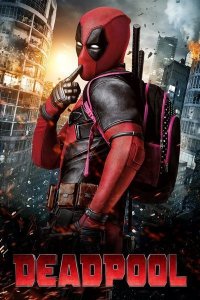 In case you somehow missed it, the Deadpool movie was released last weekend and immediately began shattering box office records: best February opening of all time, best opening ever for an R-rated movie, best opening ever for a first-time director (that’d be Tim Miller), and it came in third in the swimsuit competition. And of course, as always, the movie industry began to thoughtfully and meticulously scrutinize the film’s success to determine what qualities helped it reap the bounty, then implement carefully-considered strategies to create new content that may also be prosperous for the studios.
Ha! I’m kidding, of course. No, the movie studios immediately concluded that the American public wants superhero movies to be full of F-words and Ryan Reynolds’s ass. So today, in what could easily be the first in an infinite series of columns, I would like to discuss how 20th Century Fox – and probably every other major studio – has completely missed the point of what made Deadpool kick butt.
Let’s start with what is probably the least significant part of its success: the timing. Like I said, Deadpool’s $135 million broke the record for the highest February opening of all time. But look at the competition: Zoolander 2, the sequel nobody asked for, and How to Be Single, a movie built around Rebel Wilson playing the only character she ever plays, and who wasn’t even entertaining the first time she did it. That’s not to say Deadpool wasn’t a good movie – in fact, that’s my whole point. January and February, traditionally, have been cinematic graveyards where studios try to bury movies they don’t think anybody will want to see in a season where they don’t think people want to go to the movies. I’ve long believed this is a self-fulfilling prophecy. It’s not that people don’t want to go to the movies in February, it’s that the studios don’t give them movies worth watching. Deadpool demonstrates that if you make a movie people want to see, they’ll come out to see it no matter when it is released.
 And that brings us to the second question: why was Deadpool a movie people wanted to see? The blood? We have the news for that. The nudity? We have the Internet. The profanity? We have public high schools. All of these are easy answers, and all of these are wrong. And yet, when Fox immediately followed the box office number announcement by saying the third Wolverine movie will be rated R, they’re essentially saying that’s the reason that Deadpool worked. This is incredibly small-minded.
(To be fair, making an R-rated Wolverine was at least under discussion as far back as the first solo movie starring the character. It’s not a new idea. But man, they made sure to let everybody know that after the weekend box office closed, didn’t they?)
The reason those elements worked in Deadpool is because all of the hyper-violence and irreverent dialogue helped to create a tone that is faithful to the character. We didn’t want to see violence, necessarily, we just wanted to see the Deadpool we love. In fact, I’m going to be a little controversial here: I don’t even think Deadpool needed to be an R-rated movie. I don’t mind that it was, I very much enjoyed it, but despite what a lot of people seem to think the majority of his comic book appearances have not been full of F-bombs and boobs. (Sure, the violence is there, but the MPAA is way less concerned with violence than sex or language. Chop off all the limbs you want, but God forbid you show a nipple.)
What are they going to do in an R-rated Wolverine movie that will make it better than the first two? Curse more? The word he’s most associated with in the comics is “bub.” Bury him in naked women? Wolverine’s romantic relationships are classically tortured. Sure the fighting may be more explicit, but does anybody really think X-Men Origins: Wolverine would have been a good movie if only they showed more blood when Hugh Jackman cut off Ryan Reynolds’s head?
 The best superhero movies (and in fact, most of the best adaptations of any kind) are those that maintain the spirit and feel of the source material: Richard Donner’s Superman, the first two Sam Raimi Spider-Man movies, and most of the Marvel Cinematic Universe work for precisely this reason. People who have read about a character for years – decades even – don’t want to see a version of a character whipped up by committee, they want to see the version they love. (This, of course, will cause debate when a character has been around long enough that there are multiple valid interpretations, but that’s a discussion for another time.)
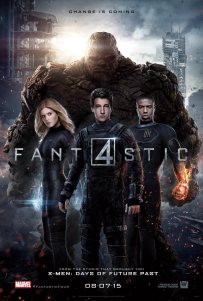
Compare that to the most epic failure of recent years, the 2015 Fantastic Four. The movie takes a comic whose best stories are about a family of explorers and turns them into a militarized unit who barely share any screen time. Director Josh Trank maintains that studio meddling sank his movie. I tend to think that when the director reportedly tells his actors not to read the comics the movie is based on, there isn’t much more a studio can do to screw it up.
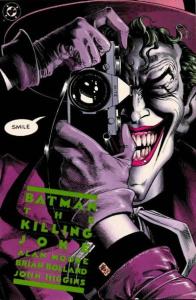 Let’s not forget that tone is dependent on the individual story as well. There was a lot of buzz last year when the producers of the upcoming Batman: The Killing Joke animated movie announced they were given permission by the studio to go for an R-rated film. It doesn’t have to be, but this is the story that forever entrenched the Joker as a true icon of evil. Gone was the bank robbing clown of the Silver Age – now he was a horrific, unhinged psychopath acting out on a twisted fixation with Batman by torturing his friends. It would be hard to tell that story faithfully and still maintain a PG-13. But that doesn’t mean a Ben Affleck Batman movie or an animated version of the first appearance of Bat-Mite should suddenly be rated R.
All of this is to say that, yes, you probably could make a good R-rated Wolverine movie, but it won’t be good because it’s rated R. The other elements need to be there too.
But what about all of the people who enjoyed Deadpool but don’t read comics? They don’t know if the depiction on screen is faithful to the comic book, and most of them wouldn’t care if they did. So why did they come out in force to see this movie? For one thing, of course, the marketing campaign was as brilliant as the marketing for John Carter was abysmal, but good marketing will only get you so far. People also liked the movie. Why? Obviously, the answer for each individual person will differ, but if I were to venture a guess for the majority, I would say it’s because it’s something different. Look, I would be perfectly happy all day long if they just took the scripts of my favorite comics and put them on screen in front of me, but I also know I’m a 10th-level nerd and what I want probably doesn’t apply to the public at large.
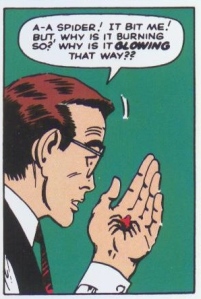 What does apply, however, is that people get tired of seeing the same thing. Origin stories, for example. Not just comic fans, but viewers in general are done with origin stories. Nobody needs to see Krypton blow up, Thomas and Martha Wayne gunned down, or Peter Parker bitten by a spider ever again. We get it.
Even with less iconic characters, origin stories are largely unnecessary at this point. If a character in a movie is a cop, a firefighter, or a baseball player, people don’t demand we spend half the movie explaining how we get to that point before the real plot begins. Granted, superheroes follow a less conventional path than those other occupations, but at this point the public is familiar enough with the tropes that all but the most convoluted of origins can usually be dealt with in a quick flashback or a few lines of expository dialogue.
“But Blake,” you say, “Deadpool was an origin movie. Doesn’t that contradict your point?” Man, you can be kind of a jerk sometimes. But no, it doesn’t contradict my point. I said that origins are unnecessary, not that they can’t be done well. Audiences – myself included – will accept even the most tired premise if the execution is entertaining and original enough.
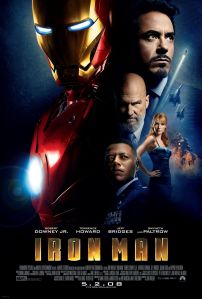 And that brings me to the most important part of Deadpool’s success. It didn’t matter that it was an origin, because it still felt different from any other superhero movie of the last 17 years. (I consider the modern era of superhero movie to have begun with 1999’s Blade. You know, that other R-rated Marvel movie everybody seems to have forgotten about.) Look at the major successes since then. After the first few years, when superheroes were still a novelty, the biggest movies all brought something new to the table. Iron Man was cocky, witty, and did away with that secret identity jazz right away. It was unique at the time. What’s more, the after-credits stinger (another novelty in 2008) opened the doors for the then-revolutionary Marvel Cinematic Universe. That eventually led to Avengers, another mega-hit, because we had never before seen six superheroes from four different movies come together as a team. The best movies of the eight years since Iron Man all bring something different to the superhero. Guardians of the Galaxy was a space opera. Captain America: The Winter Soldier was a political thriller. The Dark Knight was an epic crime drama. And none of them – even the ones that were sequels to other movies – felt like anything else we had ever seen.
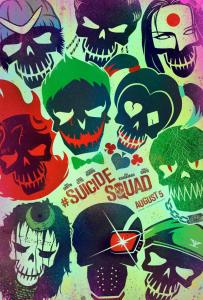 In an odd way, this actually makes Suicide Squad the most interesting superhero movie for the rest of 2016. I’m the most die-hard Superman fan you’ll find, and I’ve been waiting to see him on screen with Batman and Wonder Woman since I learned how to read. I couldn’t be more excited for that movie. But Suicide Squad is the first time, as far as I can remember, that a superhero movie has actually starred the villains. (You could make an argument for Magneto and Mystique in the most recent X-Men movies, but the moral ambiguity in those films is so thick that nobody could hear you anyway.) We’ve seen villain-starring comics plenty of times, but it’s never really happened on screen. That means the success or failure of this movie will be one for the books. The trailer was very well-received and people seem to be excited about it.
Which means the weekend after it comes out, expect Fox to announce a new X-Factor movie, starring the classic line-up of Sabertooth, Omega Red, Lady Deathstrike, Toad, and Galactus. Because they just don’t seem to get it.
 Note: If you’re new to Reel to Reel, I’m more about dissecting and commenting on film than writing a straightforward review. As such, please be warned, the following is full of spoilers.


 2016 will be known, among other things, as the year death became a serial killer targeting celebrities. The most recent, as least at the time that I’m writing this, was one of the ones that hit me hardest: Gene Wilder. Although his body of work was relatively small, the movies he made in his lifetime were some of my favorites: Young Frankenstein, The Producers, The Little Prince… and of course, the two films that AMC Theaters showcased this weekend, Willy Wonka and the Chocolate Factory and Blazing Saddles. When my wife, Erin, told me that they were going to play these films, I knew I’d married the right woman. She was as anxious to go as I was, even though unlike me, she’s not a huge fan of Blazing Saddles, which just goes to prove that marriage is about loving your partner even when they’re wrong.
 We filed in to see Willy Wonka at the 5 p.m. show. The theater was surprisingly full, and I would guess about 75 percent of the audience were parents and their children. You expect this with the latest Disney release, or whatever Dreamworks movie is currently featuring a rubbery character using the same facial expression as every other one, but it was a little surprising to see so many kids for Willy Wonka. Obviously it’s a movie that’s tailor-made for children, but it’s also 45 years old. I know from experience how difficult it can be to get kids to watch an older movie.
 The movie ended and we filed out, allowed the theater staff to clean, and walked back in for Blazing Saddles. The families were gone now, replaced by adult fans. Blazing Saddles, if you somehow have never seen it, is a brilliant motion picture. Mel Brooks takes Wilder and Cleavon Little through an hour and a half of systematically dismantling racism and prejudice, while simultaneously cranking out one golden comedic moment after another. I’ve probably seen this movie ten times, but the jokes still land perfectly. And it is a testament to the brilliance of Brooks, Little, and Wilder that I still loved every frame of this movie despite the fact that the theater in which we saw it was littered with complete assholes.






 Reel to Reel