Author Archives: blakemp
Merida’s Makeover
 Over the last few days, I’ve heard a little outrage on the part of a few Disney fans over the slight makeover that’s taking place for Princess Merida, the heroine of Pixar’s film Brave. You see, Disney’s princesses are a huge franchise for them, and when they put out a film featuring a new princess, they tend to follow up on it with a big ceremony at one of the theme parks for her “coronation,” officially making her part of the family. Merida joined Snow White, Cinderella, Sleeping Beauty, Belle, Ariel, Pocahontas, Mulan, Jasmine, Tiana, and Rapunzel earlier today.
The furor is not over her joining the “Official” Disney Princesses, making her the first Pixar character to do so. The problem is with the redesign the character is sporting for her appearance on Princess-branded merchandise, which (let’s be honest) is the point of this whole endeavor anyway. And while I agree that there’s a problem here, I think this is one of those cases where people are letting their anger lead them to statements of such hyperbole that they’re hurting their cause overall.
I hear people complaining that they’re trying to sexualize Merida. The phrase “slutting her up” has been tossed about rather liberally. And frankly, guys, I don’t really see it. The character in the “after” picture may be more traditionally cartoon-beautiful than the “before,” but that’s a far cry from turning her into a sex object. I read American superhero comic books all the time, I know what I’m talking about here. And she’s not even as tarted up as some of her sister princesses, if you want to get technical. Hell, Ariel just goes around in a clamshell bikini all the time. Only the top half of the bikini, in fact. Shouting things like this, starting a Change.org petition over it… it kinda makes a person seem a little like a zealot, and nobody listens to zealots, not even when they have a legitimate point in there somewhere past the noise.
No, the problem I see isn’t so much one of sex as of softening the character. Merida, for those of you who didn’t see Brave, was a girl whose mother tried to force her into an arranged marriage. Merida proceeded to thwart her mother’s plan by proving herself more than a match for the three princes who tried to win her hand, slinging around a bow and arrow in a method that would make Hawkeye of the Avengers take notes. This is all in the first few minutes of the film, by the way, and the bulk of the story is a sweet tale about a mother and daughter growing to understand and respect one another, plus magic bears. But the point of Merida is that she is a character who is not defined by anyone else — not her parents, not her prince. She didn’t need to be rescued like Snow White or Sleeping Beauty, she’s her own woman and prefers it that way. Hell, she’s the only one of the princesses who’s still single at the end of her movie, and she’s perfectly happy that way.
The “new” Merida wears a slightly fancier version of her iconic dress (a dress she hated in the movie, incidentally, but I’m willing to let that slide for the sake of branding and marketing, because that’s what drives all of this), with a slimmer waist and hair that isn’t quite as wild as it was originally. Most bothersome to me, though, are the small changes to the face — it looks like she’s been covered in eyeshadow and lipstick, something the movie Merida most certainly would reject.
A minor reworking of the character is inevitable, if for no other reason than that she has to be on-model with the other princesses. The same thing happened to the previous CGI princess, Rapunzel, but her changes were less dramatic. Seeing a Merida like this, made up and missing her trademark bow and arrow, takes away her uniqueness. The character on the right fits in fine with the other Disney princesses, but that’s sort of the problem. She fits in. She no longer stands out, and that’s what made her such a fun character in the first place.
This isn’t a life-changing, cataclysmic change. The princesses have very little to do story-wise anyway — after their films they seem to exist mostly to serve as models for dolls and to put their pictures on everything from pajamas to notebooks. (My niece, Maggie, has a child-size fold-out sofa stamped with the earlier princesses. She sits on it when she watches Brave.) But want to see Merida with her bow, taking aim, and standing on her own. That’s what made her different, that’s what made her worth remembering. It’s what sets her apart not only from the iconic princesses, but also from forgotten Disney princesses like The Black Cauldron‘s Eilonwy or Atlantis: The Lost Empire’s Kida. I like to think that Merida earned her spot on that platform by being who she is. Why take that away from her?
Let’s just hope we don’t have this conversation all over again when Disney decides to drop Princess Leia in the group.
Last chance to get ASSOCIATED PRESSURE for free!
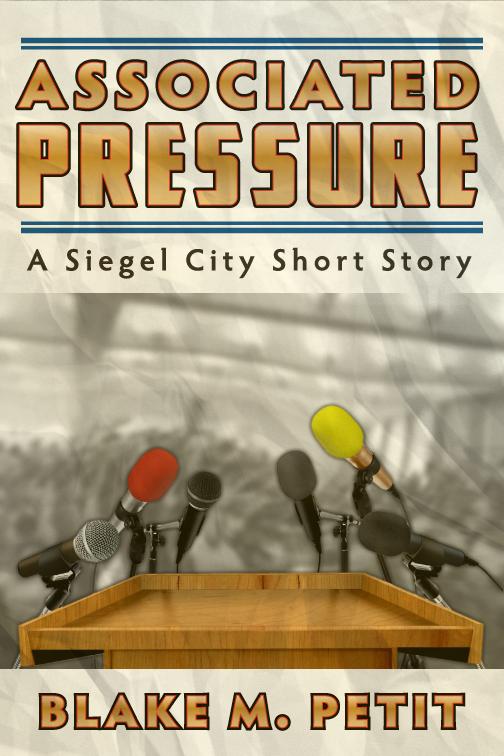 Last chance to get ASSOCIATED PRESSURE for free on your Amazon Kindle! This new Siegel City story, set in the world of OTHER PEOPLE’S HEROES, is a great introduction to a new cast of characters. The eBook edition also contains a special bonus — the first chapter of the upcoming Siegel City novel THE PYRITE WAR. Tomorrow the price goes back to 99 cents, so grab it now!
Get my short story ASSOCIATED PRESSURE for free tomorrow!
Hey, guys — if you’ll permit me a rare post that has nothing to do with movies whatsoever, I’ve got a new short story that’s going to be available for free in the Amazon Kindle store for five days starting tomorrow, May 4. Click on the link for more details and please, if you’ve got a Kindle or any device with a Kindle App, download the book and help me boost my numbers. (And if you don’t have a Kindle App, find something you can download it on — iPhone, iPad, iPod Touch, Android, any Mac or PC computer, and the apps are all free too!)
Movies you (maybe) didn’t know came from comic books
In case you didn’t know, this coming Saturday is Free Comic Book Day, the annual celebration of comics where stores across North America give out special edition comics made just for the occasion. Many of the best stores have gone so far as to make this event a sort of mini-convention, with tables for writers, artists and media folk to sit, chat, sketch, and interact with the fans. In fact, I’ll be at BSI Comics in Metairie, Louisiana Saturday with my podcast and promoting my novels.
But this year, we’re stretching the celebration out. This year, the days before FCBD have been declared Comics Kick Ass Week, a time for everyone to spread the word and talk about how great comics are. Now, I do that all the time on my main blog and in my position as a columnist and podcaster for CXPulp.com, but I know the Reel to Reel blog reaches a slightly different audience. So I decided that here, to help get folks in the mood, I’d run down some movies or franchises you (probably) didn’t know were based on comic books. Then, check out the Comics Kick Ass Week Tumblr page to see how other bloggers and podcasters are celebrating.

 Road to Perdition (2002)
Based on the graphic novel Road to Perdition by Max Allan Collins and Richard Piers Rayner
This graphic novel, originally published by DC Comics’ now-defunct Paradox Press imprint, tells the story of Michael Sullivan Jr., a young man horrified when he discovers his father is a hitman for the mob. When his father’s boss, John Looney, finds out that Mike Jr. knows what his father does, he tries to have the family killed. Mike Sr. and Jr. both survive, and begin a road to revenge for the murder of the rest of their family.
Collins is a great novelist and comic book writer who does some of the best old-school crime drama being published today in either medium. He also takes great lengths to make his books as true to life as possible, including real historical figures and events whenever possible. The film, directed by American Beauty’s Sam Mendes, starred Tom Hanks as Mike Sr., Tyler Hoechlin as Mike Jr., Paul Newman as John Rooney (they changed his character’s name for the film) and Jude Law as another hitman sent out to take care of the Sullivan problem. I’ve always enjoyed this movie, even though it can be kind of difficult to accept a hardcore Tom Hanks, and the graphic novel has several sequels, both in comic book form (which tell additional stories about the Sullivans’ time on the road) and in prose form (which focus more on what happened to Mike Jr. when he grew up).

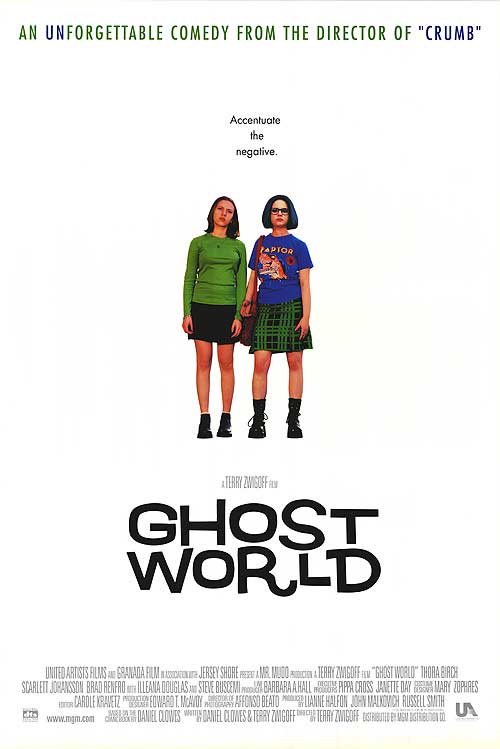 Ghost World (2001)
Based on the graphic novel Ghost World by Daniel Clowes
Ghost World focuses on a pair of teenage girls, Enid and Rebecca, the summer after their high school graduation. A practical joke on a lonely man named Seymour sends Enid into an unexpected friendship, a relationship neither of them seem to particularly understand.
Terry Zwigoff, who had previously directed a film about indie comic legend Robert Crumb, helmed this film, casting Thora Birch as Enid, Steve Buscemi as Seymour, and a pre-superstar status Scarlett Johansson as Rebecca. The graphic novel is far more episodic in nature than the film, showing assorted short stories featuring the girls without as much connectivity as Zwigoff gave them on screen. It’s an acceptable compromise, though, making the film feel unified in a way that wouldn’t have happened if he had made a strict adaptation. That sort of anthology feel works much better in book form than it does in a movie.
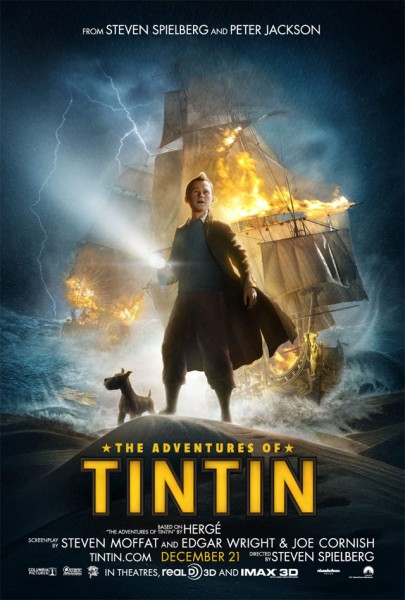
 The Adventures of Tintin (2011)
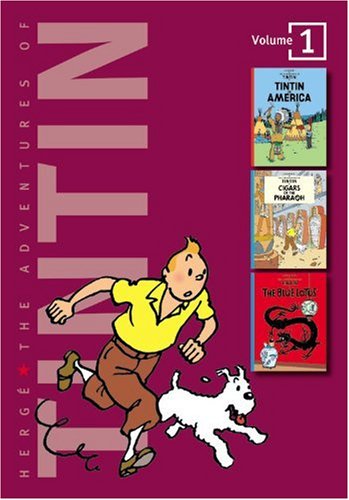
Based on the series The Adventures of Tintin by Hergé.
Steven Spielberg and Peter Jackson achieved a long-held dream in 2011 when they directed and produced the motion-capture Adventures of Tintin. Most American audiences were unfamiliar with the character, though, or if they knew him at all knew him only through the cult favorite 90s animated series. Most audiences didn’t know that Tintin is over 70 years old and, in fact, one of the most popular comic book series of all time… it’s just that most of its success has been overseas.
Created by Hergé in 1929, The Adventures of Tintin featured a young boy reporter going on incredible adventures all over the world. Hergé filled the comics with intensely-researched artifacts and cultures that Tintin and his large cast of friends would get involved with on a regular basis. The comic is criticized sometimes for some culturally insensitive portrayals of different races, depicting them as primitive in comparison to the White-As-The-Driven-Snow Tintin (who, like Hergé himself, is Belgian). Considering the time period Hergé was working in, though, it’s something I’m willing to give a partial pass. Tintin is one of those properties with a huge cultural imprint, inspiring later adventure characters like Indiana Jones, another Spielberg co-creation. It’s worth giving the original a look.

 Tales From the Crypt
Based on classic comics from Tales From the Crypt, The Crypt of Terror, The Vault of Horror and The Haunt of Fear by William Gaines, Al Feldstein and countless others.
Remember that awesome HBO horror series Tales From the Crypt? Every week it was like a new horror movie, presented by one of the greatest creepy movie hosts ever. This too, though, was based on a comic book series (in case you missed it somehow). In the early 50s, horror and crime comics were among the most popular titles being published in America, with the EC Comics line dominating sales. Then came a nationwide panic about the effect comic books were having on children, a congressional hearing, a psychology book of extremely questionable pedigree, and the comic publishers got together and wrote a content code that was so restrictive EC went almost completely out of business, eventually ceasing publication of all of their titles except a humor magazine you may have heard of, Mad.
Many of the episodes of the TV show were based on stories pulled straight from the comic books, and like the comics, they maintained their warped sense of justice. Criminals usually received a suitably karmic punishment, victims were rarely completely innocent in the first place, and through it all the Cryptkeeper would hit us with deliciously deadpan puns. The TV series was enormously popular, spawning three movies (not counting two earlier movies made before the HBO formula got it right) and an animated spin-off for kids, Tales From the Cryptkeeper. And that’s not even mentioning the huge stamp the property had on horror fiction in general over the last 50 years, influencing the likes of Stephen King and Sam Raimi and producing plenty of imitators, such as the Creepshow series.

 Ducktales
Based largely on Donald Duck and Uncle Scrooge comics by Carl Barks.
I know what you’re thinking. “Blake, you can’t tell me DuckTales was based on a comic book. The Disney Ducks were cartoon characters first!” Well, Mr. Smarty Pants, that’s true of Donald Duck and his three nephews, Huey, Dewey and Louie. But what about the rest of the cast of DuckTales? Scrooge McDuck? Crazy inventor Gyro Gearloose? Nefarious villains like Magica DeSpell, Flintheart Glomgold and the Beagle Boys? Just a few of the characters conjured up by one of the greatest cartoonists ever to pick up a pencil, Mr. Carl Barks. Barks worked in animation before finding his niche in the licensed Disney comic books published by Dell. Although he was one of many creators working on those comics, he quickly outshone many of the others… in fact, although at the time the comics were published without creator credits, his style was so distinctive and so much better than his contemporaries that fans sought out his work, and without knowing his name, simply started referring to him as “the Good Artist.”
Barks expanded Donald’s universe immeasurably, not just introducing new characters and concepts, but turning the ducks into globetrotting treasure hunters. Many — hell, most of the most memorable episodes of the DuckTales TV show (which did have a movie spin-off) were lifted straight from Carl Barks comics. He even did a little work on the show for a while. But his best work was in the comics, and those comics were some of the greatest ever made. Fantagraphics Comics is currently publishing an archival series of hardcover books reprinting Barks’s work — if you’re a die-hard Duck fan, you owe it to yourself to read the comics that breathed a new life into the Disney characters and helped spark the renaissance of 80s animation.
 The Smurfs (2011)
Based on The Smurfs by Peyo.
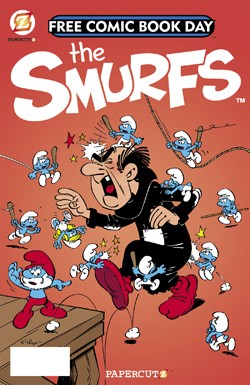
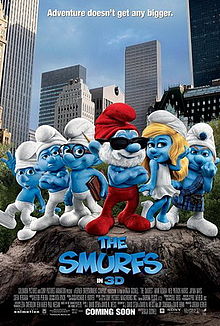
Look, I’m not even going to pretend I think the Smurfs movies were any good. But I was a fan of the cartoon when I was a kid, and at the time, I had no idea that the Smurfs, like Tintin, made their original appearance in comic books from Belgium. Originally, they were supporting characters in a Spirou magazine story called “The Flute With Six Holes,” but they soon became popular enough to explode into their own series, many of which are currently being published in English for the very first time by Papercutz Comics. And that’s the reason I’m closing off this list with the Smurfs — because this year, they’re going to be featured in a Free Comic Book Day offering that’s never appeared in the US before. If you’ve got kids who enjoy the movies, here’s a great chance to get them reading.
Check out the Free Comic Book Day website to find the nearest participating store. And while you’re there, look at some of the other books available. Your kids will find recognizable characters from Sesame Street, Spongebob Squarepants, Teen Titans Go!, Adventure Time, and the Teenage Mutant Ninja Turtles. For you grown-ups, there are comics based on the NBC series Grimm, the British cult favorite Judge Dredd, and the Image Comics publication that inspired the AMC smash hit The Walking Dead. Plus, you’ll find Superman, the Avengers, Star Wars, Tinkerbell, Garfield, the Peanuts gang, the Tick, Sonic the Hedgehog, Archie Andrews and other old friends, and there’ll be plenty of titles and characters you’ve never heard of before, but may turn into a new favorite.
And while you’re there, if you’re a fan of any of the movies I mentioned, browse the shelves of the store and pick up a few volumes, or look for something totally new.
What I Watched In… April 2013
In the interest of full disclosure (and to generate a little content here) I thought I’d present a regular tally of what movies I managed to see in the previous month. Some of them I’ve written about, most of them I haven’t. This list includes movies I saw for the first time, movies I’ve seen a thousand times, movies I saw in the theater, movies I watched at home, direct-to-DVD, made-for-TV and anything else that qualifies as a movie. Feel free to discuss or ask about any of them!
- The Neverending Story (1984), B+
- John Dies at the End (2012), B+
- Hotel Transylvania (2012), C
- Seeking a Friend For the End of the World (2012), B+
- Ruby Sparks (2012), A
- Evil Dead (2013), A-
- Hitchcock (2012), B
- Plan 9 From Outer Space (1958), F; RiffTrax Riff, B
- Idiocracy (2006), B+
- Slumdog Millionaire (2008), A
- History of the World Part I (1981), A
- Buck Privates (1941), A-
- Abbott and Costello Meet Dr. Jekyll and Mr. Hyde (1953), B-
- Kill Bill Vol. 1 (2003), B+
- Kill Bill Vol. 2 (2004), A-
- Pumaman (1980), D; MST3K Riff, B+
- Time Chasers (1994), D; MST3K Riff, B
- Merlin’s Shop of Mystical Wonders (1996), D-; MST3K Riff, B
- The Wizard of Oz (1925), D
- The Apple (1980), F; RiffTrax Riff, B
- Carnage (2011), B+
- Iron Man: Rise of Technovore (2013), C+
- Oblivion (2013), C+
- Midnight in Paris (2011), A-
- Who Framed Roger Rabbit? (1988), A
- Horse Feathers (1932), B
- Journey Back to Oz (1974), C-
- The Wiz (1978), B+
- Return to Oz (1985), B+
- Kingdom of the Spiders (1977), D; RiffTrax Riff, A-
- Condorman (1981), C+
- Reservoir Dogs (1992), B+
- Pulp Fiction (1995), A-
- The Galaxy Invader (1985), F; RiffTrax Riff, B
- The Matrix (1999), A-
- The Matrix Reloaded (2003), B
- The Matrix Revolutions (2003), B-
- Shame (2011), D+
- Tin Man (2007 Miniseries), B
- The Looney, Looney, Looney Bugs Bunny Movie (1981), B
- Tiny Toon Adventures: How I Spent My Vacation (1992), B-
- The Bugs Bunny/Road Runner Movie (1979), B
Gut Reactions: Condorman (1981)
 Director: Charles Jarrott
Writer: Marc Stirdivant, based on the novel by The Game of X Robert Sheckley
Cast: Michael Crawford, Oliver Reed, Barbara Carrera, James Hampton, Jean-Pierre Kalfon, Dana Elcar, Vernon Dobtcheff, Robert Arden
Plot: Comic book creator Woody Wilkins (Michael Crawford) is about to debut his new superhero: Condorman. Woody insists on authenticity in his character, though, and travels to Paris to test the gadgets he designed for the comic. His friend Harry (Oliver Reed), a CIA file clerk, asks him to carry out a special delivery for which a civilian has been requested. The over-enthusiastic Harry goes too far trying to impress his beautiful contact Natalia (Barbara Carrera), who is actually a KGB operative. Natalia returns to Moscow where her superior and lover Krokov (Oliver Reed) treats her cruelly. She decides to defect, and requests the agent known as “Condorman” be sent to retrieve her. Woody agrees to the mission, provided the CIA fabricate the rest of his comic book designs so he can test them in the field. Woody, Natalia and Harry are soon pursued by Krokov in a race across Europe to bring the beautiful spy to safety.
Thoughts: There is always a danger, when you go back and watch a movie or TV show you loved as a kid, that it simply won’t hold up. We’ve all been disappointed as adults, looking back and realizing things like the old Masters of the Universe TV show really wasn’t very good, or wondering how in the hell we were ever able to sit through Mac and Me more than once. Still, my fiancé Erin managed to secure a copy of this movie after she heard me mention how much I loved it back in the 80s, and I recently managed to find the time to watch it again for the first time in at least 20 years.
Condorman comes from the Disney company during that long stretch in the 70s and 80s when the company simply didn’t know what it was supposed to be anymore. After Walt Disney’s death in 1966, the company coasted on projects he’d already put in the works for a few years, then started to flounder, trying to figure out a direction now that its founder was gone. This film is the perfect example of that. The studio tried to simultaneously capitalize on the popularity of superheroes (thanks to the Christopher Reeve Superman franchise) and James Bond-style spy thrillers, while at the same time creating the sort of family friendly comedy that Disney’s live action properties were expected to be. The result is a film that fails to live up to the standards of any of the three.
That’s not to say the film is terrible. I mean… it kind of is, but at the same time, there’s something about it that still entertains me. Michael Crawford is chewing the scenery so much you expect him to blow a bubble, and James Hampton plays the same sort of big-smiling best buddy he is in most of his work. In fact, if you told me his character in this film retired from the CIA and returned to the states so he could raise his son properly before the family’s werewolf curse made itself known, I wouldn’t think you were that crazy. Just in terms of performance, Barbara Carrera and Oliver Reed are the ones that actually do the most acting. Carrera in particular is fun to watch, putting out a sort of Disney-friendly sensuality that you didn’t get to see often. In essence, she’s a G-rated Bond Girl, which is exactly what the script required her to be. (She would get another chance to be an sort-of Bond girl two years later in the infamous non-canon Sean Connery Bond film Never Say Never Again.)
The concept here is actually perfectly sound – a goofy, good-hearted man leaps at the chance for a little adventure and to test out the toys he’s only, until now, created on paper. It’s the execution that falls flat. The flying scenes are pretty uniformly terrible, with weak bluescreen effects and sometimes even visible cables. The rest of the tech is a bit more acceptable; the “Condormobile” in particular has a cool design and neat gadgets, and I can forgive the 80s-era computer display on the inside. Truth be told, to this day I occasionally fantasize about having a switch in my car that would allow me to blow off the outer shell and reveal a super-sleek high-speed sports car underneath. (These fantasies are usually prompted by sitting in traffic.)
I don’t want you to misunderstand me, guys. This is not a good movie. In fact, if the guys from RiffTrax could somehow get Disney to allow them to do a Video on Demand riff of this, I think it could be one of their greatest productions ever. But despite its cheese, this is one of those rare films from my past that I can look back on and still kind of love, warts and all. I can’t explain it, and I don’t feel the need to defend it. It’s silly, it’s crazy, it’s goofy…. And that’s why I like it.
The first Reel to Reel study, Mutants, Monsters and Madmen, is now available as a $2.99 eBook in the Amazon Kindle store and Smashwords.com bookstore. And you can find links to all of my novels, collections, and short stories, in their assorted print, eBook and audio forms, at the Now Available page!
Dorothy Gale Week: Conclusions
 So what have we learned this week?
We’ve learned that Dorothy Gale from Kansas is a character who can survive almost anything. She’s a child with a wise, kind heart, and one who can stand up to all manner of wicked witches, evil dictators, nomes, monochromatic elephants, monsters, wheelers, androids, and Richard Pryor. But I think we’ve also learned that, unlike many of the other characters the Icons project focuses on, she’s not necessarily the most important part of the story. Dorothy, even in those early days of L. Frank Baum, was most effective when used as the audience’s viewpoint character, the little girl from the real world who allows us to see Oz through fresh eyes. Giving her a ton of Oz-rich backstory can work well (like in Tin Man) or be a disaster (such as in the 1925 Wizard of Oz), but either way, it’s not strictly necessary to tell an Oz story. There are plenty of other ways to do it. And if you don’t believe that, start hunting down the public domain Oz books available freely online, or even visit your local library.
Anyway, since (as we’ve said) Dorothy isn’t strictly the most important character in Oz, let’s move on to another story told through the eyes of someone who’s not, technically, the hero. Arthur Conan Doyle knew, when he was creating the smartest man in the world, that the audience would only understand the stories if there was more of an everyman to relate to, and thus he created Dr. John Watson. But Watson isn’t the star, is he friends? Come back in late May for the third Icons week, when we turn our eye to the world’s greatest detective, Sherlock Holmes.
Dorothy Gale Week BONUS: Zooey Deschanel in Tin Man (2007)
 Director: Nick Willing
Writer: Steven Long Mitchell, Craig Van Sickle, based on the novel The Wonderful Wizard of Oz by L. Frank Baum
Cast: Zooey Deschanel, Alan Cumming, Neal McDonough, Kathleen Robertson, Raoul Trujillo, Callum Keith Rennie, Richard Dreyfuss, Blu Mankuma, Anna Galvin, Ted Whittall, Rachel Pattee, Alexia Fast, Gwynyth Walsh, Kevin McNulty, Karin Konoval, Andrew Francis, Grace Wheeler.
Plot: DG (Zooey Deschanel) is a waitress in a Kansas farm town who doesn’t feel like she fits into her life. She’s been having dreams about a woman with lavender eyes (Anna Galvin) – a dream that seriously concerns her parents (Gwynyth Walsh and Kevin McNulty). Elsewhere, in another realm called the Outer Zone (O.Z. – get it?), a brutal witch named Azkadellia (Kathleen Robertson) is struggling against spies who are trying to wrest control from her. She turns to a captive lion-like creature called a “viewer,” who predicts trouble coming from “the other side.” Azkadellia tells her general to launch a travel storm, find the trouble, and destroy it. They arrive at DG’s farmhouse, coming after her. Her parents force DG onto the roof in the midst of the storm and tell her to jump to escape Azkadellia’s Longcoats. She is swept away into the storm .
She wakes up in a forest and is captured by a group of diminutive resistance fighters from the Eastern Guild who take her as a spy sent by Azkadellia. In her cage, DG meets a man named Glitch (Alan Cumming), who has had half his brain (and memories) removed by Azkadellia. Together, they escape and find Wyatt Cain (Neal McDonough), formerly one of Azkadellia’s “Tin Man” police who has been imprisoned for years for disobeying her. His family was taken from him, and his years of imprisonment have turned his heart cold, bent only on revenge. When they stop to rescue a viewer named Raw (Raoul Trujillo) from a group of predators, they all plunge off a cliff to escape. Azkadellia’s viewer shows the escape, and when she realizes DG is alive, she is outraged.
DG finds her parents amidst a town full of cyborgs. Her parents reveal they are androids, programmed to protect DG until return to the Outer Zone. Her true mother is the woman with lavender eyes. She’s instructed to find the Mystic Man of Central City, and DG and her friends flee as the Longcoats arrive. They sneak into Central City, where DG’s picture is on a wanted poster, and Wyatt leaves the group to search for Zero (Callum Keith Rennie), who took his family. The others find the Mystic Man (Richard Dreyfuss), a carnival showman who is bombed out on Azkadellia’s mind-altering vapors. As they watch his show, Zero and the Longcoats appear, looking for DG. Wyatt saves them and the Mystic Man tells DG her search for her mother must begin at the Northern Island. He makes Wyatt promise to protect DG at all costs, and covers while they escape. At the ice-covered Northern Island, they find a hidden palace, and the truth. DG’s mother was Queen of the Outer Zone, and Glitch her advisor. Raw uses his power to show them a glimpse of the past, when Azkadellia – DG’s older sister – killed her. Their mother restored her to life, giving up her magic to do so. She tells DG she is sending her away until the time is right for her to find the only thing that can stop Azkadellia – the Emerald of the Eclipse. As they watch, the adult Azkadellia arrives and demands the location of the Emerald. Raw and DG are captured, and Zero reveals to Wyatt that his family is still alive, just before shooting him and sending him plunging into the icy water outside.
Part 2 of the film begins with DG waking up in her house in Kansas, her parents talking about the nightmares she’s been having. Her father is terribly interested in the dream, particularly about where the Emerald is. DG realizes it’s fake – Azkadellia used a hologram projector to recreate Kansas and reprogrammed the androids to trick DG into revealing the location of the Emerald. Raw is tossed in a dungeon with the other viewers, who say he is no longer one of them, while back at the northern palace, Glitch finds Wyatt in the snow.
DG is put in prison, where she finds the Mystic Man, his mind now clear, who encourages her to go south. Frustrated, Azkadellia kills him with the same life-draining spell she once used on DG. A strange dog helps DG escape, and she finds and rescues Raw. They encounter Glitch and Wyatt, who broke into the dungeon to find them, and the dog leads them to safety. It transforms into a man (Blu Mankuma) who was once DG’s tutor (which she mispronounced as “Toto”), and has been sent by her mother to help her reclaim her lost memories. She begins recalling times when Azkadellia actually helped her and treated her kindly, and starts to wonder if there may be redemption for her sister yet. In truth, Azkadellia sent Tutor as a spy, and he occasionally drops a glass disc to allow the witch to track them.
Wyatt finds the house where his wife and son lived, but instead of his wife, finds her gravestone. As he mourns, Glitch finds a glass disc on the ground just as one of Azkadellia’s monkey-bats attacks. Wyatt kills it and Tutor nervously suggests they move along, finally arriving at the former home of the royal family, an abandoned lakeside city called Finaqua. DG has another memory flash, remembering a time when she and Azkadellia found a cave in the woods. DG accidentally released an ancient witch (Karin Konoval) who possessed her sister – all of the trouble that has befallen the Outer Zone is DG’s fault.
In Part 3, DG finds a message from her mother who tells her to find her father, Ahamo (Ted Whittall), in the Realm of the Unwanted. After they depart, Azkadellia arrives and finds the same message. Wyatt discovers Tutor has been dropping Azkadellia’s discs, and Tutor swears he was using the discs to buy time while DG recalled her past and powers. The Realm of the Unwanted turns out to be an underground city, where the Outer Zone’s outcasts are in hiding. An attempt to locate Ahamo instead lands DG’s friends in Zero’s clutches, although Tutor escapes. DG, meanwhile, is taken by the “Seeker,” who turns out to be Ahamo himself.
Ahamo tries to teach DG to use her powers and reveals he’s from Nebraska, and first crossed to the Outer Zone years ago via a hot air balloon. Followed by Tutor, they take the balloon and find a hidden doorway. Inside is DG’s family crypt, including the first member: a woman named Dorothy Gale – DG’s namesake — who was brought over from the other side just like Ahamo. DG steps into the crypt into a greytone vision of Kansas. There, the original Dorothy (Grace Wheeler) gives her the Emerald of the Eclipse. As they leave, Azkadellia captures Ahamo and takes the emerald from DG, sealing her in a tomb.
DG’s friends are rescued by a band of resistance fighters who turn out to be led by Wyatt’s son, Jeb (Andrew Francis). Zero confesses that Azkadellia plans to use the Emerald and a machine Glitch doesn’t remember inventing to lock the two suns behind the moon and plunge the Outer Zone into darkness. Azkadellia reunites her parents, completely taken over by the Dark Witch, and tells them their family’s royal line ends today. In the tomb, DG remembers Tutor’s lessons about her magic, and uses her power to free herself. She finds her friends and the resistance plans an attack on Central City as a diversion. Raw is losing his nerve, though, and DG makes him recall the times he’s shown his courage. She has similar moments with the “brainless” Glitch and the “heartless” Wyatt, bolstering each of them in turn, but Wyatt cautions her that he won’t be there to help at the climax of their plan.
Breaking into the city, they find the missing half of Glitch’s brain and reconnect it so he will know how to shut down the machine, but they are interrupted by the Longcoats, and the Outer Zone goes dark. DG confronts the Dark Witch, trying to appeal to Azkadellia’s memories of their childhood love, and pleads for her sister to take her hand so their magic will be strong again. Azkadellia breaks free of the witch, and the sisters try to hold her off. Below, Raw defeats the Witch’s men and Glitch turns off the machine. The Dark Witch melts and the sisters, finally together again, embrace. As DG’s friends arrive, the suns come out from behind the moon, and the Outer Zone is once again filled with light.
Thoughts: Once upon a time, kids, there was a lovely little place called the Sci-Fi Channel, a realm where you could reliably turn for tales of science fiction and fantasy of all stripes. That is, until a cruel television executive came in, changed the name to a Scandinavian word for Herpes, and started loading it up with professional wrestling and ghost hunter shows. But before that happened, in 2007, they produced a new version of The Wizard of Oz called Tin Man.
This is the strangest vision of Oz we’ve seen yet, a bizarre mixture of science fiction and fantasy you rarely see these days. Most writers try to keep the two totally separate – something is either sci-fi or fantasy, as if there’s no room for both (a notion I personally consider ludicrous). There’s plenty of stuff in here that feels like science fiction – the hologram device, Wyatt’s particularly inventive torture chamber, the robots and cyborgs all seem to belong in that realm. They even use cars and guns that are basically retro versions of the things we have in the real world. Most of the things we see, though, are purely magic – DG’s handprint, the “travelling storm” the Longcoats use to traverse dimensions, or the power of the viewers have no attempt at a scientific explanation, nor do they require one. At the end, it’s the combination of the magic Emerald and Glitch’s technological Sun Seeker machine that the Dark Witch’s entire plan hinges on. The two elements blend very well together, and while it’s true that may be because there’s no real effort to explain the science behind the machine, there’s at least an implication that there’s science in there somewhere.
One thing I really like about this version of the story is how many of the changes are simply additive in nature. It was originally broadcast as a three-part miniseries, with part one ending with DG and Azkadellia’s confrontation at the Northern Island. By then, we’d already covered most of the important plot points from The Wizard of Oz – Dorothy is taken to Oz in a storm, meets her three friends, encounters the Wizard and confronts the witch. Even then, the writers managed to fill part one with rich backstory for all four of the heroes. Parts two and three, while still holding on to the skeleton of Baum’s story, go on to introduce lots of new elements that give the story more of an epic quality than it usually has. Even the wildest interpretations of Oz rarely attempt to expand the plot in any significant way. It was an interesting gamble for writers Miller and Van Sickle to take, and it’s one that paid off for the most part.
With the addition, though, is a healthy respect for the original. The revelation of Dorothy Gale as DG’s “greatest” grandmother, and the first “slipper” between the O.Z. and the other side, links this back neatly to Baum’s work. While it seems too far-fetched to think that the original Dorothy’s story is exactly the one that Baum wrote (there are simply too many differences between the Outer Zone and the real Oz for that to be the case) it does leave the door open for earlier stories, prequels about Dorothy and the rest of the O.Z. Royal Family, or about how the Dark Witch was imprisoned in the first place that could potentially tap into that book or the other Oz books even more than this film did. Sadly, as it’s been six years since this miniseries was made and no such movement in that direction is evident, that probably isn’t in the cards. Still, it’s nice to dream.
Even this version, though, couldn’t resist a few nods to the MGM movie. DG’s waitress uniform is the classic blue checked dress, and at the beginning of part 2 she makes a joke about dreaming “in Technicolor.” One flashback even has young Azkadellia cautioning DG to be on the lookout for “lions and tigers and…” then a bear appears. Cue DG’s line: “Oh my.” They’re funny bits, admittedly, but they kind of take the viewer out of the moment of the story. It’s not too bad in a mostly lighthearted interpretation of Oz, but with the darker attitude this miniseries reached for, it’s somewhat distracting.
In certain hipsterish circles, it’s become very fashionable to hate Zooey Deschanel. I really don’t care – I’m a fan of hers in general and I like her in this miniseries. She does have a very understated approach to the character, rarely showing extreme emotion until she’s really pushed far, and that’s an approach that seems to fit very well with this mystic/steampunk vision of Oz.
Kathleen Robertson as Azkadellia is a little less impressive. While she’s certainly got the looks for this sort of beautiful fairy tale evil queen, she lacks a certain intensity. She’s the bad guy of the piece, the one everyone in the Outer Zone is terrified of, but it’s hard to get a feeling of menace from her. She’s more of a Mean Girl than a real Wicked Witch. It’s a little more justified when you realize, at the end of Part 2, that she’s being possessed, but if that’s the intention it’s telegraphed too early.
The transformation in Dorothy’s friends works pretty well here. Although none of them are, strictly speaking, analogous to their classic counterparts, each of them has qualities that are suitable. Alan Cumming’s Glitch, for example, isn’t a scarecrow, but the large zipper atop his head (where his brain was removed) gives him a touch of the patchwork feel that the character requires. He’s also got the sort of long-limbed, lanky motion that you’d expect from a scarecrow. Raoul Trujillo, Raw, looks most like his classic counterpart. The viewers are covered in long, golden fur, with a tail and facial features that evoke the Bert Lahr Cowardly Lion in some ways. In terms of development, though, he’s probably the least developed of the three of them and doesn’t really have enough to do except for occasionally using his powers to reveal a little backstory. Richard Dreyfuss’s Mystic Man only appears in two scenes, in one of which he’s almost completely stoned. While his performance is perfectly good, like Raw, it seems like much more could have been done with him. It’s curious that they took the most interesting thing about the Wizard – his origin as an American swept to Oz via balloon – and instead transferred that role to DG’s father. The character of the Wizard is essentially split between the two of them. Dreyfuss’s character has the recognition and gives DG her quest, Ted Whittall’s Ahamo is the false mystic, the “humbug” as it were, and gives DG guidance when it really matters.
Neal McDonough as Wyatt, the titular “Tin Man,” gets the most emotional meat here. He’s got the best backstory and the deepest well of feeling to draw from, and he does a superb job tapping that mine while still trying to put forth that cold shell he insists on showing the world. The point of the original Wizard of Oz is that Dorothy’s three friends each already had exactly what they most desired, they just needed to find it within themselves. That’s not really true of Glitch (what he wants is something that has literally been taken from him) and we don’t see enough of Raw to get that impression, but Wyatt personifies this trope. I’m still not quite sure why he gets the naming rights to the whole miniseries, mind you – he’s a very important character but not really the protagonist – but he at least gives the most impressive performance out of the principals. (And with a group that includes Alan Cumming, that’s saying a lot.)
I’m a tad disappointed in the ending. There’s a little too much of the “love conquers all, hold hands and sing Kumbaya” thing going on for my taste. Don’t get me wrong – I’m all for the power of love and all that, but it always feels like a little bit of a cheat when used as literally as it is here. Fortunately we get a little more than that to contribute to the Dark Witch’s downfall – DG’s love may have helped free her sister, but the Witch still would have one if Raw, Glitch and Wyatt had failed at their task of actually turning off the machine.
As far as the actual production goes, Sci-Fi Channel productions (or “SyFy” as they call themselves now) are strange. Their original movies are famously, fabulously terrible, but they really put very high quality into their miniseries and original TV shows. This is no exception. The set design, costumes and makeup are all film-quality here, with absolutely nothing to complain about. The complaints come in whenever they start trying to use computer effects, most noticeably the creatures that attack them when they free Raw. The CGI is done on a TV budget, which even 20 years after it became commonplace, still isn’t really enough to make things look convincing. If they had done puppets or guys in suits, it may have still looked kind of cheesy, but probably would have been more convincing. The reason the Wheelers in Return to Oz were so damn scary is because they were played by real people wearing real weird suits they had to learn to use to roller-skate on all fours. It just wouldn’t have been as frightening if little Fairuza Balk had been running from a computer effect, just as it isn’t scary when little Zooey Deschanel does it here.
It’s not the greatest film version of Oz, but it’s by no means a bad one. It’s entertaining and unusual, and most importantly, it’s unique. It gives us something no other version of Oz has, and that’s the toughest part of the job.
The first Reel to Reel study, Mutants, Monsters and Madmen, is now available as a $2.99 eBook in the Amazon Kindle store and Smashwords.com bookstore. And you can find links to all of my novels, collections, and short stories, in their assorted print, eBook and audio forms, at the Now Available page!
Dorothy Gale Week Day 5: Fairuza Balk in Return to Oz (1985)
 Director: Walter Murch
Writer: Walter Murch, Gill Dennis, based on the novels The Marvelous Land of Oz and Ozma of Oz by L. Frank Baum
Cast: Fairuza Balk, Nicol Williamson, Jean Marsh, Piper Laurie, Matt Clark, Sean Barrett, Michael Sundin, Tim Rose, Mak Wilson, Denise Bryer, Brian Henson, Lyle Conway, Justin Case, John Alexander, Deep Roy, Emma Ridley, Sophie Ward, Fiona Victory, Pons Maar
Plot: It has been six months since Dorothy Gale (Fairuza Balk) came home following her adventure in Oz. Her Uncle Henry (Matt Clark) is working to rebuild the farm, destroyed by the tornado, and Aunt Em (Piper Laurie) is worried that the little girl is sleepless, stuck imagining the fairy land she “dreamed” about before. Dorothy scolds a chicken named Billina who has been unable to produce eggs, and finds an old key in the chicken coop. The design on the end of it seems to bear an “O-Z” – the symbol of the land of Oz. She shows it to Em as proof of her stories, but it only furthers her resolve to bring Dorothy to the a doctor. She tells Dr. Worley (Nicol Williamson) her stories of Oz, of her friends, of the Ruby Slippers that were lost as she flew home. Worley unveils an electrical device with a “face” that may cure her, and Dorothy sees a reflection of a girl (Emma Ridley) looking at her. The doctor and his nurse (Jean Marsh) prepare Dorothy to stay overnight for treatment. Dorothy is strapped onto a gurney for treatment, but she’s frightened by the device placed on her head. Before the Doctor can turn it on, the power to the hospital is knocked out by a storm. The Nurse goes to check on a screaming patient while the Doctor tries to repair the power, leaving Dorothy alone so the mysterious girl can unstrap her and let her free. Rushing outside, the girls are separated by a flash flood, and Dorothy clings to a floating chicken coop to ride out the storm.
In the morning, Dorothy finds that her hen Billina is in the coop with her, she begins speaking (voice of Denise Bryer). The coop has washed up on the edge of a desert, with lush, green land nearby. Dorothy realizes they must be in Oz, which means the sands beneath them are those of the Deadly Desert, which transforms any living creature that touches it to sand. Dorothy carries Billina to safety, leaping from one stone to another until she reaches the grass, unaware that some of those stones are watching her. The creature watching from the rocks rushes off to inform his king that she has returned to Oz, and has a chicken with her.
Dorothy and Billina find the old farmhouse where it crashed in Munchkinland, but realize the Munchkin City is gone, and the Munchkins with it. The Yellow Brick Road has been reduced to rubble, and she races along it until she comes to the destroyed remains of the Emerald City. The people have been turned to stone, including the Tin Woodsman and Cowardly Lion. They are attacked by creatures with wheels for hands and feet, who chase them into a hidden chamber. The lead Wheeler (Pans Maar) tells them they’ll destroy them, for the Nome King doesn’t allow chickens in Oz. Turning around, Dorothy finds a clockwork man with a plate that proclaims him “The Royal Army of Oz.” Winding him up with the key she found in Kansas, he activates and introduces himself at Tik-Tok (Sean Barrett). Upon the orders of the Scarecrow, he was locked in the chamber to wait for Dorothy’s return after the people began to turn to stone. Tik-Tok defeats the Wheelers and interrogates the leader, who tells them the Nome King is responsible for Oz’s devastation, and that only Princess Mombi can tell them where the Scarecrow is. In Mombi’s palace, they find a beautiful woman with a room full of interchangeable heads. She imprisons Dorothy in the attic, planning to come back for her when her own head is a bit older.
In the attic, Dorothy finds a pumpkin-headed man named Jack (Brian Henson), who tells her he was built by Mombi’s former servant to scare the witch. Instead of destroying him, Mombi tested a “Powder of Life” on him, then locked up the remaining powder with her original head. Jack believes his “mother” was enchanted by Mombi and hidden away. Dorothy and Jack sneaks out to steal the powder, but Mombi is alerted when her original head (Jean Marsh again) wakes up and shouts for help. The others have constructed a flying contraption from couches, leaves, and the mounted head of a Gump (Lyle Conway), which they bring to life with the powder and escape. They fly until the Gump comes apart and crashes on the mountain of the Nome King (Williamson), where the Scarecrow (Justin Case) is imprisoned.
The Nome King (happy that Billina has seemingly disappeared, although she is merely resting inside Jack’s hollow head) has transformed the Scarecrow into an amusing ornament for his vast collection, and claims his conquest of Oz was simply taking back what belonged to him – the gems from the Emerald City were all mined from his underground kingdom, after all. As she weeps for her missing friend, the Nome King seems genuinely touched by her tears, and offers her an opportunity to win him back – if she or her friends can guess which ornament he is, he will be set free. The Gump goes first, but fails in his effort and is transformed into an ornament himself – a condition of the contest the Nome King failed to mention before. Jack goes next, then Tik-Tok, and each are transformed. The Nome King offers to send Dorothy back home using the Ruby Slippers, which he found after she lost them, but she insists on trying to save her friends. She manages to rescue the Scarecrow, who was turned into an emerald, and realizes the people from Oz are all green ornaments. They quickly rescue the Gump, and the Nome King grows angry, sending an earthquake through the mountain. They find and transform Jack as the Nome King attacks them, enraged, tired of the games. He grabs Jack, lifting him to his mouth, but he’s stopped by a sudden clucking sound. Inside Jack’s head, Billina lays an egg, which rolls into the Nome King’s mouth. As he shrieks, he begins to crumble away, revealing that eggs are poison to Nomes. The mountain collapses, and Dorothy takes the Ruby Slippers from the Nome King’s body, using the magic to bring them back to the Emerald City, bring the people back to life, and return Oz to its former glory. With them is a green medal that was somehow stuck to the Gump. Dorothy guesses the truth, and transforms the medal back into the missing Tik-Tok.
The people of Oz ask Dorothy to stay and be their queen, but she wishes to return to Kansas. As she debates what to do, the women whose heads Mombi took tell the truth about her serving-girl: she is Ozma, queen and rightful ruler of Oz. (Also Jack’s “mother” and the girl who helped Dorothy escape the hospital), lost after the Wizard came. Freed from Mombi’s magic, Ozma is restored to the throne and promises to send Dorothy home, on the condition that she signal her should she ever wish to return to Oz again.
Thoughts: This film is an old favorite of mine, probably my first experience with Oz beyond the MGM Musical. It may, in fact, be what first stirred me on to read the further Oz books, when I heard it was essentially a combination of the second and third novels in the series, The Marvelous Land of Oz and Return to Oz. (Honestly, I don’t remember if I read the books before I saw the movie or vice-versa. I would have been 8 years old when this movie was released, and certainly old enough to have discovered the Oz shelf at the St. Charles Parish Public Library where I would be utterly lost for the next few years – a sojourn for which I am eternally grateful.) The writers took the characters and plots of both books and blended them together in a very satisfying way, creating a story that evokes parts of each of them, but manages to feel complete in and of itself. I won’t go into what parts came from which book (read them yourself – they’re in the public domain and free on the internet), but I can say that if I hadn’t read them myself, I wouldn’t have guessed the movie is a mash-up.
Fairuza Balk is the most age-appropriate Dorothy we’ve had yet (she was 11 at the time the film was released), and puts out a decent performance. She’s a young actor, obviously still learning, and you frequently hear the stilted delivery of a child actor trying to remember her lines. But there’s a nice bit of emotion and determination in her voice, even during those abrupt and unnecessary pauses. She feels like a Dorothy who’s already been through a lot and has to reconcile the world she experienced with the ordinary one in which she was raised. It’s a nuanced idea, one that Baum never dealt with much in the books (except perhaps in The Emerald City of Oz), and rather daring for Disney to attempt in the 80s.
Except for Dorothy and Mombi, most of the cast is realized through the use of Jim Henson’s Creature Shop, doing a job that these days would probably be mostly CGI. I find the practical puppetry of Tik-Tok and Jack Pumpkinhead far more impressive than most computer animated creations, however, and they add a sense of realism to this fantastic setting. The character designs also skew very close to the illustrations in the original Oz books — even the three characters from the original Wizard of Oz are made up to look like their book versions rather than Jack Haley, Ray Bolger or Bert Lahr. Of all the versions of Oz I’ve looked at this week, this is the one that feels most like the fantasy epic it is at its heart, and I attribute a lot of that to the designs of the characters and sets used here. There’s also some well-done stop motion animation for the Nomes, which are more like living rocks here than the dumpy creatures of the novel. The animation, done by Claymation creator Will Vinton, looks very impressive, and I can try to reconcile the changes to the characters with an attempt to make them more menacing – although the Nome King in Baum’s novels is one of the few truly credible threats to the power of Ozma and Glinda, his appearance is by no means something that will inspire fright.
Return to Oz was thought of by many people as an attempt to do a sequel to the Judy Garland movie, but this film has only a few nods to the MGM musical – the use of Ruby Slippers being the most obvious. The sequence in Kansas at the beginning, like in the MGM movie, introduces actors that would reoccur in Oz and elements that would reflect back on Dorothy’s second adventure (the pumpkin, the lunchpail, and the mechanical man most obviously). Fortunately, the end of the movie makes it pretty clear this time, it’s not just a dream, which Baum never intended in the first place.
As far as deviating from Baum’s intentions, the villains are farther off than anything else. Mombi has little in common with her counterpart from the books, borrowing her most distinctive aspects from Langwidere, the head-swappin’ princess from Ozma of Oz. The Nome King himself, though, is the biggest departure, showing a sense of compassion that doesn’t bespeak the character from the book at all, although the temper he displays at the end feels appropriate. His appearance is also very different from the pudgy, deceptively silly character he is in the books. In this version, he begins as a creature made of solid rock, and slowly becomes more human with each person added to his collection of ornaments. Once Dorothy starts setting her friends free he grows more and more inhuman again, finally crumbling to skeletal rock after Billina’s egg poisons him. It’s an interesting idea that would probably work with some villains, but doesn’t really fit the Nome King of L. Frank Baum’s novels all that well.
Despite that, this movie feels more like Baum’s Oz than any Oz movie I’ve ever seen – not perfect, mind you (the Emerald City’s sudden proximity to the very edge of Oz still strikes me as being somewhat ridiculous in the context of any version of the first story), but closer than anything else. We’ve still yet to have a truly faithful big-screen adaptation of The Wonderful Wizard of Oz, let alone the rest of the books in the series, but if we ever get them, the look and flavor of this movie wouldn’t be a bad template to use at all.
Now I know I promised you five films for each week of this project, but I feel a little bad, as the most recent significant version of Dorothy Gale I can find in cinema is nearly 30 years old. Hollywood really needs to pick up the pace. But in order to have something a little more recent, just for perspective, come back tomorrow for a Dorothy Gale Week bonus! This time we’re going to the small screen to see how Zooey Deschanel depicted Dorothy Gale (or “D.G.”) in the 2007 Sci-Fi Channel miniseries Tin Man.
The first Reel to Reel study, Mutants, Monsters and Madmen, is now available as a $2.99 eBook in the Amazon Kindle store and Smashwords.com bookstore. And you can find links to all of my novels, collections, and short stories, in their assorted print, eBook and audio forms, at the Now Available page!
Dorothy Gale Week Day 4: Diana Ross in The Wiz (1978)
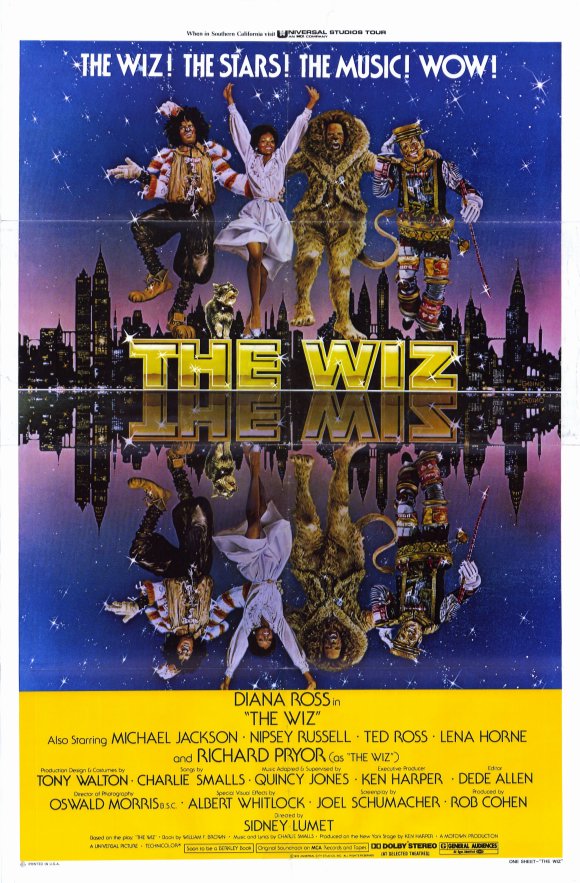 Director: Sidney Lumet
Writer: Joel Schumacher, based on the play by Charlie Smalls and William F. Brown, based on the novel by L. Frank Baum
Cast: Diana Ross, Michael Jackson, Nipsey Russell, Ted Ross, Mabel King, Theresa Merritt, Thelma Carpenter, Lena Horne, Richard Pryor, Stanley Greene
Plot: In modern-day Harlem, a family gathers for Thanksgiving dinner. Dorothy (Diana Ross) is a schoolteacher, living with her Aunt Em (Theresa Merritt) and Uncle Henry (Stanley Greene), who wishes for her to break free and find a life of her own. Her dog Toto rushes out into a snowstorm after dinner, and Dorothy races after him. A cyclone appears in the snow, grabbing them both and pulling them into the air, where we see the cyclone being manipulated by a woman in the stars (Lena Horne). She drops Dorothy into a pit of sand near a graphitti-covered wall, and the people painted onto the wall come to life. Although initially frightened, the people from the walls begin celebrating her for killing the Wicked Witch of the East, knocking down a sign on her during her descent. The people, the Munchkins, were trapped in the wall by the Witch’s magic, and now are free. Miss One (Thelma Carpenter), the Good Witch of the North, thanks Dorothy and gives her the Wicked Witch’s Silver Shoes. Miss One doesn’t have the power to send Dorothy home to New York herself, and she knows the Wicked Witch of the West will be uninclined to help. Even Glinda, the Good Witch of the South, will likely be unavailable. Instead, she suggests Dorothy follow the Yellow Brick Road to talk to the Wiz.
As Dorothy walks through the strange city, unable to find the Road, she finds a Scarecrow (Michael Jackson) being tormented by a group of crows. She shoos the birds away and frees the Scarecrow. When he realizes the crows had tricked him into captivity, he reveals to Dorothy his head is stuffed with garbage instead of a brain. She suggests he come with her to see the Wiz for help. The Scarecrow finds the rubble of yellow bricks and they finally trace them to the Road. As they walk through the remains of an amusement park they find a trapped mechanical man beneath some rubble (Nipsey Russell). The Tin Man says it’s okay – he lacks a heart, and cannot feel. They help him to his feet and he joins them. As they pass the library, the Tin Man notices a statue of a lion is watching them. Inside the statue they find a real Lion (Ted Ross), who boasts to them but is soon revealed as a coward. He joins them as well.
Following encounters with creatures in the subway and a group of “Poppies” that try to tempt the friends away from the path, they arrive at the Emerald City, where the Great and Power Oz summons “the one with the silver slippers” to his chambers. Oz, appearing as a giant mechanical head, hears their requests and bargains with them: he’ll aid them if they can destroy Evillene, the Wicked Witch of the West (Mabel King). They find Evillene in a sweatshop beneath the city, where her Winkie captives are toiling away, when she hears of Dorothy’s quest. She sends out her motorcycle gang, the Flying Monkeys, to capture the girl. Although they are captured easily, Evillene finds she cannot take the Silver Slippers from Dorothy against her will, and instead begins torturing her friends, cutting the Scarecrow in half, flattening the Tin Man, and dangling the Lion from his tail as he shouts to Dorothy not to give up the shoes. When the Witch is about to throw Toto into a flaming cauldron, the Scarecrow tells Dorothy to pull the fire alarm, setting off the sprinklers. Toto is saved, and the water melts Evillene to nothing. The Winkies, free from the Witch’s enchantment, release Dorothy and her friends and celebrate. When they return to the Emerald City, they find the Wiz (Richard Pryor) has closed up shop, and is a phony, powerless little man sleeping on a cot. He reveals he’s just an ordinary man from Atlantic City, and only sent Dorothy to destroy Evillene because he feared her. As her friends lament, Dorothy points out to each of them how they’ve already proven they have everything they need. It seems that Dorothy will be trapped, though, when the woman in the stars appears. She is Glinda, the Good Witch of the South, and reveals to Dorothy that her silver shoes have the power to send her home, now that she truly knows herself. The Wiz asks Dorothy if she can help him, and she tells him that he, like the rest of them, can only be helped by letting people see who he really is. She says goodbye to her friends and she and Toto finally return home.
Thoughts: I can’t believe my first official Reel to Reel encounter with the dreaded Joel Schumacher comes in the form of this Broadway adaptation. There’s just something terribly twisted about that. Anyway, Schumacher’s script takes some liberties not only with the Oz formula, but even with the original play, which skewed closer to L. Frank Baum’s book. The play kept Dorothy on a farm, it’s the movie that moved her to a school in Harlem and put in the metaphor of Oz as a fantastic version of New York City. Fortunately, the changes actually work to create something that feels very different than other versions of Oz, yet still undeniably taps into the soul of what Baum created.
What I like about this version of the story is that is really shows the diversity of the basic Oz concept. The writers of the play and creators of the film took the skeleton of Baum’s story and created something different and unique. The appearance of the Munchkins, for example, is initially terrifying, even for someone who knows the story and surmises that they don’t actually mean her any harm. Resetting Oz in a dark fairy tale version of New York is an effective change as well, giving it a feeling of urban magic that sets it apart from the very rural feel of most traditional interpretations of the story.
On the other hand, there are some aspects in which this version skews closer to Baum than most other film versions… Dorothy wears Silver Shoes instead of Ruby Slippers, and doesn’t (technically) encounter Glinda until the end of the story, keeping the Witch of the North in her proper role at the beginning, whereas the MGM film and most other versions just have Glinda fill both of those parts. On the other hand, the implication that Glinda manipulated events just to bring Dorothy to Oz is a new idea to this version. It would be easy to see it as somewhat cruel, but I think it feels more like the actions of a fairy godmother, putting the pieces in just the right place to do her charge some good. Baum didn’t really have a particular moral lesson for Dorothy, the MGM film added a considerable weight to the idea that “there’s no place like home.” With this film, the message seems to be exactly the opposite – there’s a big world out there and it takes courage to find it.
Diana Ross works very well in this incarnation of Dorothy. At the beginning of the movie she comes across as very timid, even frightened of the smallest things. She slowly changes as the movie goes on, first needing to find a well of courage when she saves the Scarecrow, and expressing joy in the antics of the Tin Man. By the time they reach the Emerald City (which the Wiz then changes to Ruby, then to Gold on whim), she’s becoming more fully-formed. At first, he won’t allow her friends to see him, but Dorothy refuses to speak to him without the others. Ross still has some timidity in her voice here, but it’s paired with determination in a way that shows how far she’s grown as a character already.
The small tweaks to Dorothy’s friends all feel very natural and in keeping with the concept that they all really had what they wanted all along. Michael Jackson’s Scarecrow, for instance, is never particularly foolish, and we accentuate this point by having him periodically pull a scrap of “garbage” from his head with some sort of wise fortune cookie-style quotation on it. Nipsey Russell’s Tin Man, from the beginning, has a lively energy that simply doesn’t fit the conceit that he has no feelings. He seems thrilled from the beginning to have friends and a purpose again. The Lion is the only one who really displays his fault – cowardice – and in fact has a fine moment after the encounter with the Poppies where he laments his weakness. Dorothy, as usual, helps him back from the edge (literally), and from then on when they approach danger, he may tremble, but he pulls himself together in the end.
The music in this version takes a few different paths. “Ease on Down the Road,” probably the most famous number, is vibrant, energetic, and fun. Evillene’s “Don’t Nobody Bring Me No Bad News” has a similar energy, but a much more sinister flavor. Other songs, like the Scarecrow’s “You Can’t Win,” are considerably darker, and still more project homely feelings, or soulful rhythms. A lot of them are particularly quiet and emotional – Dorothy’s “Believe in Yourself” in particular clearly is meant to reach right to the heartstrings. It makes for an eclectic mix that fits nicely with the wild, unique vision of Oz presented in this movie. Some of them do tend to go on a little too long, with endless refrains and dance numbers that probably work better on stage than in the filmed version, but there’s nothing that ever really gets tedious… just a few moments where I wanted them to get on with it.
This is the first time I’ve ever seen this version of the story, and I’m rather sorry it took so long. While not really like the classic versions, it has a spirit and vibe of its own that’s very entertaining and very satisfying. As far as efforts to “reimagine” Oz have gone, this is one of the better ones.
The first Reel to Reel study, Mutants, Monsters and Madmen, is now available as a $2.99 eBook in the Amazon Kindle store and Smashwords.com bookstore. And you can find links to all of my novels, collections, and short stories, in their assorted print, eBook and audio forms, at the Now Available page!
 Reel to Reel