Category Archives: Genres
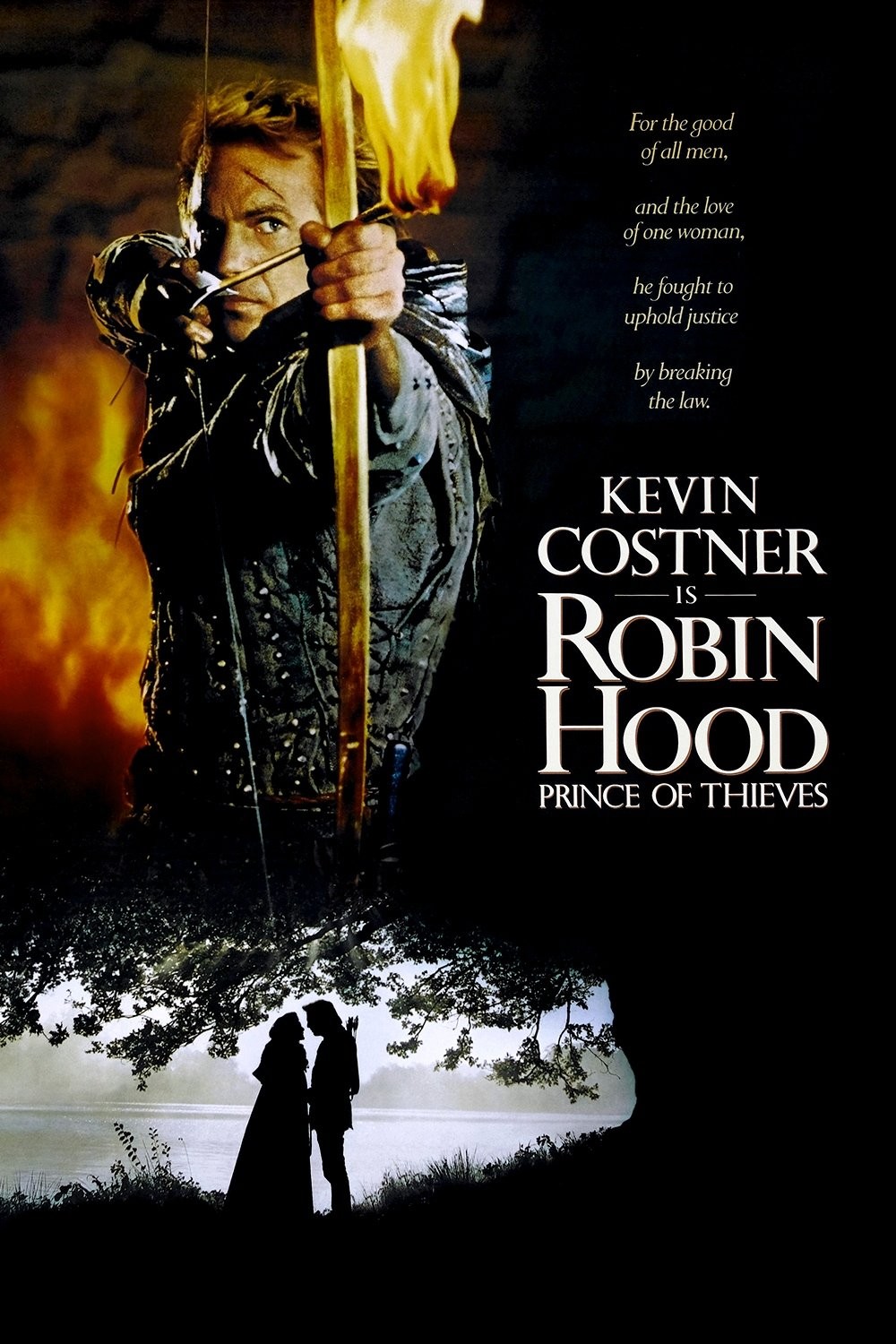
Robin Hood Week Day 4: Kevin Costner in Robin Hood-Prince of Thieves (1991)
 Director: Kevin Reynolds
Writer: Pen Densham & John Watson
Cast: Kevin Costner, Morgan Freeman, Christian Slater, Mary Elizabeth Mastrantonio, Alan Rickman, Nick Brimble, Mike McShane, Michael Wincott, Geraldine McEwan, Harold Innocent, Brian Blessed, Soo Drouet
Plot: Robin of Locksley (Kevin Costner), a nobleman who joined King Richard in the Crusades, has been captured in Jerusalem. He escapes, saving the life of a Moor named Azeem (Morgan Freeman) in the process. Azeem returns to England with Robin, having sworn a life-debt to the Christian. Robin and Azeem return to England to find Nottingham under the thumb of its cruel Sheriff (Alan Rickman). The Sheriff rules with the aid of Sir Guy of Ginsbourne (Michael Wincott), the corrupt Bishop (the ironically-named Harold Innocent), and a witch named Mortianna (Geraldine McEwan), who fears prophecy of her death at the hands of a “painted man.” Robin meets with a childhood friend, Marian (Mary Elizabeth Mastrantonio), whose brother made Robin swear to protect her before dying in the Crusades. Robin’s father is dead and his home destroyed, and he and Azeem flee into Sherwood Forest to evade the Sheriff’s men.
They encounter a band of outlaws led by Little John (Nick Brimble) and Will Scarlet (Christian Slater), who takes an immediate dislike to Robin. Robin takes the lead of the outlaws and begins training them to fight. As time passes, they begin robbing the coaches of noblemen, including that of a hard-drinking but able Friar Tuck (Mike McShane), who joins their party. Marian, realizing that Robin is fighting for the England of her absent cousin, the King, begins to quietly provide him aid.
The Sheriff hires mercenaries to help him find Robin’s woodland hideout, capturing several of his men. He “proposes” marriage to Marian, the King’s cousin, saying he will space the captured outlaws if she accepts. One of the captives, Will Scarlet, deals with the Sheriff to track down Robin. When released into the forest, though, Will tells Robin of the Sheriff’s plans despite his anger with the man. Will reveals that he is Robin’s half-brother, the son of a woman Robin’s father took up with after his mother died. Robin embraces his brother, and together, they begin to plan.
On the day of Marian’s wedding – which will coincide with the execution of the captives – Robin leads a rescue, setting them free. Azeem rallies the peasants to join them in overthrowing the Sheriff, and Nottingham erupts into war. The Sheriff rushes his “wedding” to Marian and takes her away, planning to consummate the marriage. As the Bishop tries to flee, Tuck faces him and loads him with treasure, pushing him from a window to his death. Robin saves Marian and kills the Sheriff, but Mortianna attacks him with a spear. Before she can strike her blow she is killed by Azeem, who has fulfilled his debt to Robin.
Robin and Marian marry in the forest, a wedding only briefly interrupted by the return of King Richard (Sean Connery in an awesome cameo), who blesses them and gives Robin Hood his thanks.
Thoughts: I was 13 years old the summer this movie came out, and although I know it gets a lot of grief from the Costner-haters of the world, it’s still a movie I really like. This was the first live action Robin Hood movie I ever saw, and as such it has greatly influenced my feelings about the character. Still, looking back at it 20 years later, I can see some of the cracks in the hero’s armor.
Kevin Costner, to begin with, is slightly problematic. While I don’t hate the man, and in fact find his performance to be mostly effective, the fact that he doesn’t even attempt to sound English really does stick out like a Teletubby in a Goth Club. For all the good he brings to the role – a confident air, a dedication that feels genuine – the truth is I do have to force myself to ignore his lack of an accent. There’s an irony here – most linguistic scholars believe that the modern American dialect is actually much closer to 12th-century England than the speech patterns of the modern British. One could actually make the argument that Costner technically has the most accurate speech pattern in the film. Of course, I would then tell “one” to shut up, because that doesn’t change the fact that Costner still didn’t sound like anybody else in the movie.
The rest of the cast, however, is impeccable. Morgan Freeman, who is as convincing as a Moor as Costner is as an actor being paid an enormous amount of money but still refusing to attempt an accent, steals the show as Azeem. He takes over the role of Robin’s second that is usually occupied by Little John, standing with him in the hardest moments and driving together the action when he draws his sword. His dry wit even brings a good bit of comic relief to the film. I would gladly have watched a film chronicling the further adventures of Azeem.
But the prominence of this original character doesn’t really hurt Robin’s usual Merry Men. Mike McShane’s Friar Tuck is a riot and a lot of fun to watch, and to compensate for making Little John somewhat less of a central player than he usually is, the screenwriters introduced his wife (Soo Drouet) and family, giving him much more to do and much more at stake than he usually has. Drouet herself is a very strong addition to the cast – wry and boisterous, like a saucier version of Molly Weasley. Mastrantonio’s Marian… well, she’s not bad at all, but there’s nothing particularly memorable about he. She plays the part, she does what you want her to do.
Alan Rickman, however, absolutely shines. We’re only a few years removed from Die Hard here, and he brings the same sort of nasty menace to the Sheriff of Nottingham as he did to Hans Gruber. When he threatens to cut out Robin’s heart “with a spoon” (“Because it’s dull, you twit, it’ll hurt more,”) damned if you don’t believe it. This is, without exception, my favorite rendition of the Sheriff of Nottingham of all time, the fiercest, the most frightening, and the most fun to watch.
It may be because I was just at the right age when this movie hit, but it’ll always hold a soft spot for me. I can watch it over and over even today and always enjoy it, always get swept up in the excitement, and always feel ready to cheer for England’s legendary defender.
The first Reel to Reel study, Mutants, Monsters and Madmen, is now available as a $2.99 eBook in the Amazon Kindle store and Smashwords.com bookstore. And you can find links to all of my novels, collections, and short stories, in their assorted print, eBook and audio forms, at the Now Available page!
Robin Hood Week Day 3: Sean Connery in Robin and Marian (1976)
 Director: Richard Lester
Writer: James Goldman
Cast: Sean Connery, Audrey Hepburn, Robert Shaw, Richard Harris, Nicol Williamson, Denholm Elliott, Kenneth Haigh, Ronnie Barker, Ian Holm, Veronica Quilligan, John Barrett, Esmond Knight
Plot: The aging Robin Hood (Sean Connery) has become one of King Richard’s (Richard Harris) most stalwart captains, leading Richard’s men to war in France. Robin and Little John (Nicol Williamson) lay siege to a castle, seeking a rumored treasure, but find only a single one-eyed man (Esmond Knight) guarding a few poor citizens. Richard orders Robin to storm the castle for the treasure, but Robin refuses and is arrested. The one-eyed man throws an arrow at Richard, wounding him in the neck. Richard has the castle destroyed. Dying from his wound, he summons Robin. He tries to draw his sword and slay Robin, but lacks the strength and collapses. As Robin rushes to his side, Richard pardons him before dying.
Robin and John return to England, where they’re assaulted by two old men. As they fight, they recognize Will Scarlet (Denholm Elliott) and Friar Tuck (Ronnie Barker). The friends reconnect, learning that Robin’s old adventures have become exaggerated and turned into legend, and now-King John (Ian Holm) has gone mad with power, with the people of England and even the Church turning against him. They take Robin to an Abbey where they find Marian (Audrey Hepburn), now a nun. As the Sheriff of Nottingham (Robert Shaw) arrives to arrest her for refusing the King’s order for all clergy to leave England, Robin “rescues” Marian against her will, and the Sheriff orders Robin’s arrest. In the forest, Marian abashes Robin for his part in the Crusades, and Robin confesses to the horrors he saw in war. When they return to the Abbey, they find the Sheriff has arrested all of the nuns but one.
Robin and John disguise themselves as peddlers and free the nuns, but are almost captured in the escape attempt, with Marian, Will and Tuck arriving to rescue the rescuers. Marian confesses to attempting suicide when Robin left, and the two almost kiss before Will signals them that a Sheriff’s posse approaches. After driving them off, Robin tells Marian all he wants now is a life with her in Sherwood. That night, as they relax in the woods, townspeople who saw them rescue the nuns arrive in the forest, wanting to join him to fight against King John.
King John sends out a force of 200 men to drive Robin from the forest. As they amass, Robin and his men watch, knowing they are hopelessly outnumbered. Marian tries to plead with him not to fight, but Robin insists he’s still the warrior he was in his youth. She swears to leave rather than watch him get slaughtered, and goes instead to Little John, hoping he can convince Robin not to fight. Although John agrees it is suicide, he refuses to speak against Robin, and vows to ride into battle with him.
Robin approaches the Sheriff with a proposal – a duel between the two of them. If Robin wins, the soldiers retreat; if the Sheriff wins, Robin’s men surrender. The Sheriff agrees. Both men are grievously wounded, with Robin taking a horrible slash to the side before finally killing the Sheriff. As he dies, the King’s men charge, and Little John slays their captain. John and Marian help Robin from the battlefield to the Abbey for treatment, while his men are scattered into the woods, with many captured or slain.
Lying in the Abbey, Marian gives Robin medicine and speaks of how – once well – he’ll lead his men into battle once again. When his limbs begin to go numb, he realizes Marian has poisoned him. When he asks her why, she processes her love for him – a love so deep that she cannot allow him to go on, knowing he would never be the warrior he was again. What’s more, she has taken the poison as well. Robin agrees that it’s better this way, and asks John for his bow. He fires an arrow into the air and asks they be buried together where it falls.
Thoughts: A few years before diluting Richard Donner’s Superman universe with a recut and reshot Superman II, Richard Lester put no less than James Bond and one of history’s most beautiful women in this odd rendition of the Robin Hood saga. From the beginning it’s clear this isn’t the Robin Hood most people are familiar with. This is a Robin who fought in the Crusades with Richard, something most movies don’t include. What’s more, this is a Richard who may have the name “Lionhearted,” but carries none of the patience or understanding one would expect from one of noble rank. Robin calls him a “bastard” in the opening scene, and as he’s presently ordering him to murder women and children over a non-existent treasure, it’s hard to disagree with that assessment.
Unlike the bold adventure most Robin Hood films become, Richard Lester’s version take a weird sort of anti-war stance, with Robin giving a monologue about watching King Richard order the slaughter of innocent Muslims after his single great victory of the Crusades. This isn’t the bold Robin Hood we’re used to, but a worn-down, tired man whose glory days are behind him… and what’s worse, he finds himself questioning if they were ever truly glorious to begin with.
Sean Connery is… well, he’s Sean Connery. Let’s be honest here, he’s always Sean Connery, whether he’s Sean Connery as a young Irishman, a dashing British secret agent, a Russian submarine commander or a whatever the crap he was supposed to be in Zardoz, he’s still Sean Connery. The miracle of that is that he almost always gets a role where “somebody like Sean Connery” is exactly what the movie calls for. Mid-70s Sean Connery is perfectly cast as the aging Robin Hood – still strong and undeniably charismatic, but at the same time, he’s beginning to get a little world-weary. Oh, he’ll still fight, and he’ll still kick your butt, but that doesn’t mean he isn’t getting a little bit tired of it. While Connery’s Robin is still willing to take up arms whenever necessary, it’s clear the only thing he really wants is to reclaim the love of Marian and settle down to a life he wishes he hadn’t sacrificed 20 years earlier.
Audrey Hepburn was 47 when this movie came out, and the line when she asks Robin if she’s “old and ugly” is still laughable. The woman had a grace and a poise her entire life that the greatest movie stars of all time couldn’t touch and the best of today can only dream about. Like Connery, she does a fine job of painting a woman who has grown tired with the world. She lost her dreams a long time ago, but she’s not so far gone that she can’t be convinced to take them up again. She vacillates between her heart and her vows several times, and always in an entirely convincing manner.
In this film, the villains are almost nonentities. The Sheriff and King John are the root of Robin’s problem, but he faces them almost as a matter of course, the way you face a force of nature. This could be the story of a stubborn old man intent on battling a hurricane or an earthquake for all the influence they have on the story. That’s nothing against Robert Shaw or Ian Holm, mind you, their performances are perfectly fine, but they aren’t given that much to do. Even Richard Harris as King Richard comes across as more of a personal obstacle for Robin than the ostensible villains of the piece. In truth, the real antagonist for Connery’s Robin Hood is age itself, the certainty of mortality and the inevitable approach of death.
It’s a cheerful movie, is what I’m saying.
I take that back, there is one bit that’s kind of funny… the duel between Robin and the Sheriff. If the goal of the scene was to thrill the audience, they failed, with the camera often set so far back it’s nigh impossible to tell who is who. If the goal is to depict a semi-realistic fight with very heavy broadswords and axes that look like a chore to swing around… well, Richard Lester, you succeeded, but in so doing you crafted one of the most mundane fight scenes in Sean Connery’s long and storied career. Even the sword fight in Franco Zeffirelli’s Romeo and Juliet had more excitement than this one, and that’s not intended as a compliment.
The final scene of the film is really a grand one. The revelation that Marian deliberately poisons him is baffling, but instantly understandable when she makes her declaration of love. It’s a moving scene and both Connery and Hepburn nail it. The movie isn’t a masterpiece, but the finale makes it worthwhile. It’s not a standard version of Robin Hood at all, but it’s an impressive one, and one that serves as a bittersweet conclusion to the legend.
The first Reel to Reel study, Mutants, Monsters and Madmen, is now available as a $2.99 eBook in the Amazon Kindle store and Smashwords.com bookstore. And you can find links to all of my novels, collections, and short stories, in their assorted print, eBook and audio forms, at the Now Available page!
Robin Hood Week Day 2: Brian Bedford in Robin Hood (1973)
 Director: Wolfgang Reitherman
Writer: Larry Clemmons & Ken Anderson
Cast: Brian Bedford, Monica Evans, Phil Harris, Roger Miller, Peter Ustinov, Terry-Thomas, Andy Devine, Carole Shelley, Pat Buttram, George Lindsey, Ken Curtis, Billy Whitaker
Plot: When good King Richard (a lion) left for the crusades, he left his brother Prince John as ruler of England, despite the fact that they were both voiced by Peter Ustinov. The rooster minstrel Alan-A-Dale (Roger Miller) tells us the story of the crusader who fought against John – a clever fox named Robin Hood (Brian Bedford), who defended Sherwood Forest with his friend, a bear named Little John (Phil Harris). The two outlaws disguise themselves and rob a coach carrying Prince John and his right-hand snake, Sir Hiss (Terry-Thomas).
John’s flunky, the Sheriff of Nottingham (Pat Buttram) makes the rounds to collect the exorbitant taxes from the townsfolk, snatching up every cent Robin’s friend Friar Tuck (Andy Devine) has managed to smuggle to them, even snaring a rabbit child’s birthday present of a single coin. As he leaves, Robin arrives in disguise and gives the boy a bow and arrow, along with one of his hats. The boy, Skippy (Billy Whitaker) leads his friends to play, but loses the bow in a palace courtyard. When he goes to retrieve it, he encounters Maid Marian (Monica Evans) and her friend Lady Cluck (Carole Shelley). The kids question Marian about her past relationship with Robin, and Skippy winds up playacting a “rescue” of Marian, culminating with her giving the unsuspecting boy a kiss.
Back in the forest, Robin is busy mooning over Marian himself when Friar Tuck brings him the news of an archery tournament, with the prize to include a kiss from Marian. Robin cannot help himself from entering the tournament, albeit disguised as a stork. He wins easily, but his disguise slips and he’s captured. Before the Sheriff can execute him, Little John forces the Prince to release him, and taking Marian with him, Robin and the others flee into the forest.
When Prince John learns how the people of Sherwood have begun to mock him, he triples the taxes and arrests anyone who can’t pay. The Sheriff tries to empty the church’s poorbox to line John’s coffers, sending Friar Tuck into a rage. He’s arrested and John sentences him to death in order to lure Robin Hood out of hiding. Disguising himself as one of the Sheriff’s Vulture henchmen, Robin sneaks into the palace late that night. Little John frees the Friar and the rest of their friends who have been arrested, while Robin sneaks off to steal the sacks of money in Prince John’s private quarters right under the sleeping prince’s nose. As he makes off with the last of it, Sir Hiss wakes up and alerts John (in a cartoonishly violent way). After a daring escape, Robin dives into the moat, followed by a shower of arrows, and Prince John believes him dead… but he pops up and chimes out “A pox on the phony king of England!” sending Prince John crying for his mommy.
Eventually, King Richard returns to England and pardons Robin and his men, placing John, Sir Hiss, and the Sheriff in irons, just in time for Robin and Marian’s wedding.
Thoughts: As with many people my age, this was the first version of Robin Hood I remember seeing, and in fact was the only version I was aware of for many years. In fact, even though Roger Miller’s Alan-A-Dale starts the movie by pointing out there are many versions of the Robin Hood and that this is, in fact, the version told by the animals, I remember being distinctly surprised when I got a little older and realized that Robin Hood was not, in fact, an original Disney character, and that what’s more, most versions of him were human and did not start anthropomorphic animals. Then I had to stop and look up what “anthropomorphic” meant, because I was like eight years old.
What’s more, this is the first time I watched this movie in years, and I’m catching a number of things I never would have noticed before. For example, the first scene with Robin Hood and Little John, after some cartoon antics escaping Prince John’s men, sees them engaging in a moralistic debate over the ethics of the whole “robbing the rich to give to the poor” angle. It’s a bit more thoughtful than one would expect from an early-70’s Disney movie, but it’s highly appropriate. In fact, there’s a lot of ethical moralizing in this movie. Whereas Errol Flynn (despite his loyalty) blamed Richard for leaving England in the hands of his brother to engage in the Crusades, Disney lightens it up a bit by making Richard the victim of the hypnotic Sir Hiss, who sent him off on what John calls a “silly crusade.”
The 70s were sort of a nebulous time for Disney. Walt was gone and, although it was still many years before the company’s second renaissance would begin with The Little Mermaid, it was also long before they would really hit the skids in the 80s. There’s a roughness to the quality of the films of the period, and while it now marks them indelibly as products of their time, it’s also the time in which I was introduced to Disney animation. I’ve got a soft spot for it. Even this film has a lot going for it in terms of animation and performance – the way Sir Hiss slithers his body underneath himself to simulate the elbows of a petulant teenager is a great image that gives you the perfect amount of character development. Brian Bedford and Phil Harris as Robin Hood and Little John remain the voices I hear when I think of the characters, and folk singer Roger Miller made for a fantastic bard.
Despite the animal players, the movie has lots of tiny moments that humanize the characters, such as Robin’s gift to the rabbit boy. As the kids leave, he gives the mother a sweet speech about keeping faith that Nottingham will return to glory. While Errol Flynn was loud and bombastic with his approach to rousing the townspeople, Brian Bedford’s Robin Hood is a quieter hero, one who sneaks in and out, going unnoticed until he’s discovered. Of course, once a disguise fails and he’s made, he’s just as likely to bring forth a spectacle as any other incarnation of the character. (The disguises, it’s worth pointing out, are only slightly above Bugs Bunny quality in the concealment department, but they usually work exceedingly well.)
The movie also sidesteps the usual beginning of the Robin/Marian relationship. In the Flynn movie, and in most other versions, the two are initially at odds, as he’s an outlaw and she’s a ward of the King and (technically) under the protection of the Prince. In this version, Marian loved Robin as a young girl and still does, eliminating the need for him to win her over and cutting right to the chase. I would imagine this is in deference to the cartoon nature of the film – while the scenes of Robin winning Marian over can work really well from an emotional standpoint, I can imagine in 1973 the animators thought a young audience would lose patience with such a thing.
Compared to the Errol Flynn film, the villains are far less menacing. Prince John is a spoiled mama’s boy with no air of danger about him whatsoever. Sir Hiss – a stand-in for Sir Guy of Ginsbourne – is a pompous, browbeaten serpent. The only thing about him that’s even remotely dangerous is his ability to hypnotize people, which he never even really uses to any serious effect once the story begins. (Dispatching Richard on the Crusades, the most important plot point to his hypnotism, happens before the film opens.) Only the Sheriff is an improvement in the villain department from The Adventures of Robin Hood, and that says more about the latter’s buffoonery than anything in favor of the Disney version. He’s less oafish and more dangerous than the other two, but still not the sort of villain that would give any kid trouble sleeping.
The biggest complaint I’ve got about the film is the ending. The final rescue at Prince John’s palace is fine, but Richard’s return to the throne and the arrest of the villains happens entirely off-camera. It’s not all that satisfying to cut from Robin’s escape, even as the prince pouts, to seeing them in chains with nothing in-between. Sure, these cartoons films are often short (at a crisp 83 minutes there’s little filler in this movie), but it certainly feels as though they could have given us just a bit more closure.
This isn’t the grand adventure of the Errol Flynn Robin Hood nor the attempt at an epic that the character would take later. It is, however, a grand and entertaining family version of the film with some sweet music, excellent voice performances, and mid-era Disney charm. It’s hard to say anything bad about that.
The first Reel to Reel study, Mutants, Monsters and Madmen, is now available as a $2.99 eBook in the Amazon Kindle store and Smashwords.com bookstore. And you can find links to all of my novels, collections, and short stories, in their assorted print, eBook and audio forms, at the Now Available page!
Robin Hood Week Day 1: Errol Flynn in The Adventures of Robin Hood (1938)
 Directors: Michael Curtiz & William Keighley
Writers: Norman Reilly Raine & Seton I. Miller
Cast: Errol Flynn, Olivia de Havilland, Basil Rathbone, Claude Rains, Patric Knowles, Eugene Pallette, Alan Hale, Melville Cooper, Ian Hunter, Una O’Conner
Plot: In the year 1191, King Richard the Lionheart (Ian Hunter) left England to reclaim the Holy Land in the crusades, with his bitter brother Prince John (Claude Raines) in charge. When Richard is captured in Austria John – a Norman — seizes the opportunity to increase his power over the Saxons of England, raising taxes and seizing goods and services on the populace… even enslaving people who refuse to toil for his crony, Sir Guy of Gisbourne (Basil Rathbone). The Saxon Sir Robin of Locksley (Errol Flynn) begins to resist the Norman oppression of the Saxons. As John hosts a banquet, Robin himself arrives. Robin makes it clear his intention is to rouse the people of England into revolt against John, then fights his way to freedom in front of Norman noblewoman Maid Marian (Olivia de Havilland).
Returning home, Robin and Will Scarlett (Patric Knowles) encounter a large man (Alan Hale) crossing a stream. Robin and the man battle, and Robin is knocked into the water. Laughing at the scuffle, they befriend the man – John Little – and together unite a band of free people of England who swear to fight John and defend all innocent – Norman and Saxon alike — until the return of King Richard.
As Guy leads a procession through Sherwood Forest, Robin’s men capture them all, humiliating Guy and the Sheriff of Nottinham (Melville Cooper). Robin attempts to impress Marian with their frivolity, but she remains cold. Her heart begins to change, though, when she realizes Robin and his men intend to return the goods they have stolen to King Richard and he introduces her to some of the Saxons suffering. For the first time, Robin exposes Marian to the misery John’s rule has wrought.
The Sheriff proposes a trap for Robin – an archery contest with a golden arrow presented by Marian as a prize. Robin enters in disguise and, after several rounds, wins. As Marian presents him with his prize, Sir Guy exposes him and he is captured. Robin is sentenced to death and imprisoned, and Marian rushes to his men to help plan a rescue. They disrupt his execution and flee. That night, as he comes to thank her, he overhears her professing her love for him, and he shares his own.
A bishop brings John the news that King Richard has escaped his captivity and returned to England. John sends an assassin to kill him, but Marian overhears his plan. Before she can send word to Robin, she is discovered by Sir Guy and arrested. Robin and his men capture Richard, not realizing who he is at first, and impress the King with their loyalty. They are together when they learn of Marian’s execution, which is scheduled to coincide with John’s coronation. Robin and Richard lead their men into battle. Robin kills Sir Guy and frees Marian, and the forces loyal to Richard overwhelm those of Prince John. Robin is made Baron of Locksley and given Marian’s hand in marriage. Richard banishes John and his men from England and calls for Normans and Saxons alike to share the freedoms of true Englishmen.
Thoughts: For generations this was not only the benchmark of Robin Hood movies, but the archetype against which all swashbucklers would be measured. Errol Flynn is truly magnificent in the title role, cutting a dashing figure of such strength and earnestness that one couldn’t help but want to follow him into battle.
This is, I confess, the first time I’ve ever seen this version of Robin Hood, but it’s one of those movies that’s known so well through parody and inspiration that I may as well have. Dozens of cartoons, TV shows and other films have liberally borrowed chunks of this movie wholesale. Flynn’s performance hasn’t informed too many of the modern Robin Hoods, each of whom seems to want to offer a different take on the character, but any other time a film tries to give a taste of Golden Age glory in an adventure tale, Flynn is the inspiration. You can feel pieces of his performance in Cary Elwes’s Westley from The Princess Bride, spoofed in Monty Python and the Holy Grail, and as the hero Timothy Dalton’s villain pretends to be in The Rocketeer.
Although Robin is the hero here, and a great one at that, Flynn isn’t afraid to let him feel a little humiliation. His defeat against Little John at the stream is an iconic moment, and one that’s easy for him to laugh off. His first encounter with Eugene Pallette’s Friar Tuck follows a similar pattern, but Tuck fights a bit more ferociously, and Robin comes across as a bit of a bully before he extends his hand in friendship.
Olivia de Havilland is radiant as Marian, and does a good job of selling her change of heart. In the early scenes it’s easy to feel discomfort – even disgust – during her dealings with Robin. As she starts to realize the truth about John’s rule, her emotional metamorphosis is slow, but convincing. By the time we reach the scene where Robin is sentenced to death, you can tell she’s in love with the man and trying desperately not to show it in the face of his enemies.
The villains are an odd collection. Rains’s Prince John comes across as a bit of a lightweight, but he’s at least sharp enough to have Rathbone’s Guy of Gisbourne as his enforcer. He’s not a physical threat on his own, but you can believe he would command a man of Gisbourne’s menace. The Sheriff, on the other hand, is a real goof. He’s cowardly and ineffective, with only the inspiration for the archery contest keeping him from being entirely useless. A comic relief villain isn’t necessarily a bad thing, but considering how elevated the Sheriff often is in Robin Hood lore, I was a bit surprised to see him as the clown in this early, iconic cinema version of the story.
The fight scenes are particularly impressive for the time period. Intricately choreographed, Flynn and his men put up an impressive front against the worst Prince John can send against them. Although there is a good dose of Hollywood magic to it (the swords, for instance, are not particularly convincing as weapons, although they’re handled very well), it’s the sort of thing that you forgive as a staple of the time, even as the presentation is wonderfully entertaining. The archery scene is another one of those moments that has been endlessly parodied and referenced, and it’s done fairly well. In these long-ago days, before CGI and the effort to give us an arrow’s-eye view of the winning shot, it’s presented in a very straightforward, simple style that nonetheless pleases the eye and brings a smile to a real lover of old cinema.
The final, climactic battle feels like a template for all great swordfights. Watching dozens of men fight and dozens of swords flash at once is a blast, the sort of thing every kid who’s ever picked up a branch and pretended it’s a blade dreams of. While Robin and Guy are having their own final confrontation, the directors start getting fancy: they walk off-camera and we watch as their shadows carry on the fight. Close-ups of the two of them as they grapple ratchet up the tension until Robin deals the final blow, and Guy’s plunge down the stairwell looks painful enough to be real.
One thing that rather surprised me about the film was just how much of it had the overtones of racism. Granted, the Saxons and the Normans are pretty indistinguishable to a viewer, but the oppression of the Saxons cuts a deep swath through the American heart. It’s impossible to hear the disgust John espouses without it evoking the nastier aspects of our own past. In truth, considering that this film takes place in the 12th century, it works well as a reminder that ignorance isn’t exactly a new invention. At the same time, fortunately, it does give us some hope that even 900 years ago, there were men willing to stand against it.
This movie is justifiably hailed as one of the all-time great adventure films, and it’s as fine an example of golden age cinema as I can imagine. For many, for decades, Errol Flynn was Robin Hood. And in truth, when you watch this movie, he always will be.
The first Reel to Reel study, Mutants, Monsters and Madmen, is now available as a $2.99 eBook in the Amazon Kindle store and Smashwords.com bookstore. And you can find links to all of my novels, collections, and short stories, in their assorted print, eBook and audio forms, at the Now Available page!
Next week is ROBIN HOOD WEEK
 “Icons” had to take a break in July due to another project of mine, but it’s coming back to close out the month of August as I look at one of the great folk heroes of all time and how he’s been portrayed on the silver screen.
Robin Hood is one of the world’s most indelible heroic archetypes: the dashing rogue that fights against an unjust system by robbing from the rich and giving to the poor. But is it always quite that simple? Next week we’re going to find out through five very different takes on our title character…
- Errol Flynn: The Adventures of Robin Hood (1938)
- Brian Bedford: (Disney’s) Robin Hood (1973)
- Sean Connery: Robin and Marian (1976)
- Kevin Costner: Robin Hood: Prince of Thieves (1991)
- Cary Elwes: Robin Hood: Men in Tights (1993)
Yes, there are other Robin Hoods… many, many, many other Robin Hoods. Some of them even speak with an English accent. I created this list based on the versions that are the most memorable to me. If you disagree, you Russell Crowe fans, you’re welcome to do your own write-ups.
Of course, before we can start, we need to know who our hero is, don’t we?
The Character
When good King Richard left England to go on the Third Crusade, rule of his country was left in the hands of his corrupt brother, Prince John. As John proceeded to crush the populace with unjust rule and unfair taxes, a former nobleman escaped into the eaves of Sherwood Forest. There, the outlaw who would become known as Robin Hood gathered a band of Merry Men to join him in his own Crusade — one against the Prince and his enforcer, the Sheriff of Nottingham, to preserve the England King Richard left behind.
This, of course, is a bit of an aggregate of the character. There have been stories of Robin Hood told throughout Europe for over 600 years, and as with many truly legendary characters, several of the versions have a tendency to contradict one another. But this baseline is how most people think of the hero today, and that seems as good a way as any to start. Come back Monday, friends, and we’ll start with one of the first truly great cinematic adventure films.
Gut Reactions: Kick-Ass 2 (2013)
 Director: Jeff Wadlow
Writer: Jeff Wadlow, based on the comic book series by Mark Millar & John Romita Jr.
Cast: Aaron Taylor-Johnson, Chloe Grace Mortez, Morris Chestnut, Claudia Lee, Clark Duke, Augustus Prew, Donald Faison, Steven Mackintosh, Monica Dolan, Garrett M. Brown, Lyndsy Fonseca, Christopher Mintz-Plasse, Yancy Butler, John Leguizamo, Jim Carrey, Robert Emms, Lindy Booth
Plot: It’s been two years since the events of the first Kick-Ass, and both Dave Lizewski (Aaron Taylor-Johnson) and Mindy Macready (Chloe Grace Mortez) have remained retired from action as the “real world” superheroes Kick-Ass and Hit-Girl. When Dave starts to feel restless but is unable to convince Mindy to get back into action, he finds a new team of citizens eager to fight to take back the streets. Meanwhile the former Red Mist (Christopher Mintz-Plasse) finds himself with the freedom to take action against Kick-Ass for killing his mob boss father with a plan that could plunge the entire city into all-out war.
Thoughts: As big a geek as I am, I’ve never actually read any of the comic books the two Kick-Ass movies have been based on. I’m not a fan of the writer, Mark Millar, who I feel often goes for shock value at the expense of real emotion and discards characterization at a whim. Despite this, I liked the first Kick-Ass and wasn’t surprised that I thought the sequel wasn’t bad at all.
With news stories about “real world” superheroes like Seattle’s Phoenix Jones becoming more prevalent in the news, this story hits a nice chord that examines the philosophy of a person who would choose to put on a costume and try to beat up gang bangers at night. This time around, with Nicolas Cage’s “Big Daddy” character out of the picture, the relationship between Dave and Mindy becomes the center of the film. The two of them both shift back and forth between craving the life of a hero and trying to reject it at various points. What’s more, it’s easy to understand and even sympathize with both points of view – on the one hand, it’s a remarkably dangerous and (frankly) stupid lifestyle. On the other hand, when confronted with evil, how can a decent person simply choose to do nothing?
Interestingly, the most press I’ve seen about this movie in the last few months seems to have come from the fact that Jim Carrey, who plays “Colonel Stars and Stripes,” has chosen not to promote the film. Carrey says that the events at Sandy Hook Elementary last winter (which happened after filming was complete) affected him deeply and he cannot, in good conscience, promote violence. While I don’t take issue with him choosing a pacifist lifestyle, I have to wonder if he actually paid attention to the movie while he was making it. Kick-Ass 2 in no way promotes a violent lifestyle. While there is a lot of comedy in the film, and while some of the fight scenes are somewhat exaggerated, that’s not the same thing as saying they’re glamorized. The film clearly shows the consequences of violence in general and the lifestyle that Dave has chosen in particular, and neither of these are things that any sane person would willingly accept. In this movie, as in the first one, choosing a life of violence hurts, both physically and spiritually.
Which is not to say there isn’t fun. Mintz-Plasse’s character, embarking on a quest to become the world’s first real super-villain, is pretty laughable for most of the film. Even once it gets dark, when he starts to recruit real muscle to back up his threats, he’s still a caricature of every stupid, overblown villain cliché you can imagine. He’s a point of ridicule, a pathetic character, and would be pitiable if he didn’t pull off a few legitimately evil acts in the film. (It’s also worth noting that the film scales back on the comic book, dropping the most evil act he commits as apparently being too much to put on screen. I haven’t read the comic, as I said, so I can’t judge how well it worked there, but I do think it would have been too much on the screen.)
With so many superhero movies these days, it’s nice to see one that brings the action down to a (mostly) human level, that doesn’t treat average citizens as cannon fodder, and that shows that being a hero can hurt. There are two other comics in this series (a Hit-Girl spinoff and the currently in-progress Kick-Ass 3), and I’d be anxious to see both of those make it to the screen too. If not, I may actually have to break down and read the comics to see how the saga of Dave Lizewski finally ends.
The first Reel to Reel study, Mutants, Monsters and Madmen, is now available as a $2.99 eBook in the Amazon Kindle store and Smashwords.com bookstore. And you can find links to all of my novels, collections, and short stories, in their assorted print, eBook and audio forms, at the Now Available page!
Fun with Riffing
 Once upon a time, there was a thing called the “Cable Ace Awards.” It was basically the Emmys for cable TV. They stopped giving them out about the same time HBO started winning all of the real Emmys, at which point they realized there was no longer any reason for the Ace Awards to exist, showing the sort of self-awareness the MPAA can only dream of. As far as I’m concerned, there’s only one lasting contribution the Ace Awards made to modern society: they’re responsible for my introduction to Mystery Science Theater 3000. One year, whichever network was broadcasting the awards showed a bunch of the nominated shows over a weekend, including an episode of MST3K. As my parents’ cable provider did not, at that time, carry Comedy Central, I’d never seen an episode before. I stumbled upon the image of a guy and two robots in a darkened theater cracking jokes about a terrible 50s-era monster movie, the sort that local TV channels still showed all weekend even then. I was instantly mesmerized, but it would be about two years before our local cable got Comedy Central and I was given my real entryway into becoming a hardcore MSTie for life.
MST3K went away many years ago, of course, but it has its spiritual successors, my favorite of which is RiffTrax. The RiffTrax crew consists of Michael J. Nelson, Bill Corbett, and Kevin Murphy – essentially the second cast of MST3K. They’re doing the same job as before, making fun of movies, but now they do it through video on demand you can download from their website or buy on DVD, MP3 commentary riffs for blockbuster movies that you can synch and watch on your own, and a few times a year, live riffs of movies they perform in front of an audience and broadcast to movie theaters across America. Last night, I went to the first RiffTrax Live event I’ve had the chance to attend – a Kickstarter-fueled riffing of director Paul Verhoven’s laughably bad sci-fi “satire” Starship Troopers. The riff was great, picking apart the movie mercilessly. Even several cast members, including Casper Van Dien, Clancy Brown, Jake Busey, and Neil Patrick Harris (who has joined Mike Nelson for riffs in the past) spread the word about the riffing, none of which particularly spared them from the crew’s jokes… although it should be noted that Denise Richards undoubtedly got the worst of their jabs, and she didn’t seem to have anything to do with promoting the riffing.
I’m not here to sell you on the riff, though – you can go to their website and download any of their riffs if you need convincing. What I loved about this, more than anything else, was the actual experience of watching the film. I went with my friends Kenny, Daniel and Lauren, all of whom have gone to RiffTrax Live shows before, and therefore knew a bit more about what to expect than I did. As we sat down, the screen rolled with what appeared to be the usual pre-movie spiel you get in any multiplex in America… but soon, the resounding laughter would make it clear even to the blind that this wasn’t just your ordinary stuff. Instead, it was RiffTrax-generated jokes. Anagrams that poked fun at recent summer blockbusters, “Movie Mistakes” gags that invariably turned into jokes about Casper Van Dien’s post-Troopers career, and so on. With each change of the scene there’d be quiet, then laughter.
In-between the new screens, though, the atmosphere was nothing like a usual movie theater, where disinterested strangers sit around chomping down their popcorn at best or yammering on their phone at worst. Instead, it was a sort of carnival atmosphere, full of people who came not just to watch a movie, but to have a good time. People roamed around, talking, chatting to strangers. There was a sort of unspoken promise that the general volume level would drop to read the preshow cards (even though there was no technical reason for it to do so), and a bizarre feeling of community. It was like everybody in the room was in on a joke that we knew the people wandering in and out of whatever Tyler Perry joint was soiling the adjacent theater would never understand.
Once the movie started, the conversation stopped, but not the noise. People laughed, people cheered, people applauded their favorite riffs. I don’t usually clap even in the best of movies, because it’s not like the actors can hear me. But when Mike Nelson dropped a fairly obvious gag at the expense of AT&T, it hit a sort of universal chord that made the theater almost explode with energy, and I found myself pounding my hands together along with everybody else.
Because I wasn’t just “at the movies,” like I am any other time, even when the best movies are on the screen. Years ago, the MST3K commercials included a line that was something like, “It’s like watching cheesy movies with three of your funniest friends.” Last night, I felt like I was in an entire theater full of friends who wanted to have a good time together.
They’re going to rebroadcast the Starship Troopers show on September 12, again in theaters across America. Then they’re coming back on October 24 to riff the granddaddy of the modern zombie film, Night of the Living Dead. I can’t wait to see that one too, and I intend to go to as many of these as I can from now on. In a world where even movie theaters are so often dens of misery, it’s great to know that for just a little while, you can stop in for some pure, untarnished fun.
Crappy Movie Roulette: Puppet Master (1989)
 Director: David Schmoeller
Writers: Charles Band & Kenneth J. Hall
Cast: Paul Le Mat, William Hickey, Irene Miracle, Jimmie F. Skaggs, Robin Frates, Matt Roe, Mews Small, Barbara Crampton, Kathryn O’Reilly
Plot: Following an opening sequence comprised of close-up shots of various puppets, we begin with an old man (William Hickey) painting and talking to a series of puppets that are moving independently, intercut with scenes of what appears to be the point-of-view shot of another puppet trying to sneak into a hotel, the Bodega Bay Inn. The puppet, a hook-handed creature with black eyes (Blade, according to Wikipedia), eventually makes it to the old man’s room while evading a pair of men in trenchcoats. As the two men – Nazis, as it turn out – approach, the old man hides his puppets and kills himself.
Fifty years later, we meet Alex Whitaker (Paul Le Mat), a psychic plagued with dreams of violence. He contacts three other psychics: Dana Hadley (Irene Miracle) and the husband-wife team of Frank Forrester (Matt Roe) and Carissa Stanford (Kathryn O’Reilly). The four of them are summoned to the side of their old acquaintance Neil Gallagher (Jimmie F. Skaggs) to compare notes. Upon arriving at the Bodega Bay Inn, now owned by Neil’s wife Megan (Robin Frates), they find Neil has committed suicide.
That night a puppet with a tiny head (Pinhead, evidently) climbs out of Neil’s coffin and begins roaming the hotel. At dinner, Dana tells Megan that Neil only married her for her money, prompting Megan to leave. Alex follows her and apologizes, explaining how Neil called them together years ago to study an Egyptian secret for imbuing life to inanimate objects. Later, Pinhead murders the hotel’s housekeeper and Megan faints when she finds that someone has propped up Neil’s dead body in a chair. As the psychics retire to their rooms, the puppets begin to roam the hotel, murdering Frank and Carissa in the midst of a sex-fueled “psychic experiment.”
When Neil’s body again is moved, this time to Dana’s room, she tries using her skills as a fortune teller to put him to rest. She’s instead attacked by Pinhead, who breaks her ankle to slow her down. Pinhead chases her to the elevator, where Blade slices her throat. Alex has a dream about Megan dancing with a masked man – Neil, as it turns out — followed by a flash of the three other psychics dead, with their heads in his bed. The real Megan arrives and tells Alex she has something to show him, just as she did in his dream. She’s found the diary of the old Puppet Master, who calls his creations “harmless,” but fears what they will do in the wrong hands.
In the dining room, Alex and Megan find the murdered psychics propped up at the table. To their surprise, they find Neil seemingly alive and well. He explains that he did, in fact, commit suicide, but not before using the old Puppet Master’s secrets to grant his body immortality. He had to kill the others, he explains, because their psychic link would eventually have led them to him. He’s tired of the puppets, though, and he tosses one aside, shocking the others. He also confesses to killing Megan’s parents to manipulate her into marrying him, granting him access to their hotel and leaving him free to search for the old man’s secrets. The puppets revolt, turning on Neil and killing him for good.
Thoughts: This is an odd sort of film, the kind of movie that has something to it, but overreaches. It’s a clear attempt by Full Moon Entertainment to start off their own horror franchise in the vein of Friday the 13th or Nightmare on Elm Street, and it would seem to have been at least partially successful… after all, as of this writing there have been a whopping ten sequels to this movie. On the other hand, those sequels (and this original) have all been direct-to-video and have limited cultural impact. If you were to show the average person a picture of Blade, the franchise’s most iconic puppet, they wouldn’t have any idea what they were looking at, and may even mistake him for a creation from the Saw franchise.
That said, let’s talk a little bit about what this movie does right. First of all, the puppetry is honestly not bad. The close-ups of the puppets, all done in a 1989 before CGI took over the movie landscape, appear to be legitimate puppet work, and it’s impressive. It’s slow, and it’s creepy, and that works to the movie’s favor. The shots that require a full-figure puppet to walk around in the frame are all stop motion. It’s not as impressive as the puppetry, but it’s not terrible. The greenscreen used to add them into the scene, however, is pretty bad, full of nasty and highly visible artifacting that pulls you out of the reality of the moment, such as it is.
It’s this, more than anything else, that hurts the movie. The puppets stumbling around in stop-motion look like nothing so much as a cartoon, and a silly one. Once you start seeing that, the fear level drops. You’re already dealing with puppets, after all, you have to work to convince the audience that they’re threatening. Child’s Play did it fairly well, but this movie doesn’t. The scene where Dana throws the Pinhead doll across the elevator looks like exactly what it is – a woman chucking a doll. It robs the creatures of any menace they possess. Sadly, it doesn’t go quite far enough to reach the “so bad it’s good” level of entertainment.
The characters are all pretty bland. Megan and Alex are both completely dull and blank, Dana is a stereotypical bitch (she even refers to herself as much) with a tacked-on southern accent, and Frank and Carissa seem to exist only to throw in a quick sex scene prior to kicking off the murder spree. You don’t feel for them, you don’t get to know them, you don’t care when they die and you don’t care if they survive.
Neil, as a villain, is weak as well. We’ve got the standard immortality motive, with a tacked-on excuse for him to murder the others. Why did he need to murder the other psychics? Because they would have found out he hadn’t really killed himself. Well… okay… but why did he feel the need to fake his suicide in the first place? Did the magic that animated him need his “death” in order to take effect? Could they have made that a little clearer? Or did he just get off on killing people – he did murder Megan’s parents with no remorse long before he was immortal, after all. Or maybe – and I know I’m reaching here – maybe the screenwriter just didn’t think things through all that well.
There’s a weird sort of attempt here at a Twilight Zone-style morality play. Neil wants something mankind isn’t supposed to have, he employs some homemade monsters to try to get it, and in the end those same creations turn on him. But that said, it fails to live up to the standards of Rod Serling, with a half-assed attempt at an ironic moral that might actually have worked in a half-hour TV show, but loses its steam in the film’s 90 minute running time.
In the end, Puppet Master is the sort of movie that isn’t quite good enough to be good and isn’t quite bad enough to be fun, which is the saddest kind of film to watch. That said, I’ve got other films in the franchise amidst my collection of crappy movies, and those may well be worth the watch. It’s often from mediocrity like this that truly insanely bad movies, the ones that are a blast to make fun of, flow in future installments.
The first Reel to Reel study, Mutants, Monsters and Madmen, is now available as a $2.99 eBook in the Amazon Kindle store and Smashwords.com bookstore. And you can find links to all of my novels, collections, and short stories, in their assorted print, eBook and audio forms, at the Now Available page!
Showcase At the Movies Superhero Double Feature
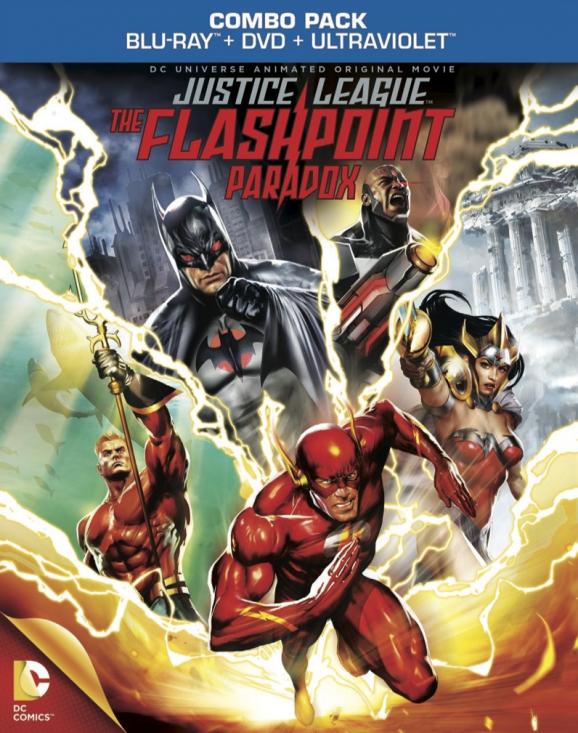
 This week’s episode of my podcast, the All New Showcase, features myself and my cohort Kenny giving our opinions on a pair of new superhero movies. We took in The Wolverine and the new animated feature Justice League: The Flashpoint Paradox. To hear our thoughts on those, as well as a comic book and TV pick, click on the link!
Crappy Movie Roulette: The Invisible Maniac (1990)
 Director: Adam Rifkin
Writer: Matt Devlen, Tony Markes & Adam Rifkin (as “Rif Coogan”)
Cast: Noel Peters, Shannon Wilsey, Stephanie Blake, Melissa Moore, Clement Von Franckenstein, Claudette Rains, Eric Campanella, Debra Lamb, Gail Lyon, Marilyn Adams, Kris Russell, Rod Sweitzer
Plot: When young Kevin Dornwinkle (Kris Russell) is caught by his mother (Marilyn Adams) spying on his neighbor girl undressing, his mother brutally warns him that women are evil. Twenty years later, Kevin (Noel Peters as an adult) has become one of the preeminent scientists in the world, but fails in his attempt to turn himself invisible, instead going mad and killing four of his fellow scientists. He’s institutionalized, but escapes a few months later and gets a job as a physics teacher at a summer school, where he overhears a student named Gordon (Rod Sweitzer) planning to tease and torment him. At home, he continues to experiment on his failed invisibility serum, finally making a rabbit disappear. He uses the serum on himself, becoming invisible, but crashing to intense dreams about women teasing and taunting him, followed by an insatiable desire to use the serum again.
He’s later approached by a student named Vicky (Shannon Wilsey), who offers to do “anything” to get an A in his class. The same day, Gordon and his friends begin their campaign to antagonize Kevin, beginning with a belch and proceeding with the classic “everybody drop your books at the same time” trick. As they laugh, Chet (Robert R. Ross Jr.) is summoned to the principal’s office. The principal, Ms. Cello (Stephanie Blake) offers to help him with his grades in exchange for “special attention,” giving further credence to the audience’s theory that this movie was written by a repressed 12-year-old boy. Kevin later summoned to Ms. Cello’s office, where she tries to seduce him. When he rejects her, she threatens to call the police over a syringe she found in his classroom. To protect himself, he kills her. He returns to his class, where he’s hit by a good ol’ bucket of water over the door, then goes mad(der). He locks the doors to the school and goes on a killing spree, beginning by choking a student to death with a sandwich in what is probably the best scene in the film.
Having killed everyone else, Kevin returns home where he’s pursued by Chet, who’s got a gun and apparently word-a-day toilet paper, as he uses the word “astute.” Don’t give him too much credit, in the same scene he actually shouts, “Die, you invisible jerk!” Anyway, both Chet and Kevin wind up invisible and start pounding on each other before the gun goes off and a headless body appears. A pair of police arrive, find the corpse, and declare it a suicide. As they leave, Kevin reappears, laughing maniacally.
Thoughts: I asked you guys last week to pick a lousy movie for me to view in the first installment of “Crappy Movie Roulette,” and I’ve gotta say, you didn’t let me down. This is one of the worst produced movies I’ve ever seen.
Released in 1990, I’ve got to imagine this film had a budget of approximately seven dollars and eighty-three cents, most of which went to craft services. They couldn’t pay for any sets, clearly, or even bother to re-dress any of the sets they got for free. The top scientists in the world, for instance, meet in what appears to be the side conference room of a neighborhood church community center, which Adam Rifkin no doubt had to lie to get access to. There’s even a weird sense that we’re getting the opposite of product placement in this movie, outright product rejection, in that there are several close-up shots of radios and tape recorders, all of which seem to have had their labels peeled off in a half-assed attempt to remove the name brands. Casio wanted nothing to do with this film.
Rifkin is attempting to draw on the wild era of great 80s slasher movies, and as so often happens when people come in at the end of a trend, he takes it to ridiculous lengths. In 80s horror, of course, the killers’s victims are usually suffering a metaphorical punishment for their crimes – drugs, sex and alcohol being the most popular choices. In the world of The Invisible Maniac, that idea of the world providing the killer a slate of deserving victims is utterly absurd. Every woman in this movie exists for one of two reasons: to torture Kevin (his mother, the women in the scientific community), or to tantalize him (the girls in the class, and even the principal, who whips out the phone number and address of a student from her bra a good twenty minutes before summoning Kevin into her office for some quality time). Even the layout of the school seems to work against him. For the obligatory “sneaking a peek in the girls’ locker room” scene, rather than even trying to come up with some sort of plan (even Porky’s went to the trouble of showing them drilling a hole in the wall), the jock peeks through an air conditioning vent in the school gym, which apparently opens up directly into the shower. Purely from an architectural standpoint, that seems dubious.
Like any terrible movie, this film also has huge gaps in logic. What summer school, for example, has a need for a cheerleader squad practicing in full uniform? Why is it, just two weeks after escaping from a mental asylum and being all over the news, the principal who hires Kevin doesn’t recognize him as a psychopathic killer? Even in 1990, there must have been some sort of background check. And why do Dornwinkle’s clothes vanish with him when he turns invisible?
What’s more, this film doesn’t seem to have any sense of time. Young Kevin – as well as the neighbor girl he spies on – dress like refugees from a campy Saturday Night Live skit set in the 1950s… but when the “Twenty Years Later” card appears at the end of the scene, we jump to 1990. What’s more, this could easily have been avoided by just changing the card to read “Forty Years Later,” because Noel Peters looks like he’s at least 50 when he first appears on screen.
Nobody in this film can act, either – stiff line deliveries, melodrama that would get you kicked out of the least professional community theater, and worst of all, very few of them seem to be aware of the fact that they’re in a terrible movie. Only Gail Lyons, who plays the doomed April, seems to be in on the joke, hamming up her death scene as she’s strangled by the titular Invisible Maniac. She commits to pounding on air and even rolls her eyes as she dies in a method that seems to indicate she knows she’s in a flop and is making the best of a bad situation.
People often talk about bad movies, and about movies that are so bad that they’re good, movies that can be enjoyed in an ironic fashion, laughing at the absurdity of a failed attempt at art. There is, however, another level – the movie that is, as TV Tropes tells us, so bad it’s terrible. This is a film so poorly made that it actually laps itself on the bad movie scale, becoming something that’s not only painful to watch, but utterly absurd. Showgirls is the classic example here – so much blatant, absurd sex that it’s no longer even titillating, but just dull. The Invisible Maniac treads very close to that line, and even crosses it a few times before coming back at the end, where the death scenes are poorly shot and stupid enough that they’re laughable again. Drowning a girl in a fish tank? You got it. Submarine sandwich stuffed down a kid’s throat until it blows up like a cartoon fire hose? Done.
Is that enough to recommend the movie? Not really. It might find a worthy place in a bad movie night with your friends, and I’d love to hear the RiffTrax crew take it on, but it’s not really worth watching on its own.
The first Reel to Reel study, Mutants, Monsters and Madmen, is now available as a $2.99 eBook in the Amazon Kindle store and Smashwords.com bookstore. And you can find links to all of my novels, collections, and short stories, in their assorted print, eBook and audio forms, at the Now Available page!
 Reel to Reel